


 Live Score
 Cricket Teams
 Cricket Players
INR 60.4 crore night for Vaibhav Sooryavanshi: India's wonderkid turns LSG demolition into RR gold crush
Vaibhav Sooryavanshi scored 93 runs off 38 balls, generating ₹4.75 crore from a match cost of ₹7.86 lakh for RR, yielding a profit of ₹4.67 crore.

 Prefer HTon Google


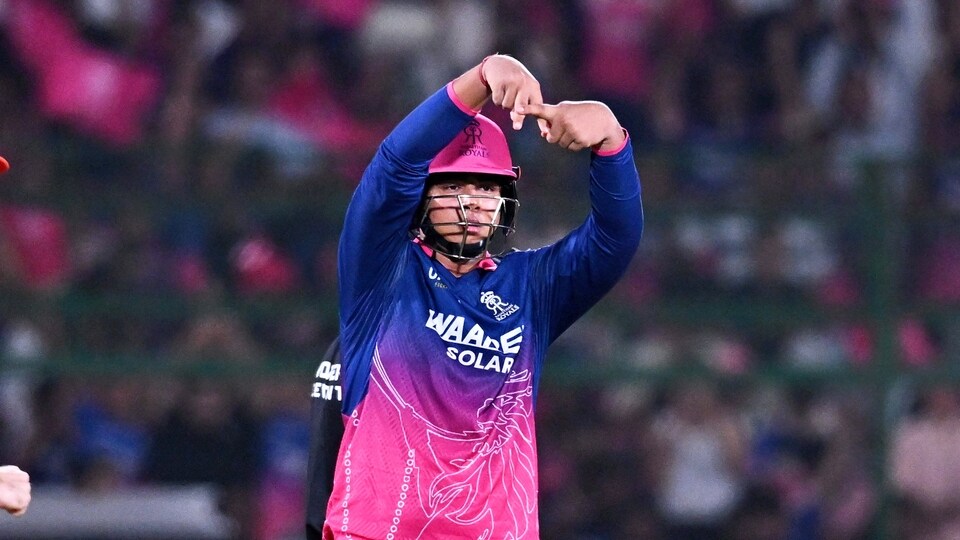
Vaibhav Sooryavanshi’s 93 off 38 balls against Lucknow Super Giants created one of the most extreme single-match return profiles of IPL 2026. Rajasthan Royals carried a match cost of ₹7.86 lakh for him in the valuation ledger and received ₹4.75 crore worth of output from one innings.
The market translation is direct. Every ₹1 crore invested at that rate would have generated roughly ₹60.4 crore worth of performance. The pure profit line was almost as severe, with the innings producing ₹4.67 crore after cost and a 59.4x profit return on the match investment.
Vaibhav Sooryavanshi’s ₹60-crore night
Sooryavanshi’s innings against LSG was built on immediate control. He made 93 from 38 balls at a strike rate of 244.73, giving Rajasthan the kind of top-order acceleration that changes the financial reading of a match. The scorecard records the runs. The valuation ledger shows how violently those runs beat the cost base.
His match cost for the game stood at ₹7.86 lakh. His rating-adjusted worth stood at ₹4.75 crore. That gap yielded ₹4.67 crore in profit from a single batting innings. The total worth was 60.4 times the cost. The profit alone was 59.4 times the cost.
That is the centre of the story. A player carrying a sub- ₹8 lakh match cost produced an output line normally associated with premium match-winners. Rajasthan received high-end top-order damage from a tiny investment base, and the spread between cost and output turned the knock into a 60x return event.
The per-ball valuation gives the innings an even sharper edge. Sooryavanshi faced 38 balls and generated ₹4.67 crore in profit. That comes to roughly ₹12.29 lakh profit per ball faced. Across every six balls of his stay, the profit value was about ₹73.7 lakh. Every run carried around ₹5.02 lakh in profit.
Those numbers explain why the innings cannot be read as just 93 runs at a high strike rate. In T20 terms, 93 off 38 gives a team dominance. In valuation terms, it gives the team surplus. Sooryavanshi’s acceleration created runs at a speed that forced LSG to respond from behind the game, and his low cost made every scoring burst heavier in the ledger.
The innings also carried tactical value. A batter scoring at 244.73 does not allow a bowling side to build normal spells. The field spreads earlier. Bowlers move faster to defensive plans. Captains lose the luxury of holding favourable match-ups for later. Rajasthan gained tempo because Sooryavanshi kept pushing the innings beyond LSG’s control window.
That tempo has a money reading. IPL teams spend heavily for players who can break games from the top order. They pay for boundary access, pace hitting, spin hitting, powerplay pressure and the ability to keep an innings moving without long settling time. Sooryavanshi delivered that package in 38 balls at a match cost of ₹7.86 lakh.
The return rises because the investment base is so small. A high-priced player can play a big innings and still create a modest multiplier because the cost line is heavy. Sooryavanshi began from a low-cost line and then produced one of the strongest batting outputs of the match. The result was a return curve that moved almost absurdly upward.
Rajasthan’s ledger from the game reads like a clean market event: ₹7.86 lakh charged, ₹4.75 crore generated, ₹4.67 crore profit. That is the entire force of the innings in three numbers. The 93 off 38 supplied the cricketing damage. The 60.4x multiplier supplied the financial shock.
The profit-per-over equivalent makes the gap even clearer. At ₹12.29 lakh profit per ball, Sooryavanshi’s value creation crossed his match cost inside the first ball’s equivalent output. The rest of the innings became surplus. By the end of 38 balls, the surplus had grown into nearly ₹4.67 crore.
This is why the ₹1 crore framing works. It does not inflate the innings. It scales the return. If ₹7.86 lakh can become ₹4.75 crore in worth, then ₹1 crore at the same rate becomes roughly ₹60.4 crore. If the calculation is restricted to profit after cost, ₹1 crore becomes roughly ₹59.4 crore in profit. Both readings point to the same conclusion: the match produced a return profile that sits far outside normal IPL efficiency.
Vaibhav Sooryavanshi’s corrected valuation also reflects the quality of the knock. The innings received a manual rating of 15 and used an impact score of 95 for the money calculation. That pushed the final worth to ₹4.75 crore and kept the ledger aligned with the scale of the performance. A 93 off 38 at that strike rate carries match force, and the valuation treated it as an exceptional-impact innings.
The knock also shows why low-cost young players can become the most powerful ROI stories in a season. Their price does not need superstar output to look efficient. When superstar output arrives, the ledger breaks open. Sooryavanshi gave Rajasthan the kind of return a franchise cannot easily buy at auction price, because the biggest edge came from the distance between what he cost and what he produced.
The match line is therefore simple and severe. Sooryavanshi generated ₹4.75 crore worth of batting value from a ₹7.86 lakh match cost. His profit after cost was ₹4.67 crore. His return on worth was 60.4x. His profit return was 59.4x. Every ball he faced generated roughly ₹12.29 lakh in profit.
That turns his 93 off 38 into more than a standout knock. It becomes one of IPL 2026’s cleanest value explosions: a low-cost player delivering premium top-order destruction and producing the equivalent of a ₹1 crore investment turning into a ₹60 crore match output.
Method note
The valuation model converts match impact into rupee terms by weighing a player’s contribution against his match cost. It includes batting, bowling and fielding value, with quality adjustments for the scale of the performance. These figures are model-based estimates for cricketing return on investment and are not official IPL salary accounts or franchise financial records.


