


 Live Score
 Cricket Teams
 Cricket Players
Ireland's Afghanistan series strains ECB ties and could cost them lucrative future men's cricket fixtures
Ireland's Afghanistan series has strained ECB ties, raising fears that lucrative fixtures against England could now be at risk in coming years.

 Prefer HTon Google


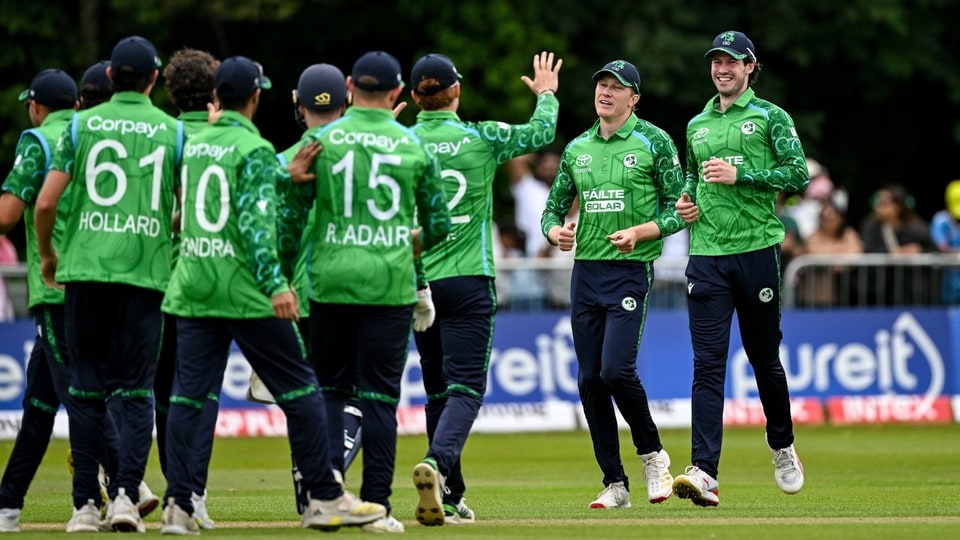
Ireland’s decision to host Afghanistan for a five-match ODI series has reportedly caused unease within the England and Wales Cricket Board, potentially placing future men’s fixtures between Ireland and England at risk. The series begins in Northern Ireland on Wednesday, with two matches scheduled at Bready before the teams move to Stormont for the remaining three games. It forms part of a broader reciprocal agreement under which Ireland are due to tour the United Arab Emirates next March for one Test, three ODIs and three T20Is against Afghanistan.
According to reports, the ECB is unhappy with Cricket Ireland’s decision to proceed with the bilateral series. England have refused to arrange bilateral cricket against Afghanistan because of the Taliban’s restrictions on women and girls, a policy supported by the UK government.
ECB chair Richard Thompson has previously described the Taliban’s treatment of women as “gender apartheid”. There has been no official warning from the ECB, and no England-Ireland fixture has been formally cancelled. However, the disagreement could have significant financial consequences for Cricket Ireland, which benefits heavily from the revenue, visibility and commercial interest generated by matches against England.
England fixtures increasingly difficult for Ireland to secure
England played one-off Tests against Ireland at Lord’s in 2019 and 2023, with both matches used as preparation for major home Test series. That arrangement will not continue next year, with Bangladesh instead scheduled to play a warm-up Test against England before the Ashes. The two countries also met in a three-match T20I series in Ireland last September, although England selected a weakened squad. No further men’s fixtures between the teams have been finalised in the immediate calendar.
England have agreed in principle to tour Ireland for three T20Is in 2029, but those matches remain subject to future scheduling arrangements. Any further deterioration in relations between the boards could therefore leave Ireland with fewer opportunities to host their nearest and most commercially valuable Full Member neighbour. Tensions were already developing before the Afghanistan series. The ECB recently declined an invitation to participate in a proposed Euro Nations Cup alongside Ireland, Scotland, the Netherlands and Italy, citing an overcrowded calendar.
England’s position on Afghanistan allows meetings at ICC tournaments but rules out bilateral contests. The ECB approved England’s 2025 Champions Trophy match against Afghanistan following a specially convened board meeting, despite more than 160 MPs and peers urging the team to boycott the fixture. The board has also supported Afghanistan’s displaced women cricketers, many of whom fled the country after the Taliban returned to power in 2021. England hosted members of the Afghan Refugee Women’s team this summer and invited them to attend the Women’s T20 World Cup final at Lord’s.
Afghanistan remain an ICC Full Member despite being the only men’s Test-playing nation without an operational women’s programme. Australia, New Zealand and South Africa have also avoided bilateral cricket against Afghanistan, while Ireland have joined several Asian boards, West Indies and Zimbabwe in continuing to offer them fixtures.
Cricket Ireland has previously acknowledged the ethical concerns surrounding its decision. The board’s approval was not unanimous, and players were reportedly permitted to withdraw from the series if they felt uncomfortable participating. For now, the Afghanistan matches will proceed as scheduled. The longer-term question is whether Ireland’s stance will come at the cost of future opportunities against England.


