


 Live Score
 Cricket Teams
 Cricket Players
KL Rahul and bridging red-and-white gap
India vs Australia: As KL Rahul gets ready to start a new series in Australia, his Test career is at the crossroads while the one-day career is soaring.


The contrasting conditions in Australia provide a real test for batsmen from the subcontinent. There’s extra bounce to adjust to while some wickets offer seam movement. Batsmen who get runs there at the start of their careers gain confidence that most things are right in their game. Among the success stories, VVS Laxman was a transformed player after a scintillating 167 at the Sydney Cricket Ground in 1999; and Virat Kohli hasn’t looked back since getting his first Test hundred at Adelaide in 2012.
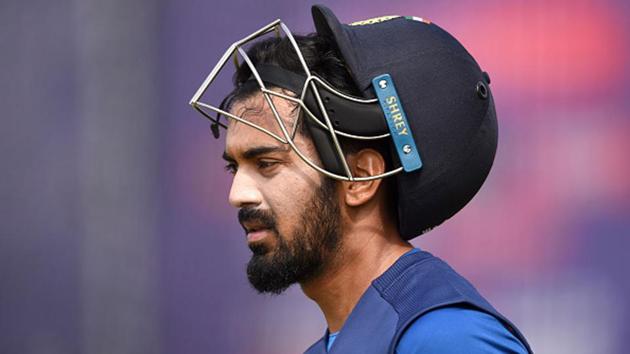
With a hundred in his second Test, in Australia, KL Rahul couldn’t have had a better start to his career. From the time he played in the under-19 World Cup in New Zealand in 2010, he was marked out as a batsman for the long format. He had the qualities for a Test specialist—strong basics, patience and a game plan based on not playing a false stroke.
Two more overseas hundreds in the next four Tests further raised the belief that India had discovered a batsman in the Rahul Dravid mould. Three hundreds in the first six Tests was a dream start.
When Australia toured India in 2017, he rattled off six half-centuries in seven innings, even braving a shoulder injury. Two more half-tons followed in Sri Lanka as the Karnataka batsman became indispensable to the side.
When he returned to Australia in 2018, surprisingly the record and reputation took a tumble. His highest was 44 in three Tests, falling to incoming balls or trying to feel for the ball outside off-stump, signs of a batsman low on confidence.
KL Rahul’s career makes for an intriguing case study. As he gets ready to start a new series in Australia, his Test career is at the crossroads while the one-day career is soaring. Except for a 149 in a lost cause against England at The Oval, he has had nothing to show in Tests in the last two years. At the same time, he has been explosive in Twenty20 and One-day cricket, which means the problem can’t be put down to form.
It reflects in his average—34.59 in Tests (36 games) compared to 47.65 in ODIs (32) and 45.66 in T20Is (42). At the end of the 2017 Sri Lanka tour, his Test average was also close to 50 (46.28). From then on, it has been a steady decline. His returns had started diminishing from the 2018 tours of South Africa and England and the drought continued Down Under.
What has dumbfounded experts is how he is a transformed played when he dons the coloured jersey.
When the limited-overs series kicks off on Friday, Rahul will be among the players to watch. For the first time, he will be seen in a three-dimensional role—first-choice keeper, premium batsman and leader as the vice-captain.
After a good showing at the 2019 World Cup, he extended his excellent form into 2020, rising to meet the team’s every demand. There was a 47, 80 and 19 in the three games versus Australia and an unbeaten 88 and 112 in New Zealand in the three games he played, the last series for India before the global lockdown.
The 28-year-old has warmed up for Australia with a spectacular showing in IPL. With 670 runs, averaging 55.83, he was the tournament top-scorer. A new dimension to his game was seen as captain of Kings XI Punjab. They were written off after a disastrous start but Rahul’s demeanour didn’t change, when the team was losing or when it was on a winning streak. Ultimately, they fought back and narrowly missed a play-off berth.
“I feel, after Virat and Rohit, probably he is one of the players who has the game for all three formats. He has a good defence and attacking shots. He has been consistent, with 600 runs in each edition of the last three IPLs. For the last two years even for India, in T20Is and ODIs he has been so consistent. That is the hallmark of a very good player. He has got a very sound head. Since he was dropped from the Test side, he has improved considerably. This time around, he will be even successful in the Tests,” says Wasim Jaffer, the former India opener who worked closely with Rahul as KXIP batting coach.
Rahul has a proven record in limited-overs cricket. The real scrutiny will begin when red-ball action kicks-off on December 17. Ignored for the two-Test series against New Zealand, there was debate on his selection for Tests based on his IPL showing.
“He is in a very good head space. During IPL, even I spoke to him about getting another opportunity in Test cricket. I just told him to approach it in a very normal way, not look to score quickly, be (too) attacking. When I saw him the last time (on the 2018 Australia tour) I was surprised how he played, he was looking to hit a lot of aerial shots which is not how we have seen him play in Ranji Trophy, or even in Tests. He must have learnt his lessons and will approach the games in a much better way,” said Jaffer, who played on the 2007-08 tour of Australia.
TRANSFORMATION
The rise in limited-overs cricket and slide in Tests started with the 2016 IPL. For the first time, he showed his ability to play big shots. It helped break into the one-day team, two years after making his Test debut.
It was a tough path like his idol Dravid, who was dubbed a long-format player, struggled a lot to prove himself in ODIs, and was even made to keep wicket.
While Dravid improved his limited-overs game, he never compromised on his Test technique. In the 2002-03 World Cup he averaged 63.60, and on the 2003-04 tour of Australia, he amassed 613 runs at an average of 123.80. His ODI and Test records are similar—10,889 runs and 13,288 respectively.
Desperate to shed the Test specialist tag, KL Rahul worked on his batting to suit limited-overs cricket. Suddenly, sixes were flowing in the 2016 IPL—16, apart from 37 fours—as he scored at a strike rate of 146.49 that season.
In the bargain, he might have compromised on his red-ball game, which places a higher demand on technique as the ball moves more. Also, one has to play on a pitch that deteriorates gradually and there are close-in catchers all the time.
Few can be termed all-format players—Kohli, David Warner, Kane Williamson and Ben Stokes standout among the current lot. Even top batsmen like Steve Smith and Joe Root haven’t really cracked the shorter versions but have never compromised on their Test success. Rahul’s case is intriguing because usually batsmen take the opposite route, striving to graduate from white-ball cricket to Tests.
Batting legend Gundappa Viswanath, who has played some delightful innings in Australia, advised Rahul to take his time before going for shots. “This IPL, he looked very good, the best actually. I have got confidence in him. He has already got a century in Australia. The only thing, in the initial stages he has to just stay there, map the wicket and the bowling; then he should be okay. He has all the shots. I am sure he should be able to handle the situation now. He looked pretty good, he is mature enough. Hopefully he gets solid runs there.”


