


 Live Score
 Cricket Teams
 Cricket Players
Kohli, the making of a machine
Team India's former strength and conditioning coach on how Virat Kohli transformed himself, and the team, on his quest for supreme fitness


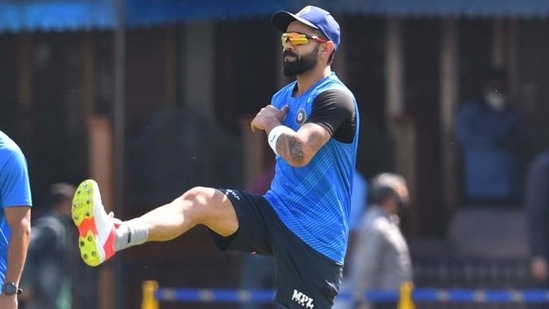
When chroniclers of Test cricket gather to ruminate on the legacy of Virat Kohli, it's a given that his remarkable career numbers will be hard to look past. Adelaide 2014, Mumbai 2016, Centurion 2018, Edgbaston 2018. Classics deserve their pride of place, but what scorecards don’t say is that the trail that Kohli blazed has been paved by years of chiselling his body into supreme conditioning, a transformation that turned his career—and the Indian cricket team— around.
Fitness expert Shanker Basu still remembers his first meeting with Kohli, an unremarkable chat 16 years back at the RSI Grounds in Bengaluru. "He was part of India's Under-19 squad, very promising and talented," said Basu. It took another three years before the two started working together, at Royal Challengers Bangalore. Then came the below-par IPL 2012, leading to Kohli's now-famous moment of epiphany.
"My training was horrible, I ate so bad, I was up until late, I was having a drink or two regularly. It was a horrible mindset. The (IPL) season ended and I was so thankful it was over. I went home, came out of the shower one day and looked at myself in the mirror, and said ‘you can’t look like this if you want to be a professional cricketer',” Kohli said of the time in 2016.
Three years later, in 2015, Basu was appointed as fitness coach for Team India. He was in for a cultural shock.
"I was a bit surprised to see the training methods in the national cricket team," he said. "I come from an athletics background, and a lot of innovations that are part and parcel of training in athletics for years were not even known to cricketers. My first real task was to make them comfortable and earn their trust.
"I told Virat that we need to change the way he trains. He was obviously a bit sceptical, to begin with, but once he was satisfied, he was all in. Every time I introduced him to something, he showed great curiosity to learn. That's what I want from my trainees."
Kohli's transformation was not built just on pumping iron or running endless laps. Basu leaned on his years of experience as a strength and conditioning expert to bring scientific expertise to the training methods. The first step was an accurate, detailed analysis of his body, through a dexa scan. Conducted for the first time in Indian cricket, the scan is a full-body assessment of key parameters such as bone density and fat percentage.
Once he had the data, Basu chalked out a fitness plan for each member of the team. For Kohli, the regimen included heavy lifting—specifically power snatches and power cleans—to engage his entire body and build explosive power.
"Cricket has a stop-start nature. You might be fielding in one corner and nothing happens, and then suddenly you may be needed to put in a sprint. You need explosive power to deliver and also avoid injuries," Basu said. "Virat understood these concepts and decided he wanted to train like an Olympic athlete. When it comes to training, he has the mindset of an individual athlete in a team sport."
The initial days were tough. Back in 2016, Kohli famously told Michael Vaughan in an interview that he wanted to “eat the bedsheet.”
“(I was) off gluten, off wheat, no cold drinks, no desserts, nothing. It was tough. For the first two months I felt I wanted to eat the bedsheet when I went to sleep because I was so hungry. I was craving taste,” he had said.
"It was brutal to begin with," chuckled Basu. "But at no stage did Virat slack off. He wanted to change the way we played cricket, and that included fitness."
Through progressive overload and intelligent load monitoring, the Basu-Kohli tag team went about packing muscle, building power, and shedding fat. That Kohli is not genetically blessed only made the training stricter.
"What he lacked in genetics, he made it up with attitude. I think more than his talent, God has gifted him with the right attitude," Basu said.
The rigorous regimen was complemented by a sea change in diet. The batter was already three years into clean eating when Basu took over, and the latter decided the time was ripe for Kohli to be put on a high protein, low carb diet.
"One man's food is another man's poison. I can't recommend the same diet for all body types. Once we had assessed Kohli’s body composition, we decided to increase his protein consumption."
The results began to show soon after. From a chubby youngster who loved his food, Kohli became a shredded fitness icon. Soon, his fitness mantra spread through the team.
"I think team's performance speaks for itself. He developed a mean bunch of fast bowlers. That was possible because the bowlers heeded to the fitness advice and followed Virat's lead," Basu said. "As captain, he was extra careful of the well-being of his fast bowlers. Both of us believed that fast bowlers are royalty, and must be treated that way."
Not a fan of crash diets for instant gains, Basu chalked out a sustainable plan for Kohli. "No one can continue to be on a diet for life, which means what you eat needs to evolve with time. I put him on a non-vegetarian diet to meet our protein goals, then we went off meat, then he turned vegetarian, then he became a vegan. So, it all depends on what your body needs and how it's responding. The biggest myth in fitness is that you can't meet your protein requirements if you go vegetarian. I understand it may be slightly tough, but certainly not impossible — Kohli is an example."
Kohli's body fat percentage, which had earlier hovered between 12-15 percent, dipped below 10 percent. Basu worked out an ideal median of 9-12 percent body fat for Kohli, and the diet was customised according to the format he was playing. The Test match days were packed with good carbs, healthy fats, and omega-rich foods, while the shorter formats saw lesser fats and carbs intake.
A reduction in fat percentage, if not done right, may also lead to loss of muscle mass. Basu, aware of this precarious balance, kept a close watch on his data sheets. "From the onset, we were not obsessive about fat percentages. I was more interested in building good, lean muscle and ensuring he doesn't lose it. When you build muscles the right way, you'll lose fat as a by-product," he explained.
Kohli’s peak fitness overlapped with his purple patch with the bat. Between 2016-18, he scored 3596 runs in 35 Tests, including 14 hundreds (roughly 50 percent of his career 100s) and eight fifties. It was also the time when YoYo tests, another fitness parameter introduced by Basu, was made a selection criterion. Expectedly, a leaner, stronger Kohli consistently aced those, regularly scoring "around 18."
"The moment we made YoYo tests a benchmark for selection, the attitude of players changed. Everyone started taking these tests seriously and began to put a lot of effort into fitness. It was a mini-revolution, and we must credit Kohli for leading the way. He is a true leader of men."
Come Friday, Kohli will become only the sixth active cricketer to play 100 Tests. The English trio of James Anderson (169 Tests), Stuart Broad (152), and skipper Joe Root (114) occupy the top-three slots, followed by Australia's Nathan Lyon (105) and Ishant Sharma (105). Equally noteworthy is the fact that none of the active cricketers in the 100-Test club play all three formats, barring Kohli. It's a testament to not only his sublime adaptability with the bat but also of an extremely fit body tailored to survive the toil of a relentless calendar.
"We have to be very smart with his training, considering the amount of cricket he plays," said Basu. "I had something called rolling averages which is a six-week assessment of workload and well-being. Then, there is a load monitoring sheet to keep track of output and workload. We used GPS technology for training assessment and analysed the sleep patterns for optimum gains. But, all of that would have come to naught if Kohli was not driven enough. He is the best student one can have. He has enough knowledge to become a trainer himself!"
As Kohli becomes only the 12th Indian cricketer to play 100 Tests, the tough taskmaster has a fresh target for his ward. "A teacher is only as good as his student. Virat was always keen to improve, which is why he has achieved so much. I want to tell him that I will be in the stands when he plays his 200th Test match.”
 ABOUT THE AUTHORShantanu Srivastava
Shantanu Srivastava is an experienced sports journalist who has worked across print and digital media. He covers cricket and Olympic sports.


