


 Live Score
 Cricket Teams
 Cricket Players
Mohsin Naqvi arrives after India's Women's Asia Cup win, presentation delayed; BCCI officials hand over medal
India's Women's Asia Cup trophy presentation was delayed as Harmanpreet Kaur's side refused to accep the silverware from ACC chief Mohsin Naqvi in Dubai again.

 Prefer HTon Google


India’s celebrations after reclaiming the Women’s Asia Cup title were held up by another trophy controversy on Sunday, with Harmanpreet Kaur and her teammates not ready to accept the silverware from Asian Cricket Council president Mohsin Naqvi.
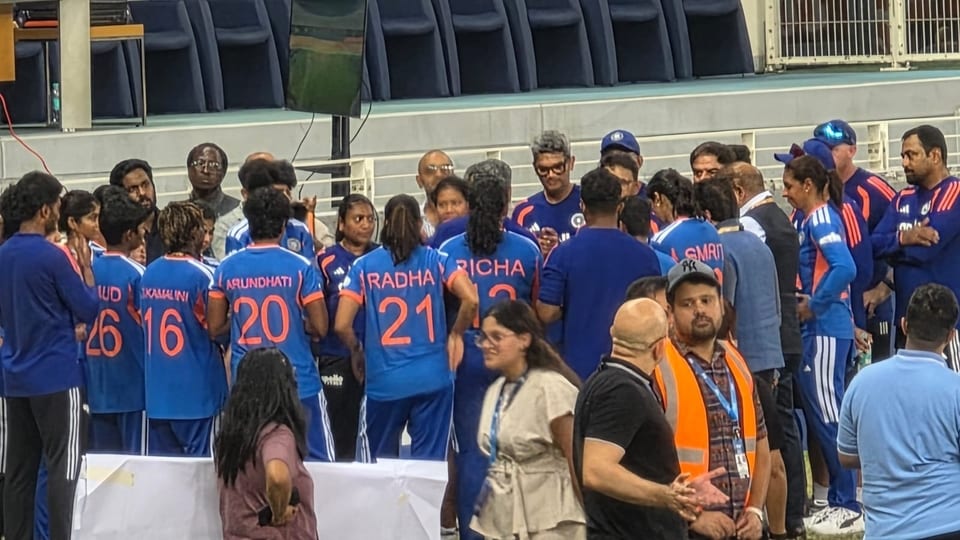
The trophy presentation at the Dubai International Cricket Stadium was delayed by more than half an hour after India completed a dominant 72-run victory over Sri Lanka in the final. The final ball of the match was done by 11:25 PM IST. Even more significant was the fact that the broadcasters interviewed Indian skipper Harmanpreet Kaur immediately. Generally, this interview is kept for the end of the presentation ceremony.
The broadcasters showed visuals of the fielding medal being handed over to Nandini Sharma by BCCI officials. This further confirmed that there was a stand-off or impasse regarding the ceremony. After a couple of minutes, the ceremony started. But the Indian team could not be seen anywhere; they were in the dressing room. Farvez Mahroof confirmed the development as he concluded the ceremony without the trophy being presented to the champions.
Naqvi, who is also the Pakistan Cricket Board chairman and Pakistan’s interior minister, was present at the ground and was expected to be involved in presenting the trophy to the champions. However, India were not prepared to receive the trophy from Naqvi, creating a fresh impasse almost a year after the men’s team took the same position following their Asia Cup triumph at the very same venue.
Deep Dive

The possibility of such a situation had been hanging over the Women’s Asia Cup even before the final. Naqvi’s expected attendance had raised questions over what India would do if Harmanpreet’s side won the competition, given the precedent established by Suryakumar Yadav’s team in September 2025.
India eventually made that scenario a reality by overwhelming defending champions Sri Lanka. Shafali Verma hammered 68 off 39 balls while Smriti Mandhana scored 59 off 39 as the openers shared a 129-run stand to propel India to 183 for five. Sree Charani then claimed four wickets and Deepti Sharma picked up three as Sri Lanka were restricted to 111, handing India a record-extending eighth Women’s Asia Cup crown. But even after the cricket was finished, India were left waiting for their trophy.
Repeat of extraordinary 2025 Asia Cup drama
The situation immediately revived memories of one of the most unusual presentation ceremonies in international cricket. India’s men defeated Pakistan by five wickets in the 2025 Asia Cup final in Dubai but refused to receive the trophy from Naqvi.
The Indian team had made it clear that it did not want the ACC president, who holds senior positions in Pakistan’s cricket administration and government, presenting the trophy. India were instead prepared to receive the silverware from another official, but Naqvi insisted on handing it over himself.
The resulting deadlock delayed that presentation ceremony for more than an hour. Eventually, the individual awards and runners-up prizes were handed out, but the Asia Cup trophy and winners’ medals were not presented to India.
Naqvi and the trophy subsequently left the presentation area, while Suryakumar’s side celebrated their title without the actual silverware. The Indian captain and his teammates famously mimicked lifting an invisible trophy during their celebrations on the podium.
BCCI secretary Devajit Saikia later publicly criticised the episode, confirming that India had taken a conscious decision not to accept the trophy from the ACC chairman. The board also objected to the trophy and medals being taken away rather than being handed to the champions through an alternative official.
The dispute did not end with the presentation ceremony. The trophy remained at the centre of a prolonged tussle between the ACC and the BCCI, ensuring that the incident continued to follow Naqvi long after the tournament had finished. Less than a year later, the same personalities and almost the same circumstances have collided again.
This time it is Harmanpreet’s India who are waiting after becoming Asian champions. And with Naqvi again present at the Dubai International Cricket Stadium, India’s position has remained unchanged — they are champions of Asia, but they are not ready to take the trophy from his hands.


