


 Live Score
 Cricket Teams
 Cricket Players
Pakistan's blame culture put on trial after dismal show in T20 World Cup: ‘There is always a demand to punish someone’
Aaqib Javed defends Pakistan's selection committee amid criticism following the T20 World Cup exit, arguing against scapegoating.

 Prefer HTon Google


Aaqib Javed has launched a forceful defence of Pakistan’s selection committee and the team’s recent record, arguing that criticism after every major setback has turned into a destructive obsession with finding someone to blame.
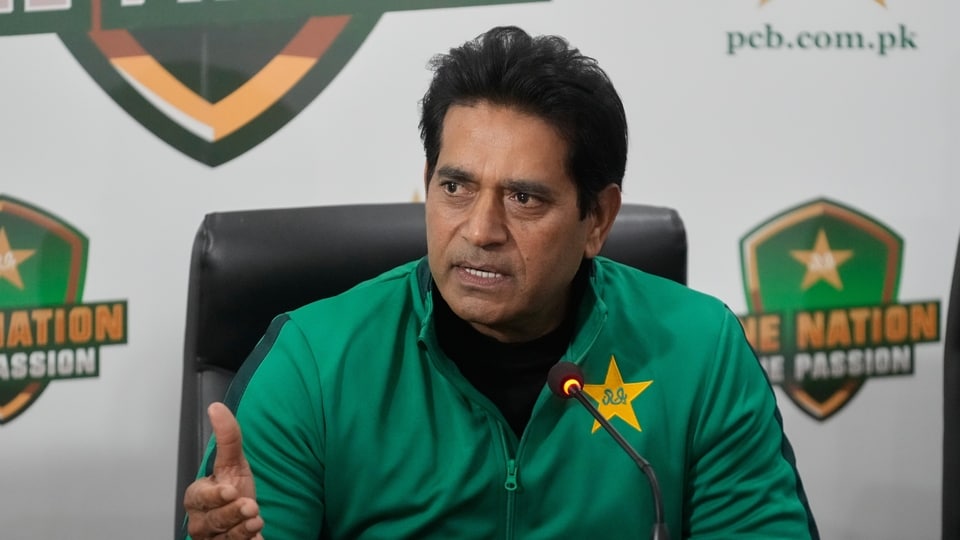
Speaking at a press conference in Lahore, where the selectors had no squad to announce, Aaqib pushed back against the fallout from Pakistan’s T20 World Cup exit, insisting the team’s campaign had not been poor enough to justify claims that Pakistan cricket had been “destroyed”. All members of the men’s selection committee were present, and the PCB later said chairman Mohsin Naqvi had met them and expressed full confidence in their work.
Aaqib Javed hits back at Pakistan cricket’s blame culture
“In our setup, whenever a team loses, there is always a demand to punish someone,” Aaqib said. “It happened at the previous World Cup, then the Champions Trophy, and the Asia Cup. Whenever we lose, we'll go over the top, demanding the whole team, coach or selectors be changed. The way we change coaches and selectors never happens anywhere else in world cricket. We'll have to move past scapegoating people.”
That was the central message of Aaqib’s appearance. Pakistan may have now gone four straight ICC men’s tournaments without reaching the last four, but he was determined to frame the reaction as excessive rather than justified. The selectors, too, appeared keen to present a united front, with Misbah-ul-Haq and Sarfaraz Ahmed attending as members of the panel after their recent appointments.
Aaqib also tried to build a broader case around Pakistan’s results over the last 18 months. “Overall, if I view the Pakistan team since I've come here, we beat England in a Test series, which no one even dreamed of. We won an ODI series in Australia after 27 (22) years. We then beat South Africa 3-0 in South Africa (in ODIs), which no one has ever done. We let the Centurion Test slip through our fingers, and should have won it.”
He did concede one major failure. “Then came the Champions Trophy, which I admit was a disaster,” he said. “Until then, the team's performance was going well.”
“We lost just one game”: Aaqib Javed
Aaqib Javed’s most provocative defence came when he downplayed the scale of the T20 World Cup disappointment. “The India-Pakistan match is important for us, but we have never beaten India in a World Cup. It is 8-0 (8-1 in T20 World Cups). The best captains from 1975 onwards have played them, including players from all generations, and we've never beaten India; the result is 8-0. Set that aside.”
He then added, “We qualified for the second round, and we lost only one game against England. Did anything else happen? It was not possible to win by that margin against Sri Lanka, which we required. We lost just one game, and only missed out due to net run rate. It's not so big an issue to say our cricket has been destroyed.”
The next selection calls will come after PSL 2026, with Bangladesh Tests on the horizon. For now, though, Aaqib has made one thing clear: the selectors are not backing down.


