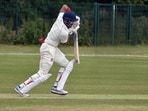
Renowned for his athletic stance, crisp strokeplay, and unmatched versatility, Alec Stewart stood as the heartbeat of English cricket throughout the 1990s. Hailing from Surrey as the son of former England cricketer Micky Stewart, the right-handed powerhouse seamlessly bridged the gap between top-order specialist batter and elite wicketkeeper. Stewart possessed a sparkling cover drive, exceptional back-foot control against raw pace, and a warrior mindset that allowed him to adapt effortlessly whether opening the batting or slotted in the middle order with the gloves.
Stewart approached the game with unwavering professionalism and an intense fitness regimen, establishing a benchmark for athletic endurance long before it became standard across the international stage. In the field, his swift footwork and clean glovework made him a premier wicketkeeper, accumulating 277 dismissals in Test cricket alongside 159 catches in One-Day Internationals. Beyond his primary roles, his tactical mind made him a natural leader, eventually serving as England's captain across both Test and white-ball formats in the late 1990s.
His international career was illuminated by moments of pure brilliance against the world's most feared bowling attacks. In 1994 at Bridgetown, Barbados, Stewart etched his name into English cricket lore by scoring twin centuries (118 and 143) against a lethal West Indies pace battery, joining an elite group of English batters to score hundreds in both innings of a Test match. Another career peak arrived on his 37th birthday in 2000, when he scored a memorable 105 against the West Indies at Manchester in his 100th Test match, sending the home crowd into raptures.
In limited-overs cricket, Stewart was a tactical pillar across three World Cup campaigns (1992, 1996, and 1999). Operating in the middle order and taking the gloves, he helped guide England to the final of the 1992 World Cup, before later transitioning to open the batting in subsequent tournaments. His domestic loyalty to Surrey was total, representing the county across three distinct decades and captaining them to multiple County Championship titles alongside domestic trophy sweeps. He concluded his international career at the end of the 2003 Test series against South Africa, receiving a standing ovation at The Oval after becoming England's most capped Test player at the time.
His outstanding services to the sport were celebrated with national honours, including being named one of the Wisden Cricketers of the Year in 1993, appointed an MBE in 1998, and elevated to an OBE in 2003. Retiring with 8,463 Test runs and 15 centuries across 133 matches, Stewart remains revered as a selfless workhorse and a true icon of English cricket.


 Live Score
 Teams
Teams Players
 ENGLAND
 IND
IND PAK
PAK WI
WI England
 England
 Surrey
 Experience
 Very Bad
 Bad
Bad Ok
Ok Good
Good Excellent