


 Live Score
 Cricket Teams
 Cricket Players
Succession: controversy and the Indian cricket captain
The most important post in Indian sport comes with its share of drama, power struggles and complex relationships.


Being India’s cricket captain has always meant much more than being a sporting leader. A position that signifies clout, catapults brand image and has larger than life appeal has thrown up plenty of drama in the past. As India looks ahead to a leadership change with Virat Kohli likely to give way to Rohit Sharma in T20I’s after the upcoming World Cup, here's a look back at some of the most complex, tense and difficult relationships between leaders in the Indian dressing room.
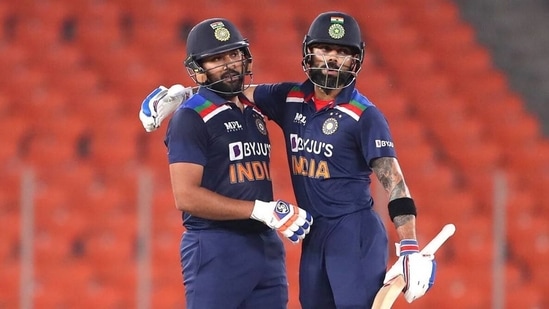
Virat Kohli-Rohit Sharma: social media wars
After retirement, Sachin Tendulkar named two young batting stars - Rohit Sharma and Virat Kohli to carry his legacy forward. Neither have let the great man down. However, as is often the case, the two standout batters in the side also became leadership contenders. They have also had their share of trouble with each other.
While Kohli has been India’s all-format captain, Sharma has continued to attract attention of the national selectors with his tactical acumen. As Kohli rallied the Indian Test team to glory, Sharma found his calling as skipper of Mumbai Indians in the IPL. Sharma’s leadership got rave reviews as he led MI to five IPL titles, while Kohli failed to win one in nine seasons as captain.
A couple of years back, the two reportedly had a falling out. There were veiled messages on social media from friends and families of both players that suggested a rift, even as the players themselved denied that there was any problem.
All the while, Kohli flourished as captain. His overtly aggressive brand of play steered his desire to make India a leading Test nation. His batting stocks zoomed while Sharma took longer to crack the Test code. But Championship success in IPL and ICC events remained elusive for Kohli. Not everyone in the change room were at peace with his frequent team changes, particularly in Test cricket.
Sharma’s easy-going leadership was for all to see in the titles he won for India in Kohli’s absence in 2018. After Asia Cup success, Sharma signaled his intentions. “Whenever the opportunity comes, I will be ready,” he said.
After a peace reportedly brokered by BCCI and head coach Ravi Shastri, there has been visible synergy between the two, with Sharma now a part of the team management. In the last twelve months, Sharma has begun to understand the beats of Test cricket. Coincidentally, this is also the time Kohli has lost a lot of his all-format consistency with the bat. He recently announced that he would end his T20 reign as India captain after the upcoming World Cup. Sharma’s time may have finally arrived, and if the selectors do hand him the ODI reigns as well, it could mark another chapter to a fairly complex relationship between two supremely gifted performers.
Sourav Ganguly-Rahul Dravid: the Chappell years
Sourav Ganguly and Rahul Dravid played a lot of zonal age-group cricket against each other and began their India journey in the same 1996 Test match at Lord’s where both of them excelled. After the bonhomie of younger days, they had many tense moments towards the latter half of their India career.
When Ganguly first became India’s full-time captain in 2000, he voted for Dravid to be his deputy. Together with Dravid and coach John Wright, India stopped the victory march of Steve Waugh’s great side in 2001 at home, won a Test match in West Indies, squared a Test series in England and Australia, won a Test series in Pakistan in 2004, apart from reaching the final of the 2003 ODI World Cup. But towards the end of 2004, Ganguly’s batting form began to desert him, up until late 2005 when he finally lost the captainship to Dravid.
The events leading up to this change of guard made for a full-scale soap opera. It began with head coach Greg Chappell early in his tenure suggesting to Ganguly that he should step down as captain to focus on his batting. Ganguly made the coach’s suggestion public. Things came to such a pass that Chappell wrote to the BCCI accusing Ganguly of dividing the team to protect his place and captainship. Soon, Ganguly got the sack as captain. Dravid said nothing publicly, but all along Ganguly felt betrayed.
The drama continued in the 2006 Test series in Pakistan when captain Dravid, Ganguly and Chappell were captured by cameras having animated mid-pitch discussions in training. Chappell reportedly wanted Ganguly to open against Shoaib Akhtar and co. Ganguly was seen giving a piece of his mind to Dravid, Chappell looking on. Indian cricket’s Chappell years were marred by divisions within the side. Ganguly felt he was wronged by Chappell and accused Dravid of “not having the guts to stop the coach”.
Years later, Ganguly and Dravid have now joined forces again at the BCCI. Dravid is in charge of the supply line to Indian cricket at the National Cricket Academy, while Ganguly is the board president. They can perhaps now afford a chuckle looking back at those tumultuous years.
Mohammad Azharuddin-Sachin Tendulkar: the dark years
Their tense relationship in the late 1990s was not really about a leadership tussle, but something more sinister. Tendulkar, appointed skipper in 1996 at the age of 23, was expected to extend his batting genius to captaincy and emulate the only younger skipper India has had—Tiger Pataudi took charge at 21 and presided over India’s first series victory abroad and promoted the famous spin quartet.
Tendulkar was already on the road to becoming an all-time batting great but Rahul Dravid, Sourav Ganguly and VVS Laxman were only starting out when he took over. The others not being in synch and delivering, in keeping with his fierce determination to excel, seemed to affect the young skipper. He also was dealing with the unbearable pressure of expectations as a batsman in the cricket world. Tendulkar took over from Azharuddin after India’s exit in the 1996 World Cup following a controversial semi-final defeat in Kolkata, to head a team with many players who had grown under Azhar’s leadership. After his first term of 17 Tests as skipper, the selectors surprisingly brought back Azharuddin as skipper in 1998-97 to let Tendulkar focus on batting. There was an air of mistrust in the Indian team environment amid allegations of corruption in the game. Azhar not being selected to play in Australia on the 1999-2000 tour amidst this also became a controversy. The CBI cricket match-fixing probe report released in October, 2000 led to an internal BCCI inquiry. It resulted in bans to four India players, with Azharuddin and Ajay Sharma handed life bans for corruption in the game. Azhar’s ban though was lifted by the Andhra High Court a few years ago. The tumult saw Tendulkar resign as captain for a second, and final, time and Sourav Ganguly appointed in late 2000 with John Wright brought on board as the first foreign coach of the Indian cricket team.
Sunil Gavaskar- Kapil Dev: out of the XI
Two all-time greats, one among the finest openers Test cricket has seen and the other independent India’s pioneering pace bowler and among the top all-rounders of his generation. One a technically gifted batsman who boosted the image of Indian cricket with his batting and professionalism—Gavaskar—and the other whose athleticism and flair in batting and bowling—Kapil—charmed millions of fans. Many saw their contrast in personalities symbolising the method of West Zone players and a more carefree approach by their North Zone counterparts. The India captaincy changed hands a few times between two players who finished as India’s most capped in Tests. Kapil led in 34 of the 131 Tests he played, across 1983 and 1985-1987. Interestingly, his last Test as captain was in March, 1987, the sensational game in Bangalore on a rank turner against Pakistan that India lost narrowly. It was also Gavaskar’s farewell game. Gavaskar, senior to Kapil as an India player by eight years, was skipper across nine years (1976 to 85). He led in back-to-back tours of Pakistan, in 1982 and 1984 involving eight Tests, but it was a young Kapil who led the country to glory at the 1983 World Cup.
What is seen as friction between Gavaskar and Kapil, and definitely one of Indian cricket’s biggest controversies, happened in 1984 when the young all-rounder was seen to have played a reckless shot to be dismissed in the Delhi Test, which England won to level the series. They would go on to win the series. The unthinkable then happened. Kapil was dropped for the next Test in Kolkata, enraging Eden Gardens fans, who held up posters that said No Kapil, No Test. Gavaskar though has since clarified that although he was in the selection meeting, he did not have a vote and did not call for Kapil’s axing. He has said it was a selector who wanted Kapil to be dropped as punishment for his Delhi Test dismissal. Gavaskar has said his relationship with Kapil was rooted on respect, rejecting any claim he had a poor relationship with a fellow Indian cricket legend. The latter too has said more than once that he has had no issues with Gavaskar.
 ABOUT THE AUTHORRasesh Mandani
Rasesh Mandani loves a straight drive. He has been covering cricket, the governance and business side of sport for close to two decades. He writes and video blogs for HT.Read More
- ABOUT THE AUTHORN Ananthanarayanan
N Ananthanarayanan has spent almost three decades with news agencies and newspapers, reporting domestic and international sport. He has a passion for writing on cricket and athletics.Read More


