Two full tours of England and Australia make 2021 a marquee year for Indian women’s cricket. There is still a long way to go though. From equal pay to a longer domestic schedule, more international tours per season to a bigger T20 tournament that runs parallel to IPL, women’s cricket could do much better. Despite the administrative shortcomings to address this apathy, our women are doing a remarkable job to put India on the map in the top T20 franchise leagues around the world.
Unfair cut: BCCI blocking male cricketers from overseas T20 leagues (FILE IMAGE)
Last Friday, Richa Ghosh became the seventh member of the India side touring Australia to sign up for the Women’s Big Bash League. She joined Hobart Hurricanes, after Smriti Mandhana and Deepti Sharma (Sydney Thunder), Shafali Verma and Radha Yadav (Sydney Sixers) and Jemimah Rodrigues and Harmanpreet Kaur (Melbourne Renegades). The tribe is increasing since Kaur became the first Indian to play in the WBBL in 2016. They also touched base with England this year with five Indian women playing in The Hundred. This is proving to be a unique experience for the women, which their male counterparts can only dream of.
It’s a strange situation. The Board of Control for Cricket in India (BCCI) gives a free hand to women, which is welcome, but does not allow their male counterparts to play in overseas leagues unless they are retired and no longer have any contract. Among the few thousands of men playing professionally, the top 28 hold central contracts. Around a hundred more have IPL contracts but the incomes can change drastically every season. Both barely make 1% of the lot. The rest live paycheck to paycheck, relying on match fees that vary according to formats.
CHAND MOVE TO US
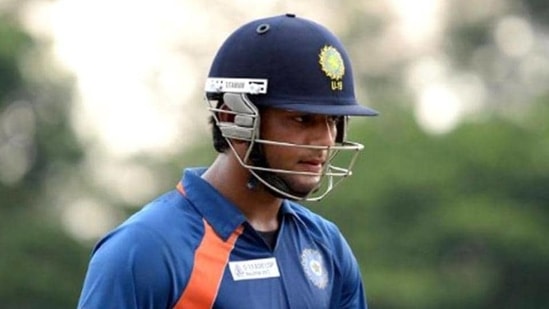
Most have no contractual security. An injury can not only pause careers but also incomes. Some face worse predicaments. This August, at the age of 28, U-19 World Cup winner Unmukt Chand retired from Indian cricket to play league cricket in the US. Having started his career with Delhi, Chand was playing for Uttarakhand as a professional when he took the decision. Had it not been for BCCI’s diktat, Chand could have possibly continued playing domestic cricket while trying his luck in leagues around the world. But he had to sever all relations with Indian cricket to continue doing his job—playing cricket.
There are many seasoned cricketers who could be a handful in foreign leagues but are not allowed. Suresh Raina raised this point last year. “I hope BCCI can get together with ICC (International Cricket Council) or with franchises and allow players who don’t have BCCI contracts to play in overseas leagues,” he said during an Instagram chat with former India all-rounder Irfan Pathan. “I feel there are a lot of players, including Yusuf (Pathan), myself, Robin Uthappa—who can go overseas and learn a lot, no matter which league. We aren’t in BCCI’s contracts list, some of us don’t have IPL contracts, we aren’t playing international cricket, and the competition in domestic cricket isn’t what it is at the international level,” Raina said. “If we can get three months of quality cricket, whether it’s CPL (Caribbean Premier League) or Big Bash (League) or any (other) league, it can help us stay ready. Players from other countries are able to play in these leagues, and a lot of them have made international comebacks after doing well in them. We play IPL, but if these people (administration) have a pool of 40-50 players, they think those outside it aren’t good enough or are past it, and neglect them. We don’t have a Plan B. If we go overseas and perform, our cricket will improve and we’ll get to learn a lot.”
Many overlooked cricketers harbour dreams of playing for India and going out with a bang. All they get in terms of preparation though is IPL and Syed Mushtaq Ali T20 tournament. It might seem a lot, but isn’t. At the domestic level, many veterans often hesitate to occupy a place that could have gone to an upcoming cricketer. And with so many youngsters vying for seven Indian spots in the eleven, IPL can provide a reality check for them. The only way opportunities can open up is if Indians are picked as overseas players in a franchise league.
MISSING THE MONEY
Considering the planning and the investment that goes into every draft pick, they are assured of more chances that way. What should also not be overlooked is the potential earnings an out-of-central-contract player is missing out on. With sponsorships drying up with little left in the tank, ageing cricketers like Raina can’t be faulted for wanting to make the most every season. On a BBC podcast last May, Uthappa pleaded with BCCI to lift the bar on non-contracted cricketers. “I am standing in front of the BCCI like this (hands folded and pleading) saying “please let us go, Please let us go, honest to god.” It does hurt when we’re not allowed to go and play. It would be so nice if we could go and play at least a couple of others (leagues) because as a student of the game you want to learn and grow as much as you can.”
India has the best domestic cricket structure in the world and a senior men’s cricket team that is making waves in every format around the world. It is home to the most successful T20 league that many overseas players are willing to give an arm and a leg to play in. While BCCI is eager to attract the best foreign talent, it refuses its own to be a part of the worldwide pool. It’s BCCI’s shortsightedness that it does not export its best talent while overseas players come to India season after season and use that experience later on international tours. At another level, it’s a high-handed ploy to monopolise the best talent as IPL money-spinners or centrally-contracted specialists. Either way, Indian cricket is yet to be globally evaluated in the market of franchise-controlled leagues.
Imagine the anticipation watching Jasprit Bumrah set up batters in a shirt that’s not the Mumbai Indians’ deep blue. Or the visual treat Virat Kohli would provide going about a tough T20 chase on a fast, seaming Old Trafford pitch for Manchester Originals? How about a Rohit Sharma special on a rock-hard Perth pitch against Brisbane Heat? We have seen the reception Indian women cricketers have got, the hype they have generated in England and Australia. Why not allow men into the mix and make India a true cricketing superpower with supply lines to every major T20 league? Why can an Indian cricketer play County in England but not in The Hundred if he is a white-ball player without a BCCI contract?
With no players’ association to drum up their cause like in England and Australia, the silence on this issue is deafening. Prominent cricketers shy away from taking a stand because of the stakes involved. Other boards may pay their contracted players less than BCCI but they don’t deny cricketers the right to an honest means of living, at home or abroad. The Indian cricketer though stands robbed of that right. BCCI is the world’s richest cricket board but has still not been able to roll out annual retainers for domestic players in every affiliated association.
So, when a pandemic hits the country, a state-level cricketer is made to wait a year or more to get 50% match fee as compensation but will invite the wrath of the board by playing a T20 tournament abroad to feed his family. Is that fair?
Somshuvra Laha is a sports journalist with over 11 years' experience writing on cricket, football and other sports. He has covered the 2019 ICC Cricket World Cup, the 2016 ICC World Twenty20, cricket tours of South Africa, West Indies and Bangladesh and the 2010 Commonwealth Games for Hindustan Times.Read More


 Live Score
 Cricket Teams
 Cricket Players