


 Live Score
 Cricket Teams
 Cricket Players
Virat Kohli’s return to Test cricket: A nonsensical move that risks damaging his legacy and what he has left to give
Rumors of Virat Kohli's Test comeback in 2026 highlight the risks involved. His legacy is already solid, but a return could lead to scrutiny and debate.

 Prefer HTon Google


The whispers about Virat Kohli's Test comeback have started again. A brilliant run in the ODIs, a nostalgic clip here and there, and the social media quickly turns into a storyline: Virat Kohli, back in whites in 2026. But Test cricket doesn’t reward storylines. It rewards evidence, repetition and scrutiny – and a late-career return would put the end of Kohli’s Test arc back under the harshest light, with far more to lose than gain.
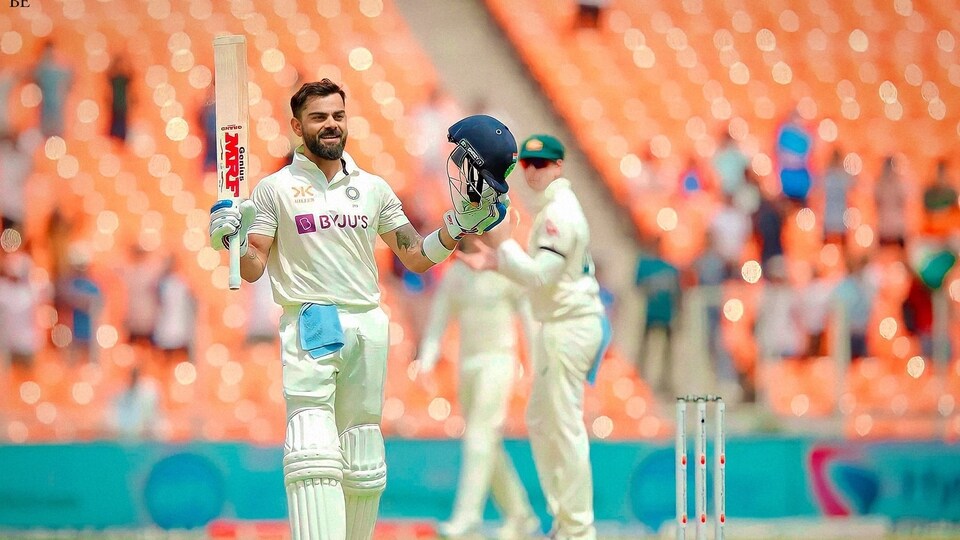
Kohli’s legacy is already sealed in whites. He didn’t step away from Tests with unfinished business. He left with 9,230 runs in 123 Tests, including 30 centuries and 31 fifties – numbers that place him firmly among India’s greatest red-ball batters. His captaincy record is even more defining: 40 Test wins from 68 matches as captain, India’s most successful Test captain by wins.
He retired as the fourth-most successful Test captain overall, behind only Graeme Smith, Ricky Ponting and Steve Waugh. Add in several double hundreds, and the core legacy is complete. That is the first reason why a 2026 return is risky: there is very little legacy upside left to chase. You can’t reopen a completed chapter without inviting people to re-read it differently.
The Lionel Messi comeback and why the analogy doesn’t fit Kohli
When we look at the comeback of legends after retirement, Lionel Messi’s case is the easy reference point. He announced he was done after Argentina lost the Copa America final in June 2016, then reversed course soon after. But that episode was born out of immediate disappointment and raw emotion. Kohli’s Test retirement in May 2025 was framed as a decision that “feels right”, after 14 years in whites. That difference matters: a reversal after an emotional announcement can be explained as healing. A reversal after a measured exit invites a tougher question – what changed, substantively?
Why the romance breaks in Test cricket
Comebacks promise the best version of a player on demand. Tests rarely cooperate. The format is an audit: it isolates tiny technical drift, magnifies small decision errors, and punishes repeated weakness. For a batter of Kohli’s stature, a return would not be judged gently. Every low score would be framed as a decline, every series a selection debate. Late-career reputations don’t usually get collapsed – they get chipped.
Why did he step away?
The strongest argument against a return is also the least sentimental: Kohli’s Test decline wasn’t a short slump that needed one more run to fix. The trend line stretched across years. Virat Kohli’s batting average from 2011 to 2019 works out to be about 54.98. From 2020 to 2025, it drops to about 30.73. That is not a marginal dip – it is the difference between a generational peak and a prolonged struggle in the same format. This reframes his retirement as a matter of timing, not temperament. It aligns with the sense that he wasn’t pushed out by a single bad match or a series, or by external factors beyond his control. He probably recognised that his Test game had been fighting the format for way too long rather than mastering it.
ODI runs are not a passport back into Tests
The pro-comeback pitch often starts with a simple line: if he’s scoring in ODIs, why not Tests? The problem is that ODI rhythm and Test rhythm do not share the same cost.
ODIs reward Virat Kohli’s strengths that remain highly repeatable: tempo control, strike rotation and match awareness. Tests demand something harsher - hours of leaving the ball, defending, absorbing the pressure of continuous nagging line and length, and constantly choosing patience when your instincts want release. The ball does more, fields stay attacking for longer, and bowlers get time to set traps.
A Test return in 2026 would also sit inside a packed calendar. The danger isn’t only that the comeback fails; it’s that the attempt forces technical tinkering and mental churn that spill into the one format where he looks most in control right now. What’s worse? For everything you know, a return to Tests could affect his ODI game, and thus hurt his preparations for the 2027 World Cup.
India rarely does Test-retirement U-turns… and the exceptions are telling
Indian cricket has historically treated Test retirement as close to final. Once you announce you’re done, the team moves on. There have been rare reversals. Javagal Srinath, for instance, offered to retire from Tests in 2002 and later returned from the home West Indies Test series that year. But that example is instructive: it’s remembered because it’s unusual, and it didn’t become a new extended chapter. It was a brief deviation, not a second act.
Kohli’s stature makes this sharper. A reversal would become a national referendum on what retirement even means. And that referendum would be played out on his scores.
What does a Test return actually achieve?
This is where the risk-reward ledger gets brutal. Best case scenario: he returns, looks solid, maybe produces one signature stint, and exits again. It is a satisfying moment, but it doesn’t meaningfully lift a legacy that already includes plenty of runs and India’s greatest Test captaincy record by wins.
Worst-case scenario: the format exposes old problems, the numbers don’t improve, and the ending gets repainted as a decline story, while the added workload and pressure start nudging his ODI rhythm. Between those extremes sits the most realistic outcome: a mixed run that invites noisy debate and leaves his Test legacy no clearer than it is now, only more contested. In legacy terms, restraint is the more powerful ending. Leave the whites as a finished portrait, not a canvas reopened for correction.
Also Read: Team India breaks silence on Sanju Samson's dwindling returns ahead of T20 World Cup: ‘Main focus is…’
How have some stars fared on coming out of retirement?
International comeback shows how messy the last stretch can get. There are examples of returning to Tests rarely going clean, cinematic things fans imagine. Ben Stokes is a useful modern reminder that returning often has more to do with timing and survival than with romance. In July 2021, England’s all-rounder stepped away from all cricket for an indefinite break to prioritise his mental wellbeing, while also continuing his recovery from a left index-finger injury, pulling out of a high-profile home Test series against India in the process. When he was later added back to England’s Ashes squad that October, Stokes himself framed it in practical terms: he had taken time out to protect his mental health and got his finger sorted, before feeling ready to return. The takeaway is uncomfortable but real: even elite-level returns are usually managed by damage control - health, workload, headspace.
Sri Lanka’s Wanindu Hasaranga came out of Test retirement to be named for a Bangladesh series in 2024 - only to be suspended for that very series, a reminder that comeback plans can unravel instantly. Go further back, and you find Bob Simpson’s famous return at 41 during World Series Cricket: he came back, made runs, even captained successfully, but the second act still carried turbulence and uneven returns. That pattern is consistent: comebacks tend to be messy, closely managed, and often remembered for what they exposed, not what they restored.


