


 Live Score
 Cricket Teams
 Cricket Players
Virat Kohli's journey to 52 ODI centuries: From chasing Sachin Tendulkar to owning the all time 100s record
Virat Kohli scored his 52nd ODI Hundred, going past Tendulkar's 51 in Test cricket to have the most centuries in one international format.

 Prefer HTon Google


Virat Kohli walked off the Ranchi field with the bat raised, the helmet tucked under his arm, and a number that almost doesn’t look real anymore - 52 ODI Hundreds. The latest was a sculpted 135 off 120 balls in his 306th ODI, an innings that turned a tricky first ODI against South Africa into another familiar tale of India leaning on their number three.
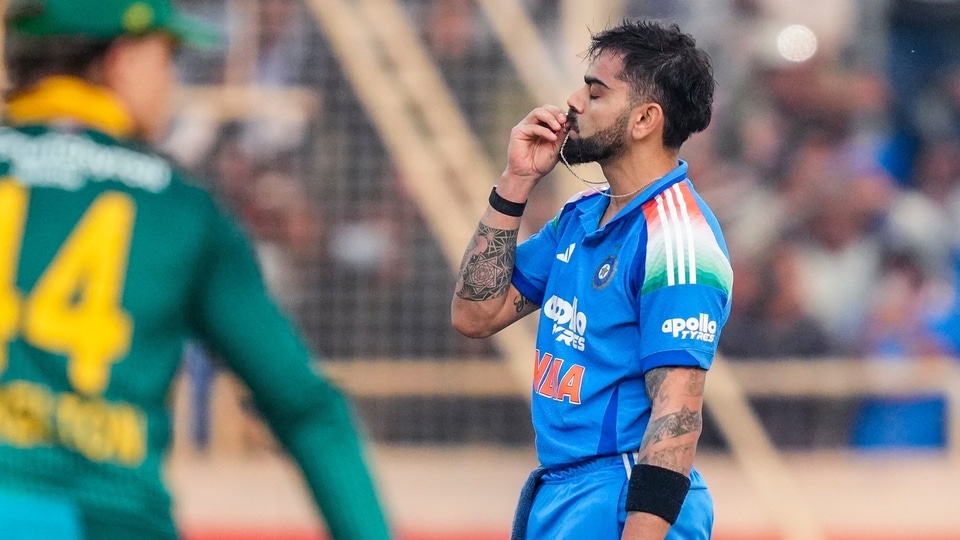
With this, Virat Kohli moves to 14,390 runs in 294 innings, and he isn’t just extending a record - he’s stretching it into another postcode. No one else has even touched 50 in this format. He is now three clear of Sachin Tendulkar’s 49, and also ahead of Tendulkar’s 51 in Tests for most Hundreds by any batter in a single international format.
A single-format record that now belongs only to him
Kohli’s 52nd ODI hundred does two things at once.
One, it further distances him from the pace in ODI centuries. Sachin Tendulkar (49), Rohit Sharma (33), and the rest are now chasing a man who continues to score Hundreds even in the “back nine” of his career.

Two, it pushes him past Tendulkar’s 51 Test Hundreds as well, which means Kohli now holds the outright record for most centuries in a single format across men’s international cricket. Tendulkar needed 452 ODI innings for his 49; Kohli has touched 52 in just 294.
Sachin Tendulkar: 49 ODI 100s in 452 innings - 1 hundred every 9.2 innings.
Virat Kohli: 52 ODI 100s in 294 innings - 1 hundred every 5.6 innings.
That efficiency gap is ridiculous. For a generation that grew up believing Tendulkar’s numbers would never be matched, Kohli hasn’t just matched them - he has normalised a different scoring frequency altogether.
Form chase master to two-gear run machine
In his early and mid-career, Kohli’s ODI legend was built on chases. The template was simple: target on the board, Kohli at number three, tempo under control, finish line crossed on most occasions.

The newer phase of his career has subtly changed the story. A lot of these tons have come batting first, where he is not just stabilising but also accelerating, often batting deep into the 40th over and beyond. The Ranchi 135 (120) fits right into that pattern: start in the first gear, soak up the new ball, hit cruise control in the middle overs and then flip the switch once he is set.
Also Read: Virat Kohli’s death stare after Gautam Gambhir’s subdued celebration of Rohit Sharma’s fifty gets the internet riled up
The second peak after drought

There was a time, not very long ago, when the running joke was that Kohli’s hundred had dried up. Between mid-2019 and late 2022 he went through a long spell without a ton, and everything from age to IPL fatigue to technical decline was blamed.
Look at the record sheet from there to today and you see something else: a second peak. Since, breaking that drought, he has stacked up World Cup hundreds, piled runs at home again, and now another century against a strong attack. This 52nd hundred comes in the late-career, high-pressure, expectation-max phase - and his average and strike rate are still elite.
For India, that’s huge beyond the romance of numbers. With Rohit Sharma slowly moving towards the back end of his career and middle order still in flux, Kohli’s consistency at number three is the stabilising line in every long-term World Cup plan. He is no now the scaffolding wound which India should build their batting identity in the marquee tournament.


