


 Live Score
 Cricket Teams
 Cricket Players
What is stopping the Ravindra Jadeja and Sanju Samson swap? IPL trade rules and regulations explained
The potential CSK-RR trade involving Sanju Samson, Ravindra Jadeja, and Sam Curran faces legal complexities under IPL rules.

 Prefer HTon Google


Chennai Super Kings wanting Sanju Samson as their next face of the franchise is a story in itself. Throw Ravindra Jadeja and Sam Curran into the mix, and suddenly you have what feels like the biggest trade the IPL has ever been. A superstar all-rounder possibly leaving CSK after more than a decade, the Rajasthan Royals’ captain switching to yellow, and an England all-rounder as the third piece of the puzzle.
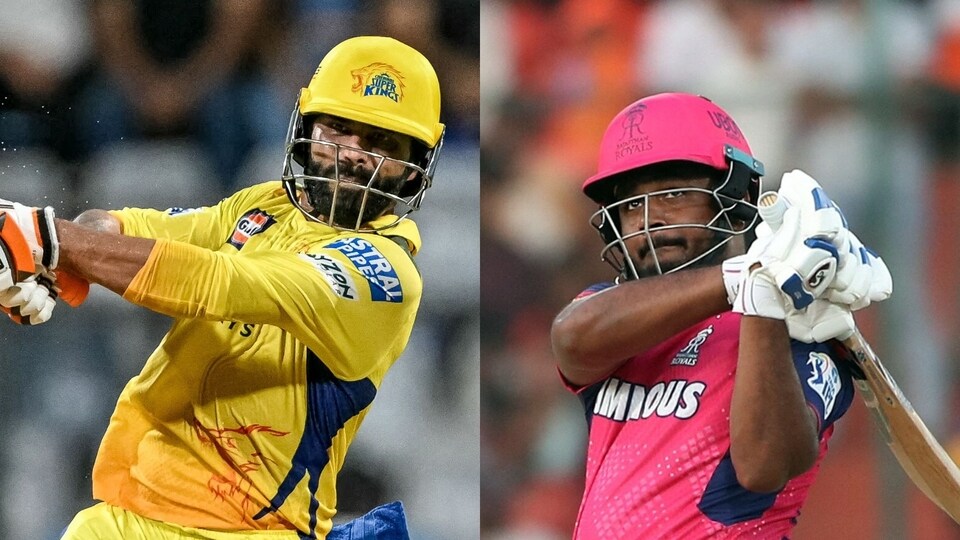
But for all the excitement, this CSK-RR swap is crawling through a maze that’s a lot less emotional and a lot more legal: the IPL’s trade rulebook. The Jadeja-Samson-Curran deal is not just about cricketing logic or fan sentiment; it’s about whether every small step lines up with the BCCI’s tightly written regulations.
How the Samson-Jadeja deal walks through IPL’s trade rules
First, the basics: A player bought in the most recent auction cannot be traded for the very next season. That’s why this move is being up for IPL 2026. Jadeja and Samson are both INR 18 cr retentions, while Curran was bought for INR 2.4 cr at the last auction - and now, with the immediate “no-trade” season over, he’s finally eligible to be a part of a swap.
The trade process formally starts with an Expression of Interest (EOI). A franchise sends BCCI a list of players it wants from other teams; BCCI then alerts the current franchise, which has 48 hours to say whether it is even open to taking. Various reports claimed that CSK and RR have already triggered this process, with the Jadeja-Samson-Curran trade on track, though not yet complete, and that IPL regulations give roughly a 48-hour window for such a swap to be formalised.
Once the EOI is acknowledged, the player’s consent becomes non-negotiable. Jadeja, Samson, and Curran must sign a Consent Form agreeing to be traded, pre-agreeing how any Negotiated Increase in their League Fee would be split between them and the selling franchise. Reports have already claimed that consent has been obtained from all three players in this case, which matches this exact stage of the rulebook.
Also Read: Ravindra Jadeja not leaving CSK for now; blockbuster trade deal stalled due to RR's overseas slot complications: Report
Then comes the money. The buying franchise’s salary cap is charged with the full League Fee of the incoming player (assuming 100% availability), but any amount paid between franchises as part of the trade is outside the cap. So if CSK end up with Sanju Samson at around his current INR 18 cr band and RR carry Jadeja (INR 18 cr) plus Curran (INR 2.4 cr), CSK actually free up cap space while RR tighten theirs - ever before any top-ups or discounts are negotiated.
There’s one more complication: Sam Curran is an overseas player, which means RR, as his prospective new team, must not only obtain an ECB NOC but also have an overseas slot and enough purse space available. That is exactly where the move has reportedly stalled, with RR’s overseas quota full and their purse too tight to accommodate Curran’s current price.
Finally, nothing is official until the BCCI approves the paperwork and makes the first public announcement. Until that happens, this remains the most dramatic potential IPL trade in history, a deal where emotion, strategy, and the fine print of the regulations are all colliding in real time.


