


 Live Score
 Cricket Teams
 Cricket Players
Why southpaw Rishabh Pant holds the key to the WTC final
Rishabh Pant 2.0 version is a revelation. His wicketkeeping has improved by big strides with every match. But it’s his batting that’s thrilled like few other things in Test cricket right now

 Prefer HTon Google


“If I get a chance to reverse-flick a fast bowler again, I definitely would.”
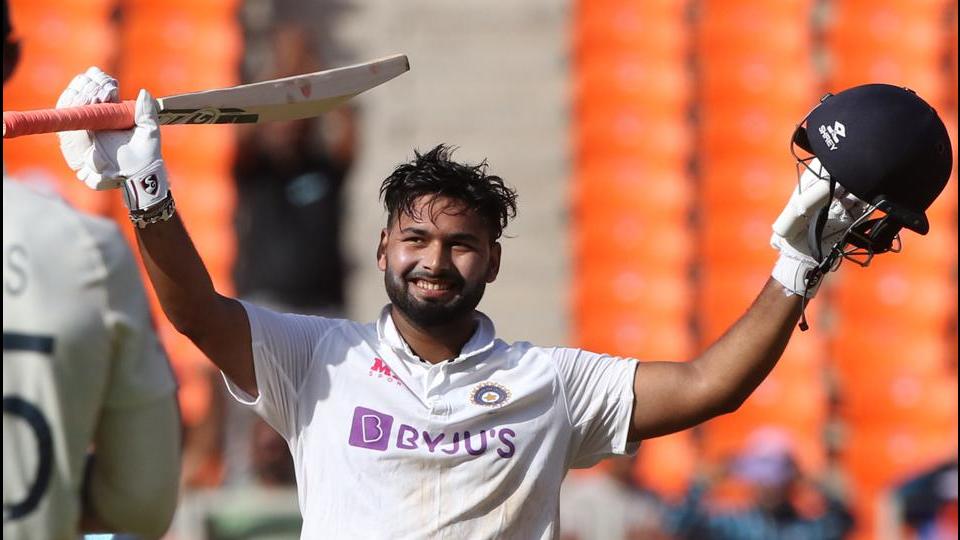
The shot in question is a reverse lap off James Anderson in Ahmedabad this March; Rishabh Pant—head perfectly still--just switches his bottom hand to slap the ball over the outstretched fingers of first slip. In his 18th year of Test cricket, all Anderson, the only fast bowler in history to have more than 600 Test wickets (and counting) could afford was a wry smile walking back to the top of his run-up. In the whimsical world of Pant, anything is possible. Ask him to take a swing at the world’s best bowlers with a bruised elbow with his team chasing 407 and he will gleefully smash the ball around. Dare him to chase 329 at the Gabba with lower order batsmen playing their first or second Test and he won’t think twice. And if you believe a mix of patience, watertight defending and orthodox strokes is the only way to stand up to good Test bowling, Pant will force you to rethink that notion.
Also read | WTC final not just about Virat Kohli and Kane Williamson: Sachin Tendulkar
You could say this 2.0 version of Pant is a revelation. His wicketkeeping has improved by big strides with every match. But it’s his batting that’s thrilled like few other things in Test cricket right now—five times out of his last nine innings Pant has scored at least a fifty, one being a 118-ball 101 in Ahmedabad this March that snuffed out English hopes of a series equaling win. With centuries in England, Australia and at home, Pant, 23, has emerged as India’s finest left-handed prospect now.
That’s significant—not since Sourav Ganguly have India had a long-serving left-handed middle-order batsman.
Why are left-handed batsmen so special? The simple but powerful reason is that bowlers have to change their lines to them, not the easiest task when you are used to bowling to right-handers almost all the time. It’s this break in pattern that tends to upset a bowler’s rhythm. Take for example the leg-before decision. The only way a right-arm fast bowler can trap a left-handed batsman leg-before is by getting close to the stumps and making the ball move in from outside the off-stump. It’s almost always a no-go round the wicket because bowlers normally go wide on the crease and the angle of the delivery automatically takes it down the leg-side. This could prove to be a factor while bowling to Pant in the World Test Championship final.
English conditions have also suited left-handed batsmen well in the past. Two of the top-three highest scorers in England since 2000 are left-handed—Graeme Smith and Shivnarine Chanderpaul. Ganguly, who started his Test career with two centuries at Lord’s and Nottingham, ended with an average of 65.35 in nine Tests there, his best ever performance in any country (including India). More recently, New Zealand opener Devon Conway (with scores of 200, 23, 80 and 3) has been a sparkling example of a left-handed batsman excelling against a top-class bowling attack in England.
Coincidentally, New Zealand have had problems against left-handed batsmen if they weren’t dismissed early. The highest scorer against them in the recently concluded Test series vs England was left-handed opener Rory Burns, who forced Tim Southee to come around the wicket at Lord’s. Southee’s lines took a beating once the shine came off, allowing Burns to anticipate the lengths better and go on to score a century. Go further back and you have left-handed Bangladesh opener Tamim Iqbal string scores of 126, 74, 74 and 4 against a strong Kiwi bowling attack comprising Trent Boult and Tim Southee in an otherwise one-sided Test series (New Zealand won both Tests by innings margins) in Hamilton and Wellington. Iqbal finished top scorer (278 runs) in that series.
Also read | India announce 15-member squad for WTC Final: openers named, 2 spinners included
Pant doesn’t open the batting. He generally comes in when the ball is scuffed up and the pitch relatively easier to bat on. And if the team is in trouble, it inadvertently translates into a licence to hit. That, in turn, often prompts captains to set up defensive fields.
“Sometimes you have to respect the bowler, and the ball, get a bad ball, look for a single. I just see the ball and react to it, that’s the USP of my cricket,” Pant had said after the final England Test in March. His approach to audacious shots too is simple. “You have to premeditate it, but when things are going your way.”
It’s this no-frills approach that makes Pant such a difficult batsman to bowl to if he isn’t dismissed earlier. A typically on-sided player, Pant doesn’t move his feet much. He normally starts with a leg-stump guard and gradually covers his stumps by moving across as the innings progresses. Bowlers tend to pitch it wider when they know Pant is shaping up to go big. By moving across the stumps, Pant only takes himself closer to the new line of bowling. This creates havoc with the bowler’s lines, especially if he has to bowl to a left-right pair. New Zealand may face the same odds, especially in the second innings when the Southampton pitch is expected to ease out.


