E-Paper



Uttarakhand high court asks govt to seal all unregistered clinics
The Uttarakhand high court ordered all doctors in the state, including government doctors and those serving at clinical establishments, to prescribe only generic medicines which are readily available.

 Prefer HTon Google


Terming surgeries being performed by doctors without any prescribed medical degree in the state as “shocking”, the Uttarakhand high court has directed the state government to immediately seal all clinical establishments not registered under the Clinical Establishments (Registration and Regulation) Act, 2010.
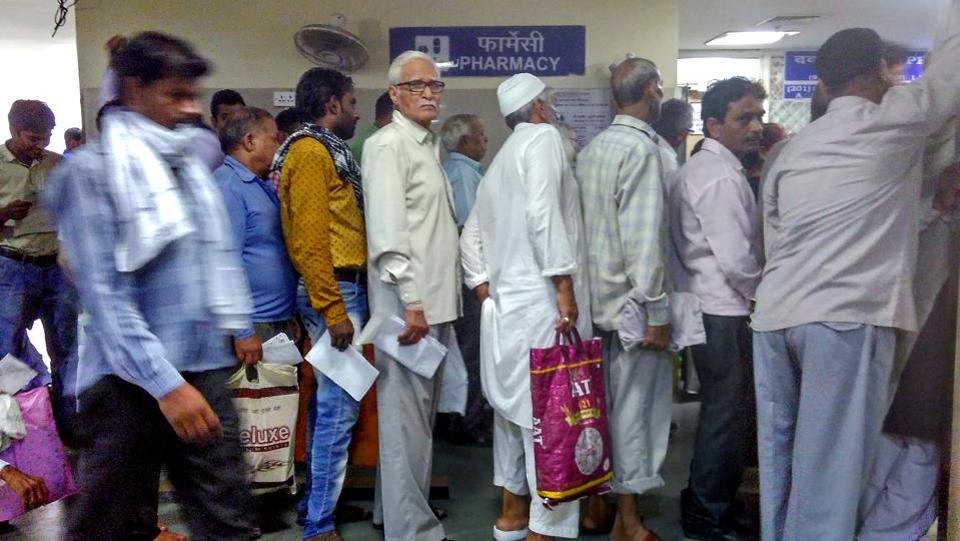
The court also ordered all doctors in the state, including government doctors and those serving at clinical establishments, to prescribe only generic medicines which are readily available. “No patient should be forced to buy branded medicines,” the order said.
The HC also directed the state government to ensure that all clinical establishments registered under the 2010 Act follow the operational guidelines under both the clinical establishments Act and Clinical Establishment Act Standard for Hospital (Level 1A & 1B). It also directed all the clinical establishments not to subject patients to unnecessary diagnostic tests.
A division bench of acting chief justice Rajiv Sharma and Justice Manoj Kumar Tiwari gave these directions while disposing of a public interest litigation (PIL) filed by Ahmad Nabi in 2016. The order was issued on August 14 but its copy was released on Friday.
The PIL had alleged that the BD Hospital Doraha Bazpur and Public Hospital Sarkari Road Kela Khera in Udham Singh Nagar district were being run by persons without any medical degree and were not registered under the Clinical Establishments (Registration and Regulations) Act, 2010.
The PIL also alleged that surgeries were being conducted by those with no medical degree. “It is shocking that the operations are performed by the doctors without a prescribed medical degree. Surgeries can only be performed by a duly qualified surgeon,” the order said.
The court has also directed the state government to prescribe the rates for various diagnostic tests, procedures, surgeries and treatments within one month.
“The outer wall of the intensive care unit (one of its side) shall be fitted with transparent glass, closed with cloth curtains to enable attendants of the patient to see the patient. The attendants of the patient shall be informed about the health/condition of the patient every 12 hours and the same is ordered to be videographed”, the order said.
The HC said that chief medical officer, US Nagar, had issued two notices to BD Hospital, Doraha Bazpur, and Public Hospital, Sarkari Road, in 2016.
“The chief medical officer had ordered an inquiry. The medical officer of government hospital, Bazpur, sent the inquiry report to the chief medical officer. It is mentioned in the report that 10 patients were admitted for surgery at BD Hospital, Doraha Bazpur. No doctor having MBBS degree was found to be practising there,” the order said.
HC said it is unbelievable that surgeries at the two hospitals are being performed by doctors with homoeopathic and Unani degrees. “Surgery is a very serious procedure and it can be performed only by a duly qualified surgeon. In a hospital, in which, there were no surgeons, 10 patients were found to be admitted for surgery,” the order said.