
 E-Paper



Covid hospitalisations under 5k mark first time in 97 days
Experts have warned that if the RT-PCR tests slacken, it could catch the Capital off guard if the outbreak begins resurging.

 Prefer HTon Google


With fewer cases of coronavirus disease (Covid-19) being reported in the city over the last fortnight, the number of hospitalisations dropped below the 5,000-mark on Friday for the first time in 97 days. The total number of hospitalisations in the city was 4,934 on September 5.
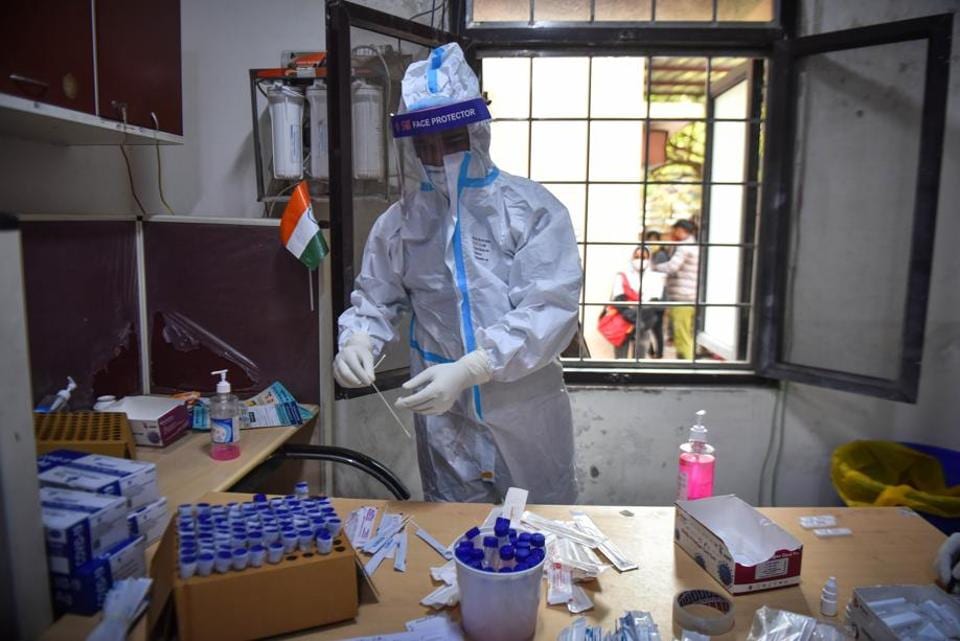
Of the 71,679 tests conducted, 31,724 (44.2%) were done using the RT-PCR method — the gold standard for coronavirus diagnosis. Experts have warned that if the RT-PCR tests slacken, it could catch the Capital off guard if the outbreak begins resurging.
On Friday, Delhi recorded 2,385 new cases of Covid-19 and 60 deaths due to the infection. So far, 603,535 people have been affected and 9,934 have died in the city.
As on Friday evening, only 26% of the total 18,853 beds earmarked for Covid-19 were occupied and 46% of the 5,075 ICU beds were occupied, according to the Delhi Corona app. The ICU beds’ occupancy was over 86% during the surge in cases during November.
The Delhi health minister Satyendar Jain on Friday said that the “third wave” of coronavirus disease (Covid-19) was waning in the state, with the positivity rate—the proportion of samples that test positive—remaining below 5% for 10 days consecutively. On Friday, it stood at 3.33%. Experts believe that the spread of the infection is under control when a positivity rate of 5% or less is maintained for two weeks.
“The third wave of Covid-19 in Delhi is going down. We can now say that the peak was on November 7 when a positivity rate of 15.26% was recorded. Now, the positivity rate has remained below 5% for 10 days,” said Jain in a press briefing.
He said Delhi has been conducting one of the highest tests per million in the country with over 70,000 a day. As of November-end, Delhi reported the highest tests per million in the country at over 330,201. The national average stood at 100,159.
Delhi was followed by Ladakh (241,355), Goa (237,626), and Andaman and Nicobar Islands (202,033), which have a fraction of Delhi’s population.
“Currently, the situation seems to be under control. But people need to continue wearing masks and maintaining social distance. It is because people of Delhi have cooperated that we are seeing this result. I also want to thank the healthcare workers who have worked day and night,” the minister said.
Delhi has tested over 71,741 samples a day on average during December, compared to an average of 53,579 during November. Nearly half of these tests were conducted using the RT-PCR method.
In Delhi, the ratio of tests was skewed towards the less-accurate rapid antigen tests since they were rolled out in mid-June during the first surge in the number of cases.
The number of RT-PCR tests was ramped up in the city in mid-November after a meeting with Union home minister Amit Shah.
“I agree that the reports for the RT-PCR tests, which should be given within 24 hours, are getting delayed in some places and we are trying to strengthen that. When we met with the centre, we were asked to double RT-PCR testing. We doubled our testing, but the reports were getting delayed. Now, the situation is improving,” said Jain.


