
 E-Paper



Destitute roam the streets in search of food, govt says plenty of room at shelters
Delhi Police said as prohibitory and lockdown orders are being strictly enforced in the city, no one, except those who are part of essential services, is being allowed on roads.


The strict imposition of the 21-day nationwide lockdown rules in the national capital has deprived the destitute of their only source of income — seeking alms outside religious places or at traffic signals.
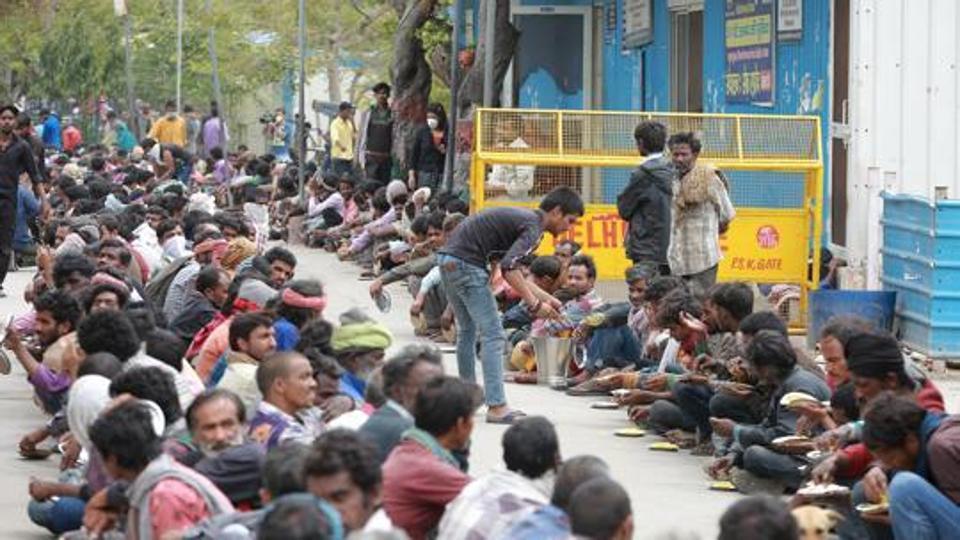
While social activists say the government should make efforts to ensure all destitute people are placed in government-run shelter homes and screened for Covid-19, Delhi Police officers said measures have been taken to ensure that they don’t roam the streets in search of food.
Delhi Police said as prohibitory and lockdown orders are being strictly enforced in the city, no one, except those who are part of essential services, is being allowed on roads.
But social activists say many still seek alms on the road. Indu Prakash, a member of the Supreme Court-appointed a committee on homeless shelters, said, “I have got calls from homeless people in need of help. The police and the Delhi administration should ensure that all destitute people are taken to shelter homes.”
Delhi chief minister Arvind Kejriwal Friday said his government has taken numerous steps to extend help to the poor. He said the availability of food at their hunger relief centres has exceeded the demand. “We are giving 7.5kg free ration to 71 lakh ration card holders in the city and 60% have already availed of this. Besides, we have been offering free lunch and dinner for all through 1,780 hunger relief centres. More than 12 lakh people are eating at these centres every day,” he said.
The chief minister also said the government has set up shelters at 328 locations for migrant workers, destitute and those in need. “These 328 shelters have the capacity to accommodate 57,270 people. But, only 11,443 people are currently using these facilities. So there is no dearth of room at shelters,” Kejriwal said.
A senior police officer, who did want to be named, said on the orders of Delhi’s lieutenant-governor Anil Baijal, each police station has been given a bus to shift migrants, the destitute and the homeless to shelter homes.
The police personnel deployed on street patrolling have been asked to stop such people, and send them to the permanent shelter homes as well as schools that have been converted into temporary homes.
“Those having homes are asked to immediately return there, while the homeless are shifted to shelter homes,” a Delhi Police officer said.
In government-run shelter homes, the number of destitute has increased since the lockdown. Nishu, caretaker of a shelter home in Yamuna Pushta, said there are a lot of people at the shelter who used to beg on the streets.
Ashok Pandey, convener of Shehri Adhikar Manch, said, “The main problem is that not all homeless people have got space in shelter homes. You can still find people sitting on the pavement outside shelter homes. During this time, social distancing is essential. The government should ensure that all those who live on the streets are taken to shelter homes. They should also start mobile health vans to screen these people for Covid-19 symptoms.”
Apart from destitute people, a senior police officer said there are many living in poor neighbourhoods who also come out on roads and ask for money from motorists stopping at traffic signals. “We constantly warn them and send them back whenever we see them at it,” the officer, requesting anonymity, said.
“We arrange food packets from various volunteers and distribute them among the destitute and all those who are not able to arrange food for themselves and their families due to a lack of daily income. The food is distributed twice a day,” deputy commissioner of police (south) Atul Kumar Thakur said.
According to the Delhi Urban Shelter Improvement Board (DUSIB), all of its 238 night shelters are seeing an average occupancy of 9,000 per night, which before the coronavirus outbreak used to be around 7,000. “Usually, we keep our night shelters closed during the day since the purpose is to provide a comfortable roof for the homeless and daily wage earners to sleep. But, now we keep our shelters open 24x7. Sanitisation is also being done at least twice a day,” Bipin Rai, member, DUSIB, said.


