
 E-Paper



Expert explore possibilities to create ‘highways’ for butterflies in Delhi
Butterflies have important roles to play in our ecosystem. While on the one hand they are excellent pollinators, thereby helping plants to reproduce, they also form an important part of the food web. Other animals such as birds and reptiles eat them. Butterflies are also indicators of a healthy environment.


A team of experts from Delhi University and the Bombay Natural History Society (BNHS) is exploring the possibility if butterfly corridors could be developed crisscrossing the busy national capital by connecting the city’s green patches.
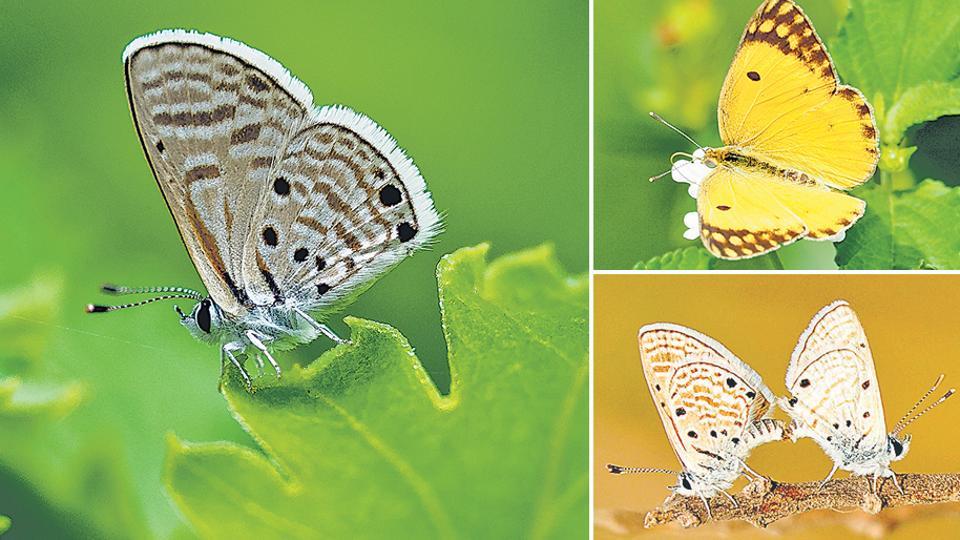
A survey conducted in September 2017 found that there are at least 70 species of butterflies in the city. In 1986, European scientist Larsen Torben conducted a study on butterflies of Delhi, which collated historical record dating back to 1944. He had recorded a total of 85 butterflies.
These corridors or ‘butterfly highways’ would provide a safe passage for them to travel from one park or garden to another within the city. It would, in turn, help maintain a healthy gene pool, necessary for the survival of any species.
“The idea is to connect the city’s green patches such as local parks, gardens, biodiversity parks, city forests so that there is a corridor, which butterflies can avail. To plug the gaps between the existing green patches, some specific plants that butterflies need to lay eggs and the larvae feed on will have to be grown,” said Sohail Madan, centre manager at Conservation Education Centre at Asola Bhatti sanctuary which is maintained by the BNHS.
Even though a variety of seasonal flowering plants are planted throughout Delhi every year, there is a lack of host plants needed for butterflies to lay eggs, said researchers. Experts said that these plants could be planted along the roadsides, individual houses, schools and colleges, hotels and government campuses among others. Each butterfly species need a specific kind of nectar producing flowering plants for food and host plants on which they lay eggs and the caterpillars grow.
“We are collecting detailed data on all aspects such as which plants attract which species of butterflies, how they would travel through the corridors, the common and rare butterflies of Delhi among others,” said Rajesh Chaudhary, assistant professor of biomedical sciences at Acharya Nardendra Dev College under Delhi University.

After a preliminary survey, the researchers have listed the existing green spaces such as the Yamuna Biodiversity Park, Asola Bhatti Sanctuary, the ridge area, Delhi zoo and Lodhi Garden among others. A map of possible corridors has been drawn up and a list of plants that could be planted has also been prepared.
“Green corridors within cities are very important because they increase the ability of existing ecosystems to sustain a diverse community of animals and plants. They also have other positive effects such as mitigating extreme weather conditions,” said CR Babu, ecologist.
Butterflies have important roles to play in our ecosystem. While on the one hand they are excellent pollinators, thereby helping plants to reproduce, they also form an important part of the food web. Other animals such as birds and reptiles eat them. Butterflies are also indicators of a healthy environment.
The city already has some butterfly parks in places such as the Yamuna Biodiversity Park. More than a dozen such parks have been developed by BNHS in various schools and colleges across Delhi and NCR.
Some experts, however, raised doubts about the plan, saying that it might not be feasible to develop such butterfly corridors.
“Butterflies are sensitive and have some specific requirements such as clear air and optimum weather conditions. Planting host plants along roads might not attract them because of high pollution levels on the roadsides,” said Surya Prakash, a biologist from the School of Life Sciences in JNU, who has been studying butterflies for more than a two decades.

Stay updated with all top Cities including, Bengaluru, Delhi, Mumbai and more across India. Stay informed on the latest happenings in World News along with Delhi Election 2025 and Delhi Election Result 2025 Live, New Delhi Election Result Live, Kalkaji Election Result Live at Hindustan Times.


