
 E-Paper



In 100 days of Covid, many lessons for Lok Nayak hospital
The health hub had immediately set aside 11 isolation rooms for Covid-19 patients, with the hospital admitting its first Covid-19 patient on March 17.

 Prefer HTon Google


Four days after the city reported its first case of Covid-19 on March 2, Lok Nayak hospital had sprung into action to take on the virus challenge.
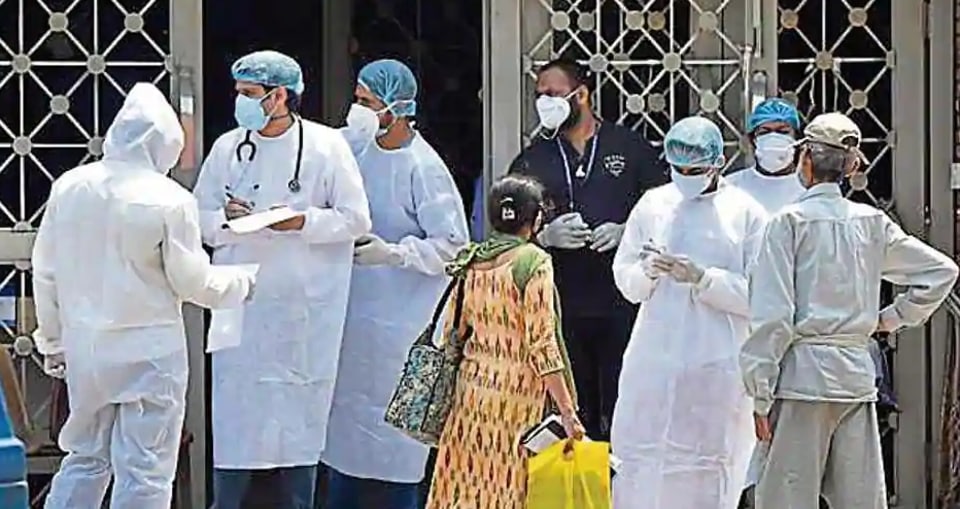
The health hub had immediately set aside 11 isolation rooms for Covid-19 patients, with the hospital admitting its first Covid-19 patient on March 17.
In the next 100 days, Lok Nayak hospital had treated 3,760 Covid-19 patients – most with severe infection.
Now, as the city reports more than 3,000 cases of the virus daily, the 2,000-bed hospital has been converted into a Covid-19 only treatment facility, making it the biggest such health hub in the state and Delhi government’s prime weapon against the virus.
The hospital also helped fill a gap in the procedure by offering dialysis for Covid patients and also helping in deliveries of Covid-19 positive women.
“We have provided 1,130 dialysis sessions to Covid-19 positive patients – the highest in north India. So far, there have been 144 babies born to Covid-19 positive mothers – 60 through c-section and 84 through normal deliveries. Our doctors, nurses, and staff have worked tirelessly to provide patient care,” said Dr Suresh Seth, medical director of the hospital.
Starting with the wards in the emergency block of the hospital, the entire hospital was converted into a Covid-19 facility by April. The out-patient clinics were initially moved to the segregated orthopaedic block of the hospital and then completely shut by March-end. Patients already under treatment at the hospital started being shifted to Guru Teg Bahadur Hospital in Dilshad Garden. The hospital set up beds in their out-patient clinic area as well.
“This was unthinkable. I had never imagined that the scale of the outbreak would be this big. We had set aside some isolation rooms and one ward for Covid-19 patients. I would have thought that this would be enough. The hospital had 107 ventilators, I never imagined we might need more,” said Dr Kishore Singh, the then medical director of the hospital.
The hospital’s only isolation ward — with its own separate elevator — had been created during the H1N1 outbreak of 2009-10.
One of the doctors who worked in the ward, remembered, “At that time, we just had one-floor with its own OPD for patients with flu-like symptoms. There were about 18 ICU beds and that’s all we needed. PPE kits were to be worn only inside the ICU and in the general area we used to just wear masks and gloves. A medicine -- Tamiflu – was already available and all doctors working in the H1N1 area were put on it. After one batch of doctors finished their duties, the fear for the others was less. In this case, people are getting more scared day by day.”
Healthcare workers were the first to be impacted by Covid-19, with several cases being reported from among the community in the first two months, all of which were traced back to hospitals or contact with other healthcare workers.
“We had anticipated an increase in the number of cases. But this rapid exponential surge in the number of cases has definitely caught us a little off-guard. At the time, we thought that there would be maybe 50-100 cases a day. A committee formed by the CM had said that we should be ready for handling 1,000 cases a day. But, we did not imagine a scenario beyond that,” said Dr JC Passey, who had been the director of the hospital for 49 of the 100 days, while it was transitioning to become a complete Covid-19 facility.
In the 100 days, the hospital has had to learn hospitality. “We were not used to providing toiletries and buckets to patients, meals as well as snacks. These were earlier taken care of by the relatives of the patients. Initially, we had trouble in estimating and understanding what might be needed where,” said a nurse from the hospital, on condition of anonymity.
These were uncharted territories for the hospital and they have been troubleshooting as and when problems arise. When they faced complaints of families not being able to communicate with patients, they set up a help-desk with tablets to connect them digitally.
“We have started with ten tablets today (Wednesday). And, we will be adding one tablet in each ward slowly. All the relatives of the patient can come to the help desk and video call their family members,” said Dr Kumar.
Delhi has been reporting over 3,000 cases a day and there are 124 hospitals – both government and private – that treat Covid-19 patients. The government is also working on setting up makeshift hospitals in hotels, banquet halls, stadiums, and railway coaches. Almost 15,000 people with the infection are in home isolation as well.


