As temperatures soared across the National Capital Region this summer, ozone levels spiked in many parts of the region especially residential areas, data from by the Central Pollution Control Board from February to May showed.
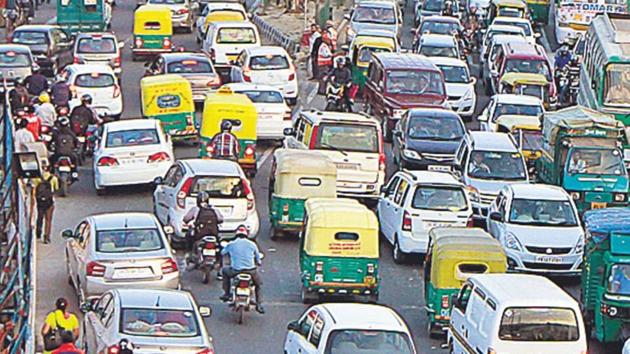
Ozone is not a primary pollutant. It is formed through photochemical reactions involving pollutants like nitrogen oxide and Volatile Organic Compounds (VOCs) that take place in the presence of sunlight. Vehicles are a major source of these precursor pollutants, experts said.
Surface-level ozone is associated with a host of health problems especially among children and the elderly, because it impacts lung function. It can also harm vegetation and the larger ecosystem.
“It is a seasonal phenomena,” D Saha, a former official at the CPCB, said. “Diesel and CNG run vehicles emit nitrogen oxide and petrol vehicles release VOCs that are unburnt hydrocarbons.”
The Centre for Science and Environment (CSE) analysed data from 29 stations in NCR and found that from February to May, the number of days when the ozone standard was breached showed an increasing trend. In 90% of the stations, the recorded ozone levels exceeded the norm at some point.
{{/usCountry}}The Centre for Science and Environment (CSE) analysed data from 29 stations in NCR and found that from February to May, the number of days when the ozone standard was breached showed an increasing trend. In 90% of the stations, the recorded ozone levels exceeded the norm at some point.
{{/usCountry}}“Heat waves and stronger sunshine increase the frequency of days during summer when ozone begins to cross the standards posing public health risk,” according to the CSE.
India reported the highest number of ozone-pollution related deaths globally, 2.54 lakh in 2015, according to the Global Burden of Disease report.
Since even short-term exposure to ozone is believed to be harmful, standards are set for shorter time durations compared to other pollutants — 180 micrograms/ cubic metre (1-hour average) and 100 µg/m3 (8-hour average). For particulates there are 24-hr and annual averages.
“We have to see whether there is a trend of higher concentration over sufficiently long period of time to be able to impact public health,” CPCB chairman S P Singh Parihar said. “We don’t seem to be headed in that direction.” Parihar, however, said that the large number of vehicles in Delhi and the lakhs of vehicles added to the city roads every day was a cause of concern.
“More studies need to be done about the impact of ozone pollution,” Saha said. Ozone pollution might be impacting rural populations as well. The precursor gases travel and the photochemical reaction may be happening over areas where pollution sources are not present, Saha said.
Stay updated with all top Cities including, Bengaluru, Delhi, Mumbai and more across India. Stay informed on the latest happenings in World News along with Delhi Election 2025 and Delhi Election Result 2025 Live, New Delhi Election Result Live, Kalkaji Election Result Live at Hindustan Times.
Stay updated with all top Cities including, Bengaluru, Delhi, Mumbai and more across India. Stay informed on the latest happenings in World News along with Delhi Election 2025 and Delhi Election Result 2025 Live, New Delhi Election Result Live, Kalkaji Election Result Live at Hindustan Times.