
 E-Paper



Delhi: World’s smallest baby gets liver transplant
The baby from Lagos, Nigeria was operated upon at Medanta – The Medicity on August 2.

 Prefer HTon Google


Doctors at a private hospital in the city transplanted liver in a baby weighing just 2.1 kg -- the smallest baby to have such a surgery in the world. To date, the smallest baby to have undergone a liver transplant and survived weighed 2.59 kg and was operated in Japan.
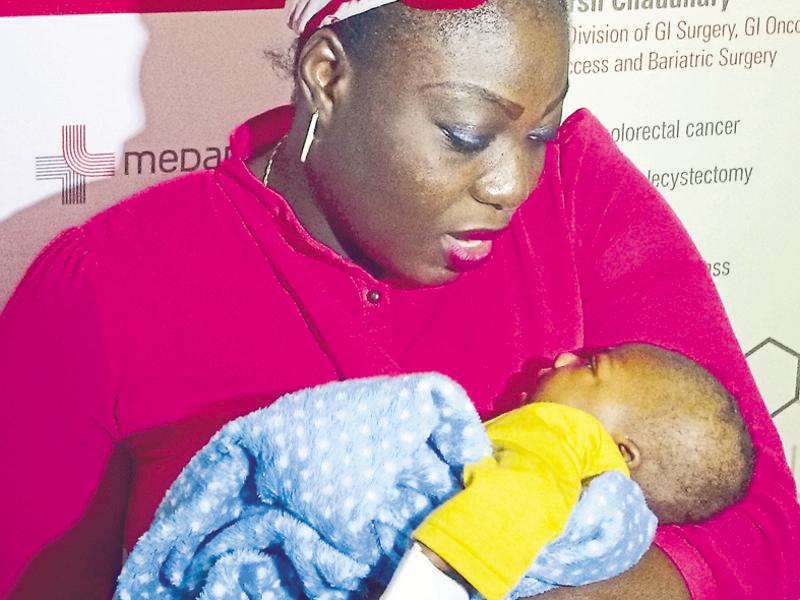
The baby from Lagos, Nigeria was operated upon at Medanta – The Medicity on August 2.
He became the first child to have survived a condition called neonatal hemochromatosis, in which the body starts depositing excess iron in the liver, pancreas, salivary glands and other organs.
Ayogbadebo ‘David’ Oyetunde was just two months old when he was brought to Delhi from Lagos in a near-dead condition by his lawyer parents. “This is our first child and we wanted him to survive,” said James, his father.
“Despite medical therapy in Nigeria he did not recuperate. We were told the only way to save him was a liver transplant, which was not possible because he was so malnourished and had lost so much weight. So, we came to India,” James said.
It was a challenging task for the doctors. “The first challenge was the size,” said Dr AS Soin, chief liver transplant surgeon at Medanta – The Medicity.
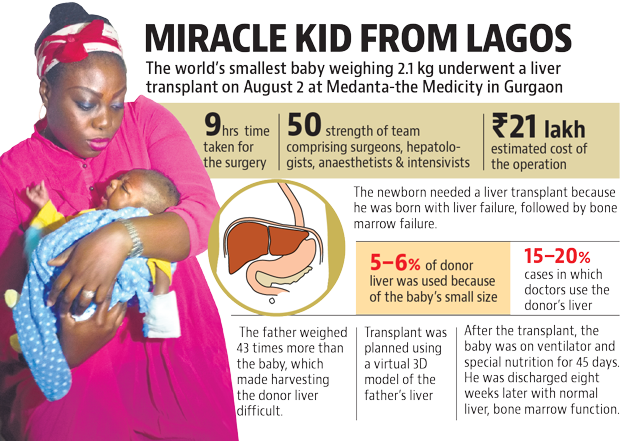
“With his bloated liver he weighed 2.1 kg, without it maybe just 1.4kgs. We needed to harvest a 5-6% portion of his father’s liver, who weighed 43 times more. Cutting such a sliver makes it difficult because we have to keep the 1mm-vein, 0.1mm-artery and the bile duct intact for the liver to function on its own,” said Dr Soin.
The donor in the Japanese case was only 27 times the weight of the recipient.
The baby was at a high-risk of infection because of the failure of the bone marrow, which produces white blood cells to fight infections, coupled with the immune-suppressant given to transplant patients to prevent rejection.
“Thankfully our hypothesis that the bone-marrow failure was a result of the liver failure was right and the baby regained both functions,” said Dr Neelam Mohan, director of paediatric hepatology and liver transplant at the hospital.
There were post-surgery challenges too.
“The baby was not able to breathe or eat. He spent a week on ventilator, after which a cut was made in his throat to help him breathe. He started eating only after he was off oxygen in the fifth week after the surgery,” said Dr Mohan.
When the child was discharged, nine weeks after the surgery, he weighed 3 kg and had normal liver and bone marrow functions.


