
 E-Paper



Middle powers can bring peace
India has long held out the belief that middle powers can come together to rescue the world from the vagaries of a uni or bipolar global order

 Prefer HTon Google


“One of the great tragedies of life is that men seldom bridge the gulf between practice and profession, between doing and saying.” So said Martin Luther King and it is clear that New Delhi understands him all too well. Foreign minister S Jaishankar’s speech at the Munich Security Conference signals India’s graduation from words to action, especially as geopolitical deadlocks appear in different parts of the world today and superpowers no longer bring any semblance of order and stability. It is this interregnum, this in-between stage of changing orders that Jaishankar sees as a space for the middle powers to assert themselves. The middle powers, a gamut of large developing economies and small developed countries, are more visible than ever today. And they are holding out against the superpowers. Spain is unrelenting in its strong stand against US-backed Israeli action against Palestine; Iran, ravaged by decades of economic sanctions, has not yet lost the ongoing existential war against the US; India has refused to capitulate against unilateral economic policies of the US or China’s territorial claims; South Korea, Phillipines, and Taiwan are checking China’s influence in the Indian Ocean; and Ukraine is meeting Russia on an almost equal footing in the fifth year of the war.
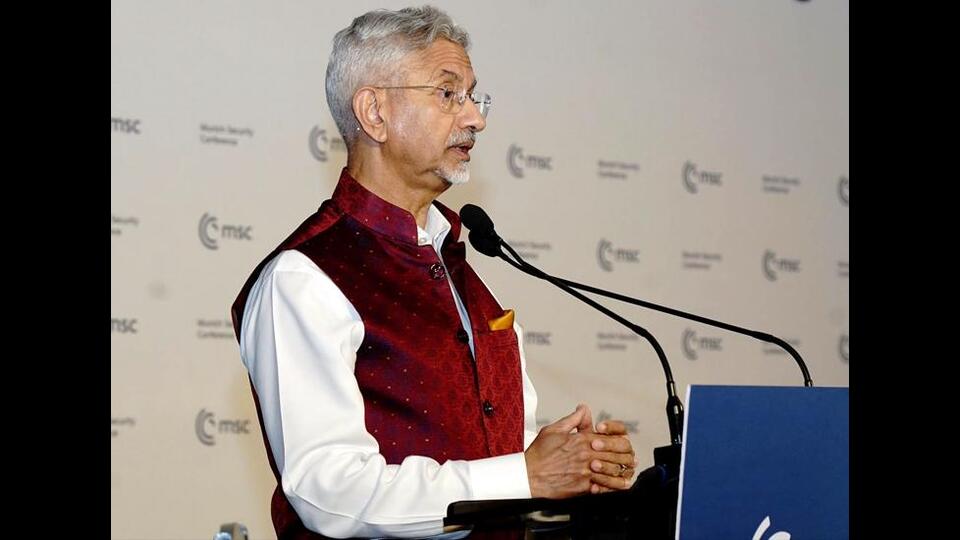
Jaishankar acknowledged that India has moved ahead of its stated position by getting “a little bit more involved beyond advocacy in the Russia-Ukraine conflict”. Earlier last week, Ukrainian foreign minister Andrii Sybiha lauded India’s peace proposal out of all four — including those by Türkiye, Egypt and the US — as the most comprehensive one. By standing shoulder to shoulder with the US in peace-making efforts, India and others are doing exactly what the middle powers are supposed to do: channel their capacity to pivot to exerting global influence.
India has long held out the belief that middle powers can come together to rescue the world from the vagaries of a uni or bipolar global order. Peace and stability cannot be left to the economic heavyweights. New Delhi’s insistence on BRICS solidarity marks one such way of middle power consolidation as an economic bloc to reckon with. The current trend of weaponisation of any leverage by any country, cited by Jaishankar, can only be reversed through cooperation between middle powers. It is time for them to do this out of choice, not compulsion.


