
 E-Paper



Privilege equality over uniformity
The UCC bill flags the need for reforming personal laws but reveals the limits of pursuing a uniform code amidst India’s diverse traditions

 Prefer HTon Google


There are two ways to see the fractious debate around the uniform civil code (UCC) bill introduced by Uttarakhand this week, a first-of-its-kind draft that is likely to be the template for similar efforts by a clutch of other states.
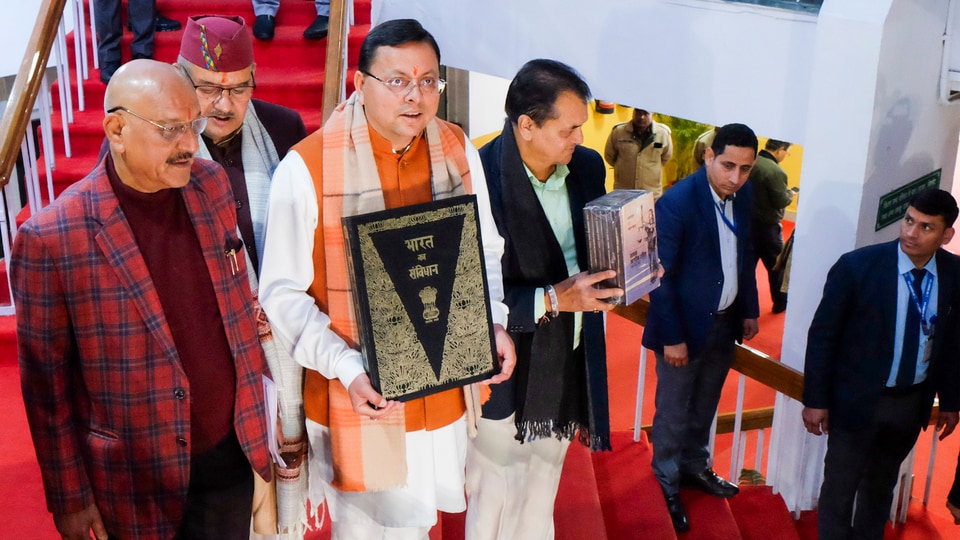
The first is the immediate political context — UCC is the final prong of the decades-old ideological troika of the BJP, comprising the Ram temple and the abrogation of Article 370, and the only one that remains incomplete. Uttarakhand, in that sense, is a microcosm of an impending national effort, one that might unfurl itself should the National Democratic Alliance (NDA) gain a third term in this summer’s general elections. It also sketches the broad contours of how this effort might look — a broad exception granted to India’s tribal communities in light of the constitutional guarantees given to adivasis and a state-by-state approach instead of a blanket national law. More gender-just laws on marriage, divorce, inheritance and adoption are desirable but some provisions on compulsorily registering live-in relationships are disquieting because they have the potential to encourage vigilantism against a backdrop where transgressive relationships already battle immense social pressure. Granting a bouquet of rights to live-in couples and their offsprings is a progressive step, but the government would do well to use the rules to dispel any spectre of overreach.
The broader discussion, however, is not about Uttarakhand, or even this draft law. Since Independence, the debate around UCC has been between two contrasting impulses — one that hopes to safeguard the cultures of smaller communities from being subsumed under the dominant group’s influence, and another that seeks to expunge bias in personal laws. The Constituent Assembly chose to resolve this apparent contradiction by placing the UCC among the directive principles of state policy, recognising correctly that the diversity of the country couldn’t be encompassed by only one set of laws (For instance, prohibitions regarding bloodline marriage in the Uttarakhand UCC will not pass muster in the southern states where traditions are different).
But these impulses aren’t incompatible; the focus instead should shift from uniform to equal, ensuring that no personal law is allowed to violate the basic rights guaranteed under the Constitution. Personal laws, irrespective of the faith, have to be reformed so that they do not discriminate based on gender, caste or other similar categories. A nation as complex as ours calls for an endeavour beyond politics towards inclusion, collaboration and deliberation.


