
 E-Paper



Wrecking a relationship
Trump administration officials are not doing the US any good by expanding anti-India action & rhetoric

 Prefer HTon Google


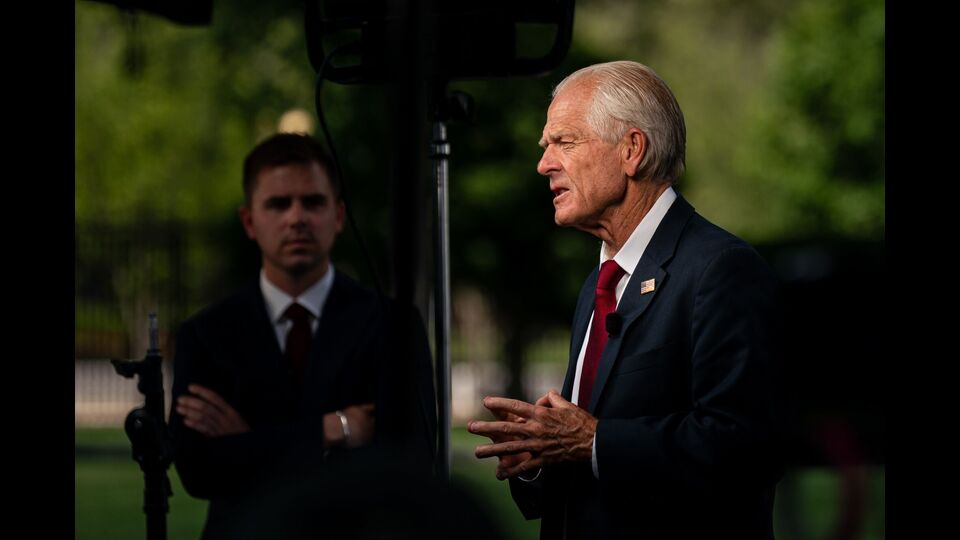
US President Donald Trump’s top trade advisor Peter Navarro’s description of the conflict in Ukraine as Prime Minister Narendra Modi’s war ups the ante in the widening standoff between Washington and New Delhi over unjustified and unprecedented American tariffs. Navarro has gone so far as to suggest that India is hurting American consumers and businesses and is using its proceeds from trade with the US to purchase Russian energy. Coinciding with Navarro’s strong words, Washington has indicated that changes are on the anvil for the H-1B and student visa programmes, clearly targeting India. These developments are taking place against the backdrop of Modi’s upcoming visit to Tianjin, China, for the Shanghai Cooperation Organisation summit, where he will also hold discussions with President Xi Jinping. Earlier, external affairs minister S Jaishankar was in Moscow, emphasising a legacy relationship and reiterating that India-Russia ties are on a strong wicket. What is unspoken in the voices from and moves by Washington is a veiled threat to New Delhi that cosying up to Moscow and Beijing will have repercussions, and that these will go beyond trade and hurt other civic interests, including those of the elite and aspirational sections of Indian society. And what is evident is also a sense of pique — although it isn’t clear why.
What should New Delhi do? Its response to Trump’s demands has been clear and in step with India’s long-term view of global affairs, national interests, and strategic autonomy. Central to Navarro’s claim about India aiding Russia’s war effort is the purchase of Russian oil. The context of that decision — and the hypocrisy in the US stance — has been eloquently explained by Jaishankar. Indeed, the West was a key beneficiary of India’s purchases of Russian oil as it helped stabilise the global energy market and ensured relatively cheap supplies for Europe. But that has not stopped the US from continuing to indict India over its oil purchases, even while ignoring the largest buyer of Russian oil (China). The US has sought to situate India-Russia relations in the context of the Ukraine war to pressure Europe to slow down on a trade deal with India. The UK already has a deal, and a similar one with the European Union is in the works. Clearly, the Trump administration wants to make it difficult for Europe to proceed with a trade deal with India.
Similarly, the move on professional and student visas (India sends the most students to the US, followed by China) is meant to hurt India, and perhaps, is aimed at influencing public opinion . The US continues to be a desired destination for many Indians, especially technology workers and students. But Indians going to the US have brought with them capital and skills that have benefited the American economy.
New Delhi recognises the importance of its relations with Washington and Europe. It sees them as more than a transactional relationship, and firmly anchored in shared democratic values. But as a sovereign nation that experienced the deprivations of imperialism, India can’t be expected to compromise its national interests — agriculture and fuel security among them — and play the US game. Its legacy relationship with Russia has a vital strategic component, and engagement with China, a neighbour, is necessitated by geography, security, and economics. Diplomacy is not a zero-sum game. Navarro and others personalising the trade spat with India should ask themselves if they prefer to be remembered in history for wrecking a relationship that leaders in New Delhi and Washington painstakingly built over a quarter century.


