
 E-Paper



HT@100 | 2004-2013: Growth and equity
India sees economic advancement, additions to stable of rights; HT brand creates flagship event

 Prefer HTon Google


In February 2004, a redesigned Hindustan Times greeted its readers.
It remained a heavyweight in political and local news coverage, but the photographs on the front page were in colour and the inside pages carried colourful informative graphics. Page 2 carried a snappier version of news-on-the-go. The Business section turned its gaze to global events; sports coverage was brought to the centre of the paper. A new 28-page Sunday magazine, Brunch, was added to the HT stable.
The new HT combined the credibility and gravitas built over the past eight decades with new flair. The company expanded into thought-leadership, launching the Hindustan Times Leadership Initiative Conference (later, the Hindustan Times Leadership Summit or HTLS). It was a by-invitation event that brought the best global minds to a single stage to analyse critical problems and find solutions.
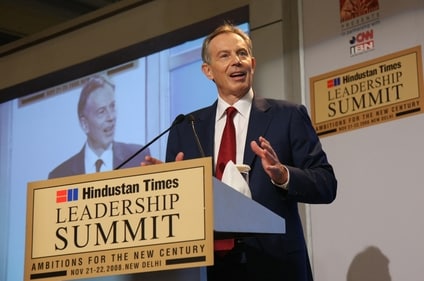
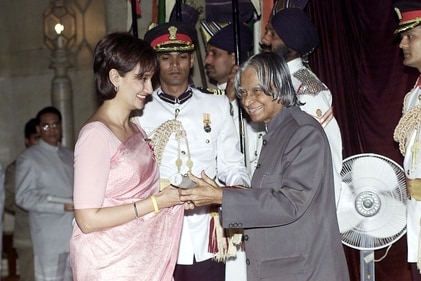
“The world was facing challenges, and we, in India, were at the cusp of a radical transformation. What if we were able to bring leaders, not just from South Asia, but also all over the world, into one room and discuss issues that mattered to all of us at a global level? There were already international events where this was happening, but nothing of the sort was there in India. The Leadership Summit has grown over the years, but it has always been about contemporary concerns, the best speakers, national and international, and a focus on leadership,” said Shobhana Bhartia, who had been appointed vice-chairperson of the company in 1999.

If growth defined the first decade of the millennium, the first term of the United Progressive Alliance (UPA), a Congress-led coalition government, was also marked by a sharp focus on welfare. Though the incumbent Bharatiya Janata Party’s (BJP) loss came as a shock to the party and the constituents of the National Democratic Alliance (NDA), the markets and the country soon rallied around the new Congress-led regime.
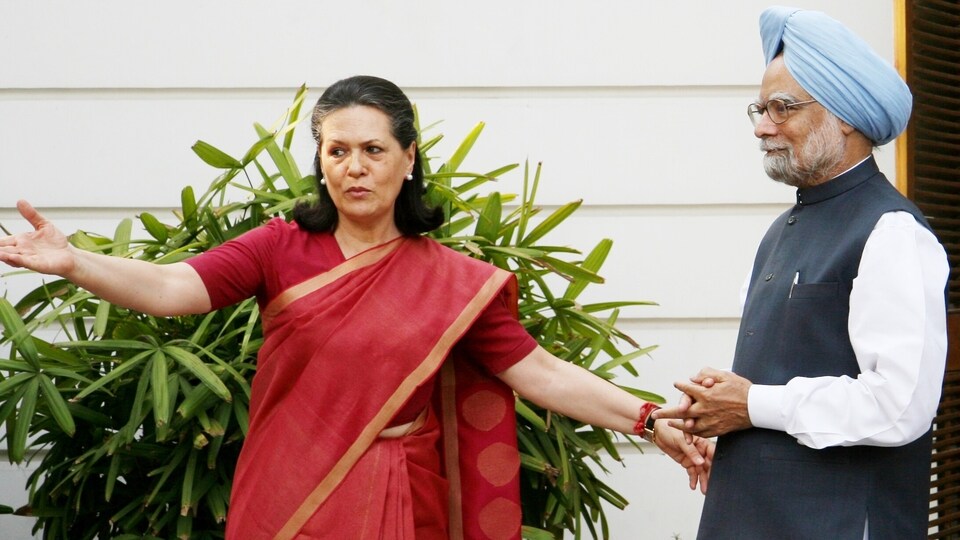
HT was far ahead in its coverage of dramatic political events, including the general elections of 2004 in which Atal Bihari Vajpayee’s coalition lost despite predictions of victory. What also made headlines was Congress president Sonia Gandhi’s renunciation of the post of PM. She gave the responsibility to Manmohan Singh, the original economic reformer of the 1990s, instead. The Page 1 headline on May 19 read: “Amazing Grace”.
Singh’s two terms in office would be remembered for their path-breaking rights-based legislations. An employment guarantee act offered a cushion to the poorest. A law ensuring a citizen’s right to information provided unprecedented transparency to the workings of the government. The right to education, right to food and right to fair compensation after land acquisition, aimed to bring equity to the most marginalised.
The 2000s seemed to present an opportune moment to launch a business newspaper that would offer business and financial news to readers. However, with five such papers already in existence, Bhartia and the board of directors, which includes her sons Priyavrat Bhartia and Shamit Bhartia, needed to create a differentiated product. The result was Mint, designed by Mario Garcia, who had also redesigned HT supplements a few years earlier.
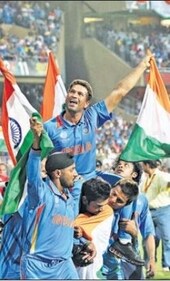
Even the sport most beloved to Indians underwent a makeover. In 2007, the Board of Control for Cricket in India (BCCI) announced the launch of a new cricket league called the Indian Premier League (IPL) that followed the Twenty20 format. The front page of HT which reported the launch on April 19, 2008, was suitably headlined, “A Billion Dollar Baby is Born”.
The telecom revolution meant that the internet was no longer a preserve of urban lives, and falling prices of handsets coupled with an increasingly competitive market for telecom companies quickened the rate of internet penetration across the country.
Indians got a taste of social media’s raw power on November 26, 2008, when 10 Lashkar-e-Taiba gunmen launched multiple coordinated attacks in Mumbai, killing over 160 people and injuring several hundred in a 60-hour siege. Soon after the attacks began in south Mumbai, tweets began flying fast and furious, spreading information about what was happening in the Taj hotel, the Trident hotel, CST station and other locations of the attack, often before TV crews arrived. People used the platform to publicise helplines, and lists of victims. HT, now with a bureau in Mumbai, led this coverage over several days.
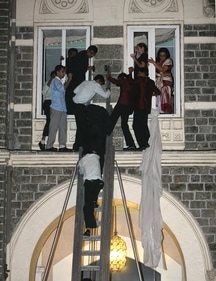
An edit on Page 1 denounced the shambles in which the suicide fighters found our security apparatus: “It is time to understand that fearsome, global jihad has come to India. It is time to stop our endless debates, our waffling, our love of governing by committee and proposal, and create an ultramodern, professional force to tackle ultramodern, professional terrorism.”
Security wasn’t the only challenge the government faced.
By 2011-12, growth rates plunged. High fiscal deficits crowded out private players from the market, and ambitious spending on programmes without tax reforms took their toll.
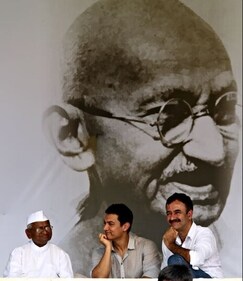
The final years of the Singh tenure were mired in controversies, internal rifts, political mismanagement, policy paralysis and a weakened prime ministerial authority. A review of HT’s headlines between 2011 and 2014 reflects this: many of them are on the slowing economy, allegations of corruption in the issue of telecom spectrum and coal blocks, and an anti-corruption movement led by Gandhian Anna Hazare.
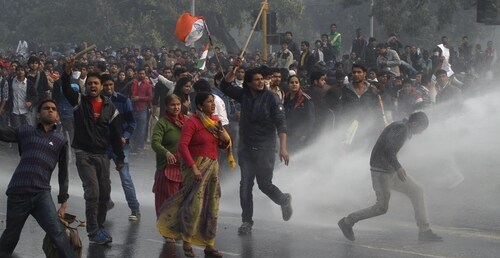
In between, in December 2012, the country also saw a public movement as people poured into the streets, incensed at the rape and brutalisation of a 23-year-old physiotherapy student in New Delhi. HT ran a signature campaign to demand stricter punishment for rape.
The Lokpal and Lokayuktas Act was passed in 2013. By then, the anti-corruption movement had also made way for a political formation, the Aam Aadmi Party, led by former Indian Revenue Services official, Arvind Kejriwal.
In the assembly elections held in December 2013, Kejriwal defeated Congress leader and former Delhi CM Sheila Dikshit. After a brief stint as CM, he resigned, and returned in 2015 with a decisive mandate to rule Delhi. Or, as HT’s front-page story on February 11 put it, “Kejriwal sweeps it all AAP”.
In 2014, the Indian voter delivered yet another decisive mandate in the Lok Sabha elections. On the wave of anti-incumbency and a desire for deep rooted change, India chose the BJP’s Narendra Modi, former CM of Gujarat, as the 15th Prime Minister.
Modi’s ascent to power signalled an important shift in the electorate. The Hindutva that Modi championed successfully was very different from what was associated with the BJP in the pre-Modi years. Under Modi, the party forged a broad coalition of “upper castes”, Dalits and OBCs. And it pushed a strong development agenda.
The biggest proof of this successful social reboot was seen in Modi’s ascent to power in 2014 with a resounding BJP victory. The Congress was reduced to 44 seats, and the BJP’s promise of “acchhe din” (good days) won over the 800 million-strong electorate. “His Time Starts Now”, read the Page 1 headline on May 27, 2014, a day after Modi was sworn in as Prime Minister.


