
 E-Paper



Chhattisgarh launches ‘Meri Beti–Mera Abhiman’ campaign, announces rural infrastructure works
Chhattisgarh unveils the 'Meri Beti–Mera Abhiman' campaign, targeting girls' education and rural infrastructure.

 Prefer HTon Google


Chhattisgarh Chief Minister Vishnu Deo Sai on Thursday launched the statewide ‘Meri Beti–Mera Abhiman’ campaign under the Viksit Bharat–Guarantee for Rozgar and Ajeevika Mission (Gramin) (VB-G RAM G), announcing a series of rural development projects, including girls’ toilets in government schools, cremation grounds in villages and groundwater recharge works.
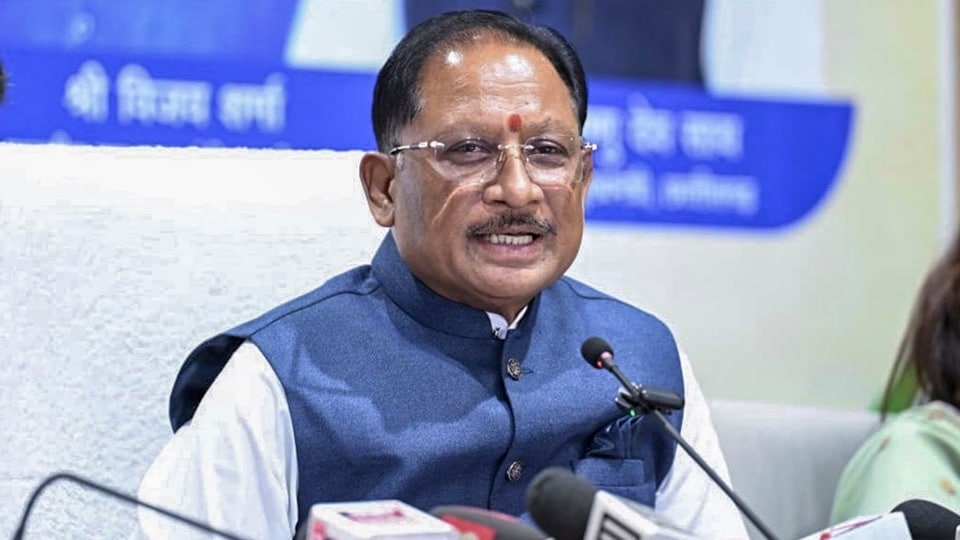
The campaign will run from 15 August 2026 to 26 January 2027 and focuses on sanitation, social infrastructure, water conservation and rural livelihoods.
Rural infrastructure projects announced
Addressing a press conference, Sai said toilets would be constructed for girls in all government schools in rural areas. According to the government, 6,671 girls’ toilets will be built at an estimated cost of ₹286.85 crore.
The state also plans to construct cremation grounds with waiting sheds in 6,524 villages at a cost of ₹391.44 crore, while another 549 cremation grounds will be developed with an outlay of ₹18.22 crore.
The chief minister also announced measures aimed at groundwater recharge. The government plans to install sand filters and recharge structures in 10,027 closed or defunct borewells, with an estimated expenditure of ₹52.14 crore. According to Sai, the initiative is intended to improve groundwater levels, conserve rainwater and help address drinking water shortages in rural areas.
Scheme to be implemented through Gram Sabhas
Sai said the VB-G RAM G scheme, rolled out nationwide from 1 July 2026, provides for development works to be identified and approved by Gram Panchayats and Gram Sabhas. He added that the daily wage under the programme has been increased to ₹300.
The chief minister said Chhattisgarh is expected to receive nearly ₹6,855 crore under MGNREGA and VB-G RAM G during the current financial year, with the Centre already releasing the first instalment of over ₹1,538 crore.
According to the government, the programme includes 318 categories of development works across four sectors: water conservation, rural infrastructure, livelihood promotion, and climate adaptation and disaster management.
The water conservation component covers ponds, check dams, irrigation expansion, recharge structures and plantation activities, while rural infrastructure works include roads, culverts, Panchayat buildings, Anganwadi centres, additional classrooms, libraries, laboratories, kitchen sheds, waste management systems, cremation grounds and veterinary hospitals.
Livelihood-related works will focus on strengthening infrastructure for rural markets, storage facilities, dairy farming, fisheries and animal husbandry. Climate adaptation measures include flood and cyclone shelters, drainage systems, embankments, forest fire prevention and post-disaster reconstruction.
Sai said the state has recorded 98% e-KYC completion of workers and 99% geo-tagging of assets under the programme, while GIS-based Gram Panchayat work plans have also been prepared through the Yuktdhara portal.
The chief minister said ₹5,591.42 crore has been earmarked for the scheme during 2026-27, while ₹1,264 crore has already been spent in the first quarter of the financial year. He said the programme aims to strengthen employment generation, water conservation, sanitation, education, rural infrastructure and livelihoods through Gram Sabha-approved works supported by digital monitoring, timely wage payments, quality checks and social audits.


