
 E-Paper



Muslims in the Bihar assembly in the last six decades | Number Theory
.
Updated on: Oct 27, 2025, 08:44:30 IST

 Prefer HTon Google
Share via


Copy link

Muslims have a share of 16.9% of Bihar’s population according to the 2011 census. The number is broadly the same in the 2023 caste survey conducted by the Bihar government.
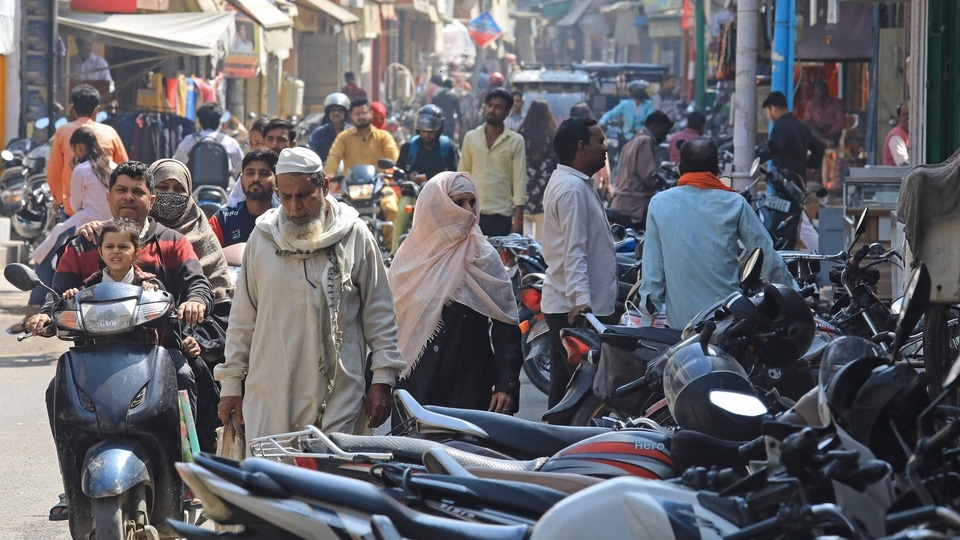
How have Muslims been represented in the state legislature over the years? Has Muslim representation changed with the changing politics in Bihar? Which parties have given the maximum representation to Muslims in Bihar assembly? We answer this question by looking at the database of all 3,629 MLAs Bihar has had since 1962, which has been prepared by the first author of this story.
Muslims in the Bihar assembly in the last six decades
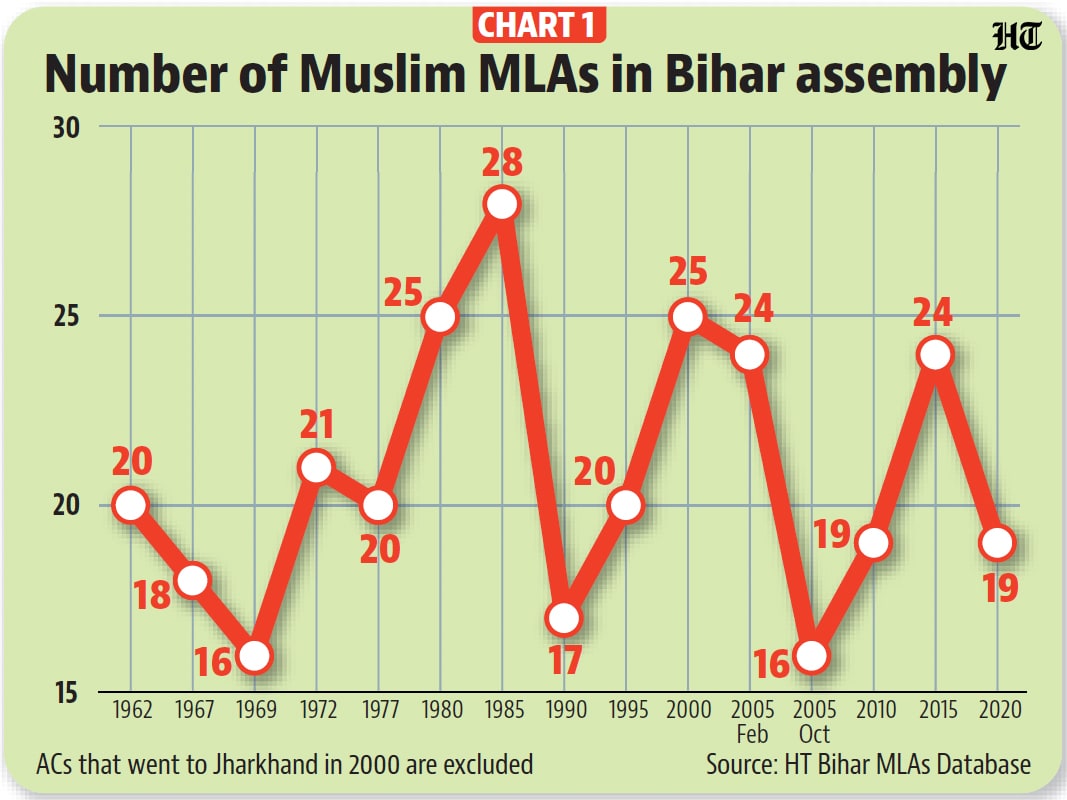
 Share of Muslim MLAs in Bihar has varied from 6%-12%The Bihar assembly had 239 MLAs until 1972. This number has increased to 243 since 1977. To be sure, undivided Bihar used to have 324 assembly constituencies, but this analysis has left out the ACs that became a part of Jharkhand when it was created in 2000. The number of Muslim MLAs as a share of all MLAs has had a high and low of 11.5% and 6.6% in the 1985 and 2005 (October) assembly elections in Bihar. The highest share of Muslim MLAs was in the election held in the aftermath of Indira Gandhi’s assassination, which the Congress won with almost a two-thirds majority. The lowest share of Muslim MLAs was in the assembly election where an alliance of the Janata Dal (United) with the Bharatiya Janata Party (BJP) captured power for the first time in the state in 2005. To be sure, the BJP’s predecessor, the Jan Sangh was part of some coalition governments in the state between 1967 and 1972, but the Janata Dal (United) and BJP government formed in October 2005 was the first government with BJP to complete a full term.
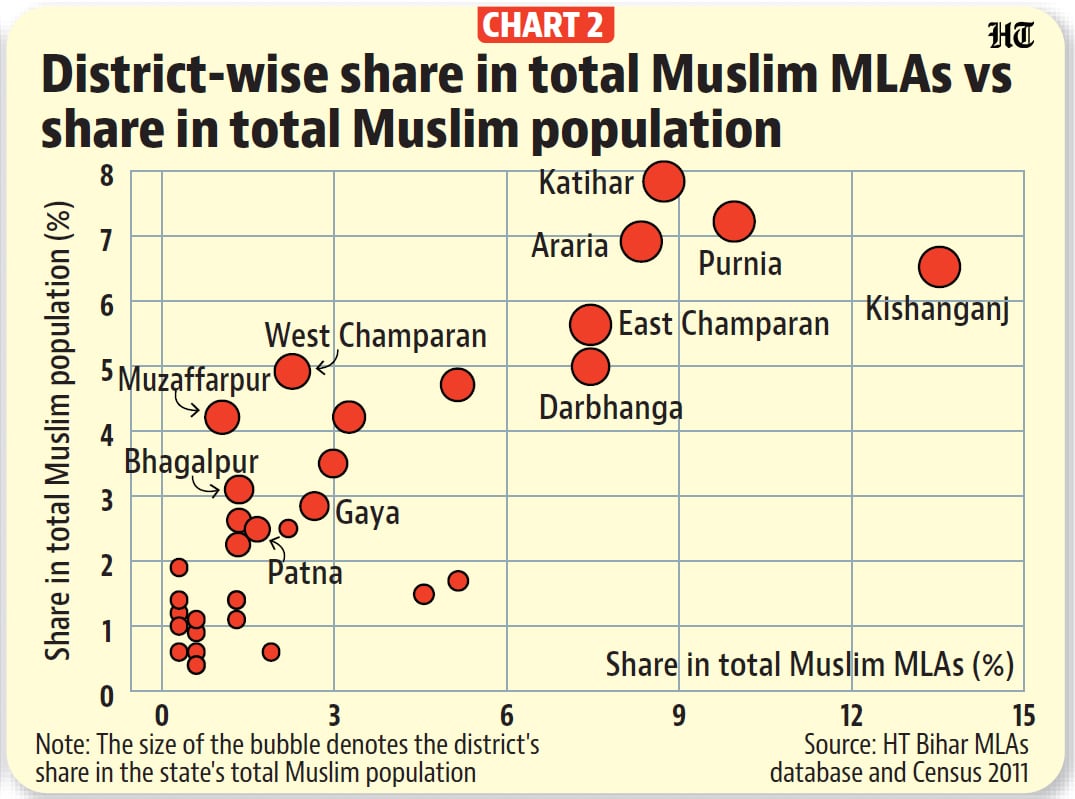
- Intra-state distribution of Muslim MLAs is skewed like the Muslim population in the state…As is often the case in states, the Muslim population in Bihar is not uniformly distributed across the state. According to the district-wise breakup of religious population in the 2011 census, almost 40% of the state’s Muslim population was in just six districts, which accounted for just under 20% of the state’s overall population. If one were to compare the cumulative district-wise share of Muslim MLAs in Bihar, there is a broad overlap between districts with the highest Muslim population share and the highest share of Muslim MLAs.
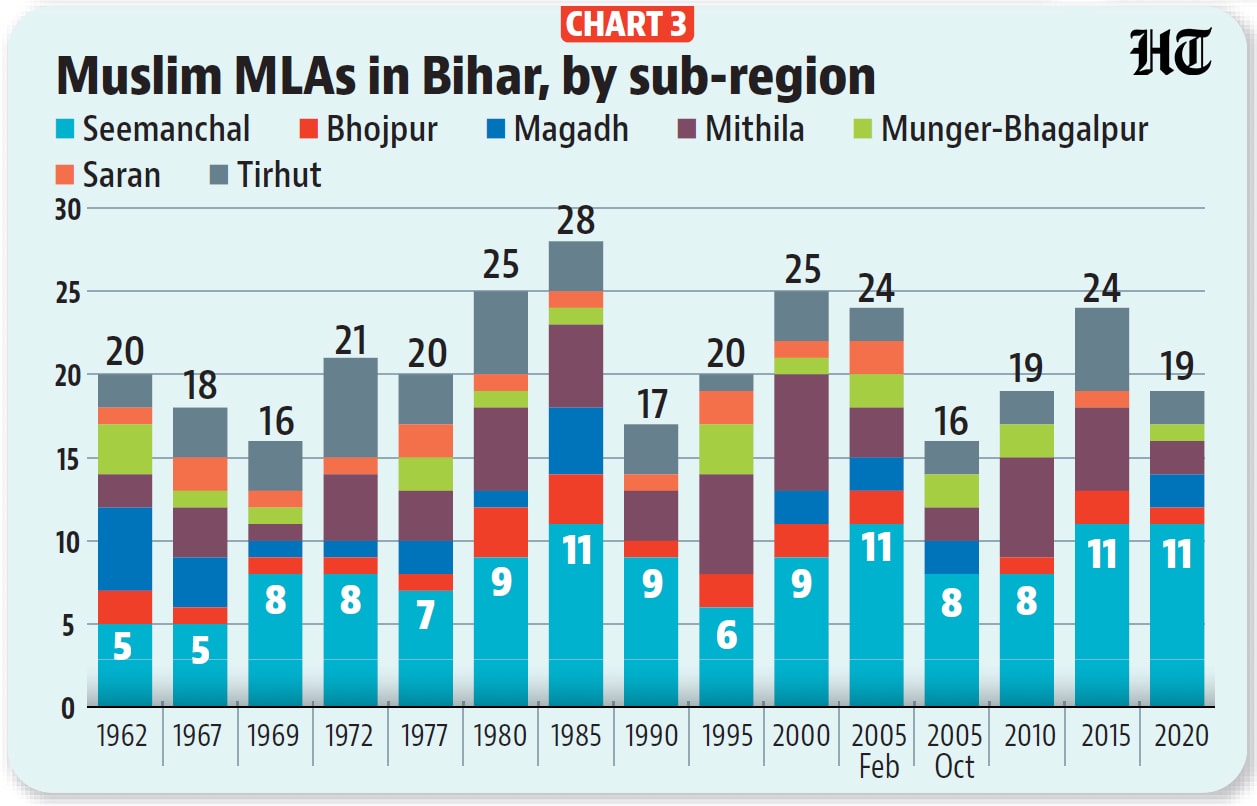
- …And the skew was the highest in the 2020 electionsBihar can be broadly divided into seven major sub-regions. Seemanchal, which comprises four districts—Araria, Katihar, Purnia, and Kishanganj — has the highest share of the Muslim population . The number of Muslim MLAs from Seemanchal has remained broadly stable over the years, but its share in the total number of Muslim MLAs in the state has increased when overall Muslim representation has come down in the assembly. This number was the highest in the 2020 elections when 60% of the state’s Muslim MLAs came from just one sub-region, which sends just 9.9% of all MLAs in the assembly. The fact that three of the top five elections by share of Muslim MLAs from Seemanchal have been post-1990 suggests that Muslim politics has undergone a ghettoisation of sorts in the state with more Muslim MLAs being elected from a part of the state which has the highest share of Muslim population.
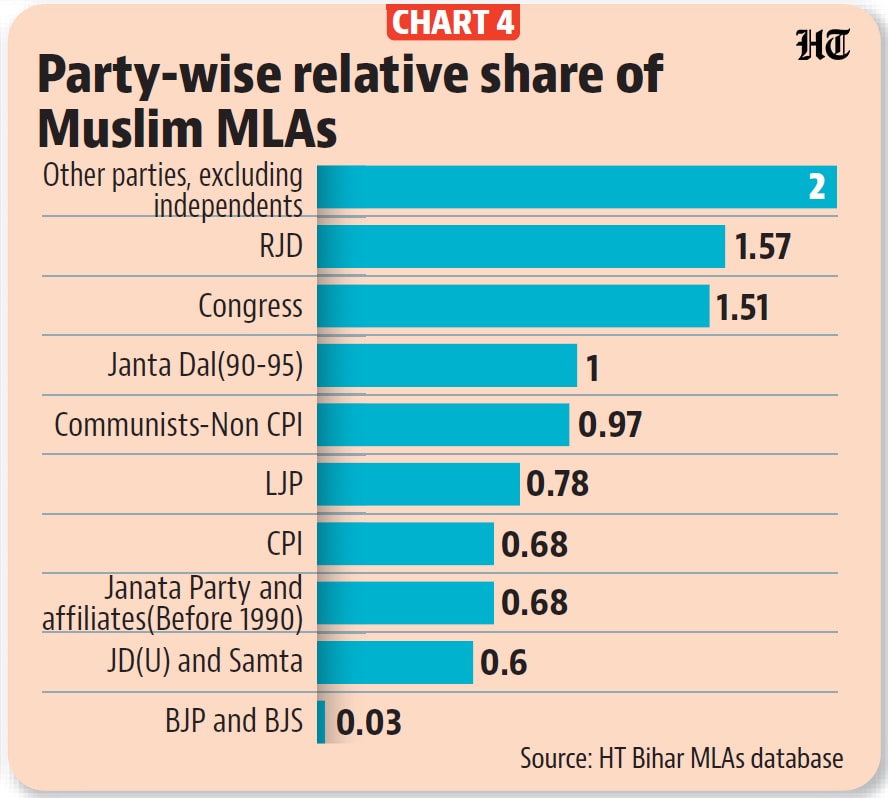
- Among the major parties, RJD and Congress have the highest relative share of Muslim MLAsOut of the 312 Muslim MLAs elected so far, 130 and 57 won from the Congress and the Rashtriya Janata Dal (RJD). However, to ascertain Muslim representation of lack of it within parties, relative share of Muslim MLAs – share of a party’s Muslim MLAs divided by its share of total MLAs -- is a better measure because not all parties have had the same number of MLAs in Bihar. The RJD and Congress have the highest relative share of Muslim MLAs while BJP, as expected, has the lowest. However, what is most interesting is the fact that the other smaller parties have the highest relative share of Muslim MLAs in the state. For example, even in the 2020 assembly elections in the state, five of the 19 Muslim MLAs in the state were elected from the All India Majlis-e-Ittehadul Muslimeen. To be sure,four out of the five AIMIM’s MLAs joined the RJD in 2022. Whether or not the number of Muslim MLAs increases in the new assembly in Bihar remains to be seen. However, what is clear from the analysis given above is the fact that Muslims have had lower than proportional representation in the Bihar assembly most of the time. While the more recent explanation is that they’ve largely been represented/given tickets from only one side of the political spectrum since the rise of the BJP as a political force in the state, their under representation in the pre-BJP period suggests that the factors behind their lower than proportionate representation in the state legislative are more structural in nature.




Unlock a world of Benefits with HT! From insightful newsletters to real-time news alerts and a personalized news feed – it's all here, just a click away! -Login Now!


