
 E-Paper



Number Theory: Illegal migrant crackdown may hurt US farms
.
Published on: Feb 21, 2025, 09:18:22 IST

 Prefer HTon Google
Share via


Copy link

Donald Trump’s second stint as US President that began a few weeks ago has been accompanied by a severe crackdown on illegalimmigrants, especially those that cross the border from Mexico to look for jobs in the US. Not everyone in the US is averse to foreign workers . Illegal immigrants account for a chunk of the workforce in several sectors; agriculture is one such — so much so that a mass deportation could actually threaten its entire economics. How significant is the contribution of migrant workers, especially from Mexico, to American agriculture and how much better do they fare by working in the US? Here are four charts that try to answer this question.

Illegal migrant crackdown may hurt US farms
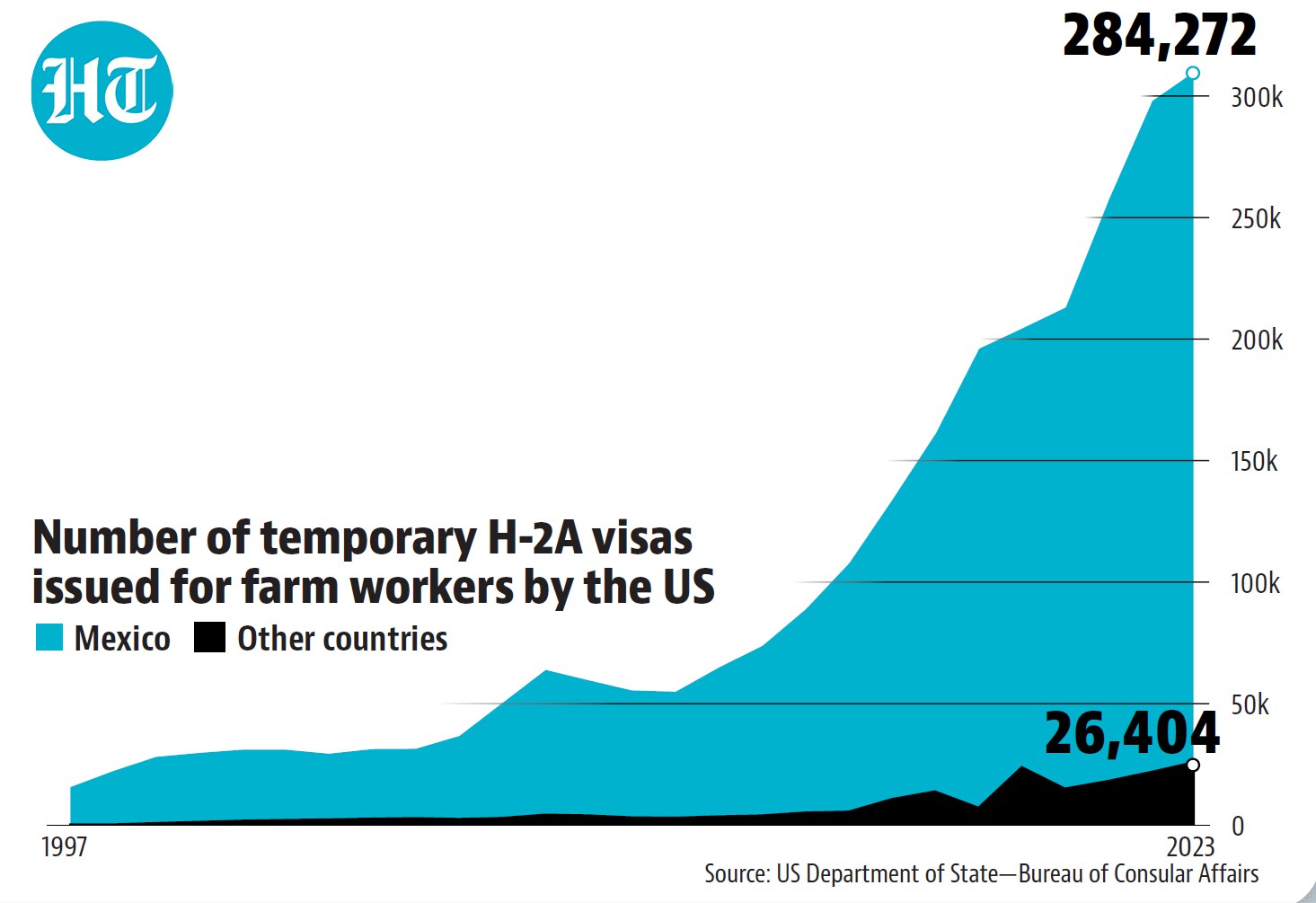
 Farmworkers from across the border entering the US has increased significantlyThe US has an agricultural labour force with a significant proportion of “foreign born” workers. Legally, these workers mainly enter the US by means of an H-2A visa, which is a temporary work permit that lets employers in the US hire foreign workers for seasonal agricultural work. The number of agricultural workers entering the US on H-2A temporary visas has gone up significantly over the years—number of visas issued went up from 30,000 in 2000 to more than 3,10,000 in 2023. Most of these workers are from Mexico. In 2023, 91.5% of all H-2A visa recipients were Mexicans. To be sure, the share of unauthorised migrants within farmworkers in the US are even higher. According to the US Department of Agriculture (USDA), 42% of the hired crop farmworkers in the US during the 2020-22 period were migrants without any work authorisation.
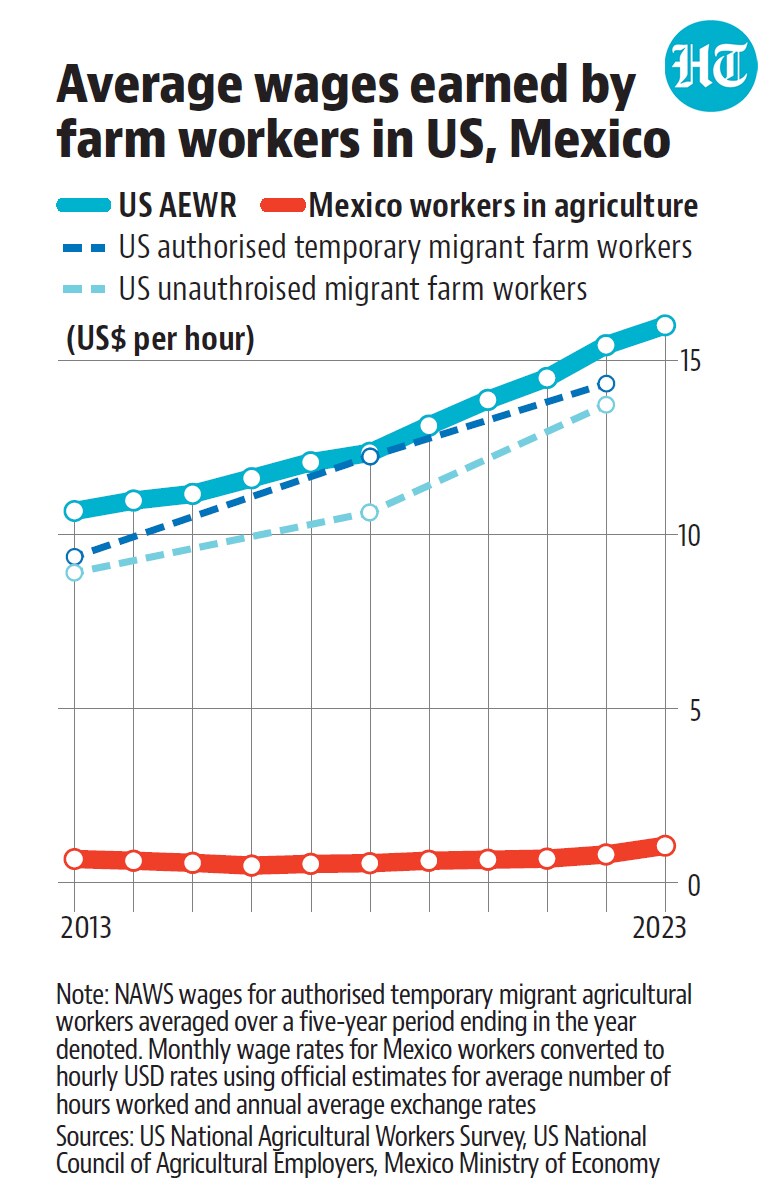
- Even unauthorised migrant farmworkers in the US earn more than they would earn on average in MexicoThe primary driver of blue-collar farmworker migration from Mexico to the US has been wage disparity. Adverse Effect Wage Rates (AEWRs) are the minimum wages set by the US Department of Labour (DOL) for H-2A agricultural workers, designed to prevent foreign labour from undercutting wages for US workers. In 2023, H-2A farmworkers in various US states earned an average of approximately $16.13 per hour. In contrast, Mexico’s general minimum wage equates to roughly $1.75 per hour. However, actual wages often differ from official minimum rates. According to the US Department of Labour’s National Agricultural Workers Survey (NAWS), authorised temporary migrant farmworkers in the US earned an average of $14.50 per hour between 2019 and 2022. Meanwhile, data from Mexico’s Ministry of Economy shows that agricultural workers in Mexico earned around MX$2,983 per month in 2022—equivalent to approximately US$0.94 per hour, based on official estimates of average working hours and annual exchange rates. Notably, NAWS estimates indicate that even unauthorised migrant workers in the US earned an average of $13.87 per hour—1,376% more than they would have made in Mexico.
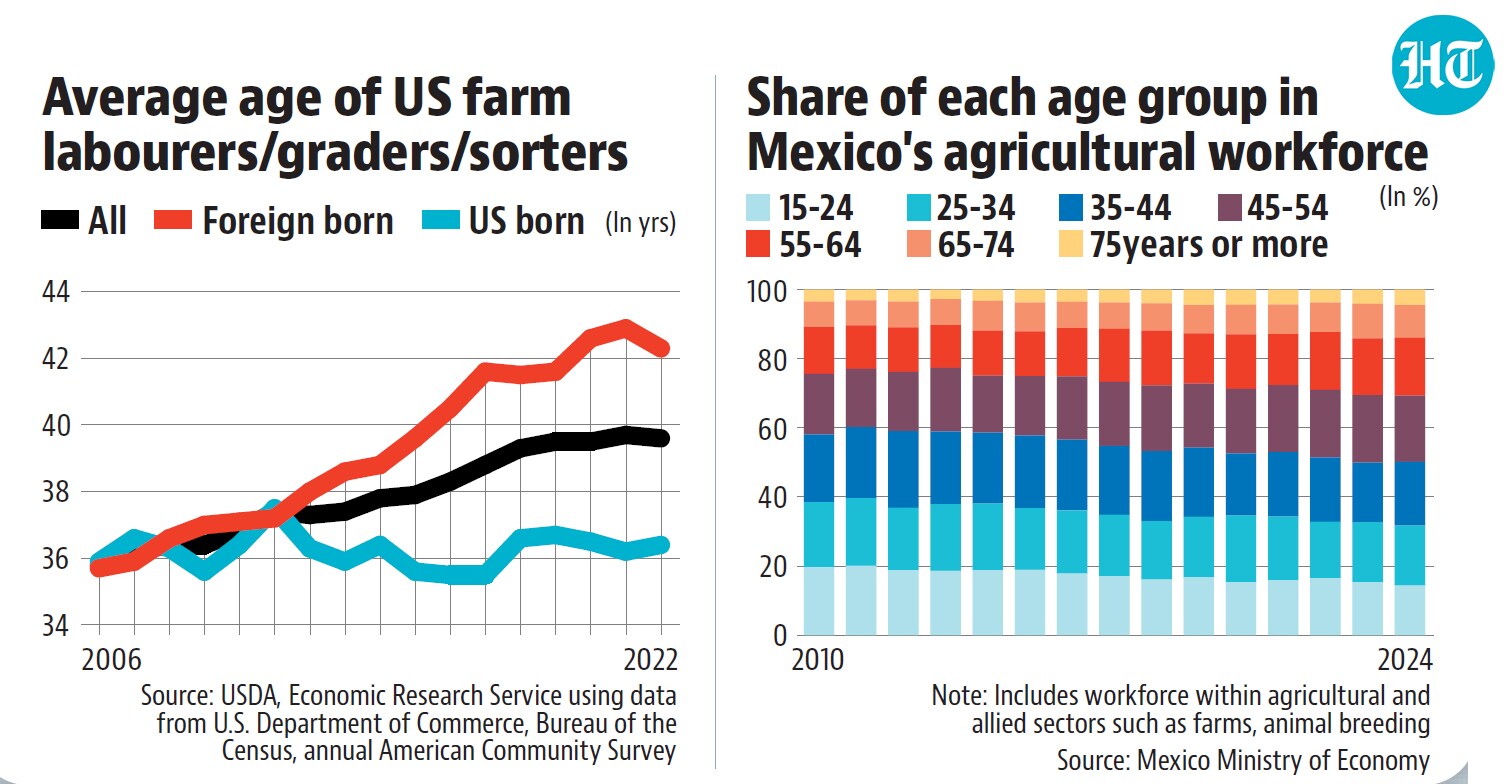
- While the US relies on Mexico for farm labour, the latter’s own workforce is starting to see shortagesWith fewer young immigrants entering agriculture, the average age of foreign-born farmworkers in the US rose by nearly seven years between 2006 and 2022, while US-born workers’ ages largely remained steady, according to the USDA. This trend underscores the declining presence of young workers in agriculture, particularly among immigrants. The US has long relied on Mexican workers to fill farm labour shortages, but Mexico itself is now facing a shortage of agricultural workers. The sector’s share of Mexico’s workforce fell from 16% in 2000 to 9% in 2020. Meanwhile, the country has also emerged as an agricultural power in its own right, and its farmers—who previously had little need for foreign labour—are now advocating for a large-scale guest-worker programme to fill workforce gaps. In response, the Mexican government plans to launch a job database listing 14,000 roles for non-Mexican workers, with more to follow, according to a March 2024 Washington Post report. These shifts limit young immigrant farmworkers’ entry into the US labour market, a trend that could worsen under stricter Trump-era immigration policies. The end result could be a worsening of farm incomes in the US and, ironical as it sounds, a boost to Mexico’s agriculture.


Unlock a world of Benefits with HT! From insightful newsletters to real-time news alerts and a personalized news feed – it's all here, just a click away! -Login Now!


