E-Paper



Number Theory: The inflation situation in the Indian economy
This is the last of a two-part series on inflation in the Indian economy. The first part explained what the latest inflation numbers mean.
Published on: Jun 19, 2024, 08:58:52 IST

 Prefer HTon Google
Share via


Copy link

The first of this two-part series looked at the latest CPI and WPI numbers released last week and explained them in detail. What do these numbers mean for the Indian economy at the current moment? Here are four charts that try and answer this question in detail.
The inflation situation in the Indian economy
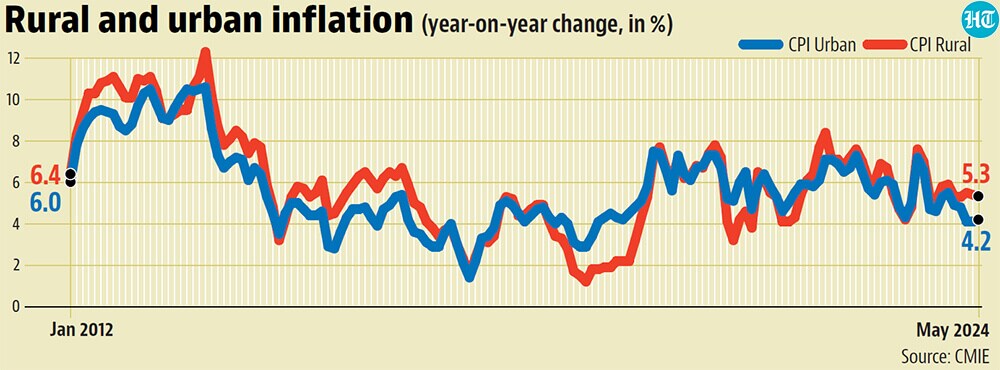
 A higher food inflation means rural inflation has been higher than its urban counterpartWhile food has a weight of 39% in the combined inflation basket, this number is 29.6% and 47.3% respectively in rural and urban areas. At a time when food inflation has been higher than its non-food counterpart, it is a given that rural inflation will surge ahead of the urban numbers. The data shows this clearly. Urban inflation was 4.11% in May 2024 compared to 5.28% in rural areas. Past data shows that rural inflation has been more than urban inflation for 11 consecutive months now.
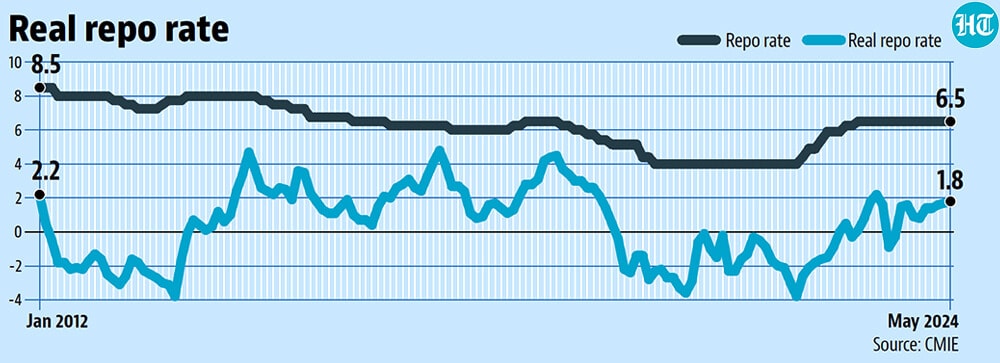
- Moderation in headline CPI print means real rates have firmed up in the economyThe repo rate has been kept at 6.5% by the RBI since February 2023. The repo rate is the rate at which the RBI lends funds to commercial banks and therefore it acts as the base of all other interest rates in the economy. When the repo rate was increased to 6.5% in February 2023, headline CPI print was 6.4%, which meant the real rate of interest was 0.1% in the economy. In May 2024, with the repo rate still at 6.5% and headline CPI at 4.7%, the real rate has climbed to 1.8%. While real rates have been even higher in the past, even the current level is on the side of too high for an economy, where private consumption is still struggling to attain a broad base and private capex yet to revive. In fact, concerns about a high real rate’s impact on economic growth have been gaining ground even within the Monetary Policy Committee (MPC) of the RBI. The dissent over keeping interest rates unchanged increased to two members from just one between the April and June meetings of the MPC.
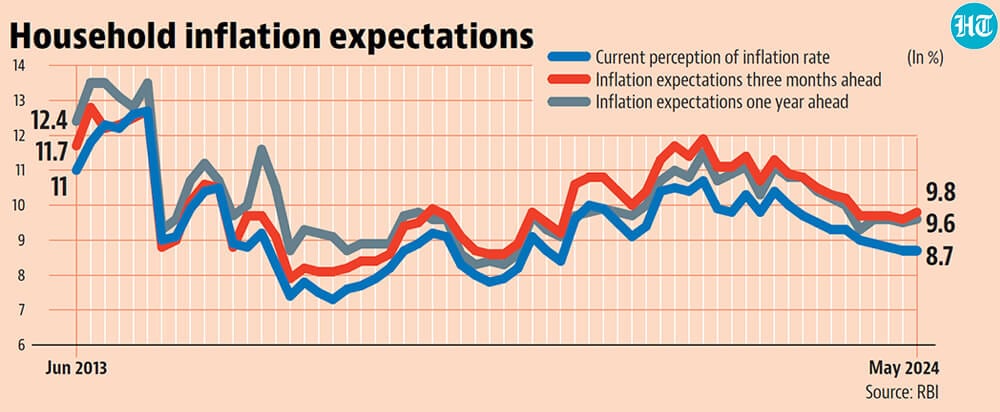
- Inflation expectations of households has seen a moderationNotwithstanding the debates on its efficacy, inflation targeting via monetary policy is a forward-looking exercise because higher interest rates are expected to curb demand and bring down inflation in the future. This makes the role of inflation expectations extremely critical in this entire process. Data from RBI’s survey on household expectation of inflation shows that they have seen a moderation compared to where they were even a year ago. When compared over a slightly longer period, the moderation is even more significant. However, what can also be seen in the data is that these numbers have been lower in the past when the overall inflation environment was more benign. Perhaps this is why the MPC is insisting on stabilising inflation around the RBI’s actual target of 4% rather than announce victory on it being in the range of 2%-6%.
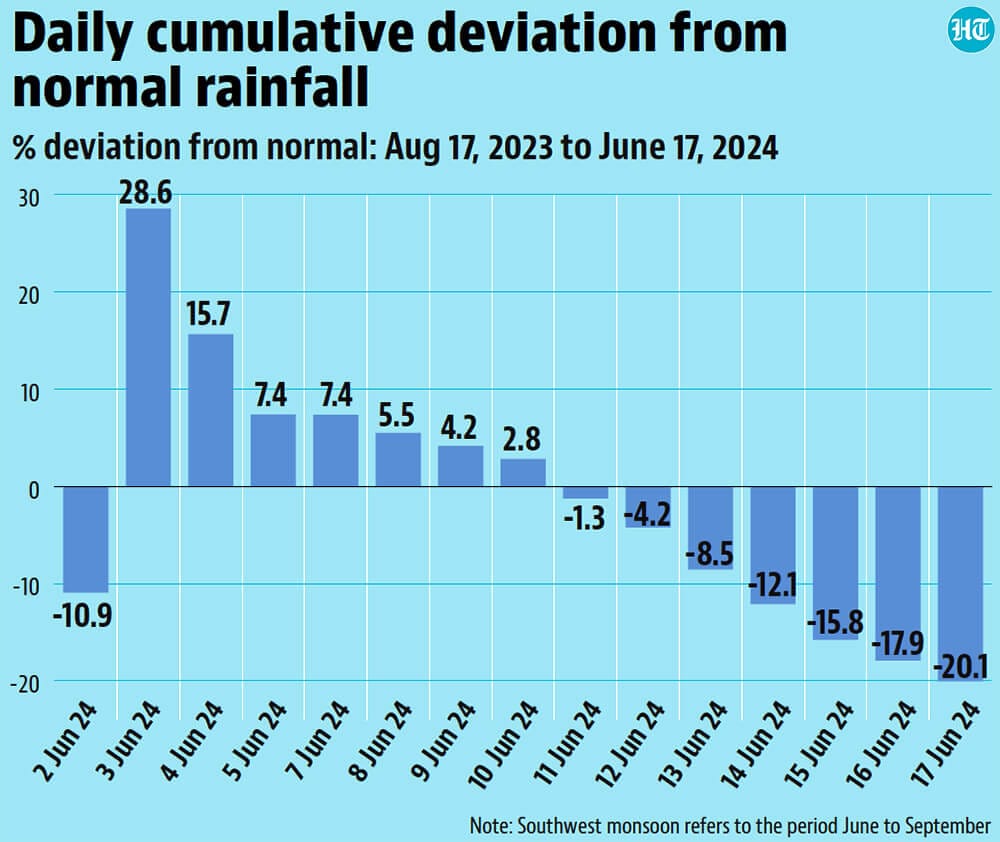
- If the monsoon loses momentum, inflation worries could increaseMost analysts believe that whether or not the RBI gives up its hawkish tone and pivots to monetary easing sooner rather than later will depend on the performance of the monsoon. “If rains over June and July are strong, reservoirs fill back up, and sowing activity rises quickly, food inflation could fall over a five-month horizon, opening up space for a shallow rate cut cycle. So far, rains started off well in June, but have slowed in recent days. We are watching this space carefully. If rains rise back up to normal/above-normal levels, the RBI could cut the policy repo rate as early as August”, Pranjul Bhandari, Chief India and Indonesia Economist at HSBC said in her research note on June 13. According to data from Centre for Monitoring Indian Economy, the south-west monsoon started with a surplus was in surplus until June 10. But it lost momentum thereafter and had a cumulative deficit (compared to long-period average) of 12.1% on June 14.