
 E-Paper



Number Theory: The rise and rise of India’s income tax collections
.
Published on: Feb 3, 2025, 09:27:35 IST

 Prefer HTon Google
Share via


Copy link

Much of the euphoria around the 2025-26 budget has to do with income tax. The government has , through a rebate and a redefinition of slabs , forgone revenue of ₹1 lakh crore, giving a huge boost to consumer sentiment. Despite this, it has not had to sacrifice its fiscal consolidation plan for the next fiscal year. Everything else (and there is quite a bit, including a continued emphasis on cap-ex), in the Budget is pretty much the same as last year. Here are four charts which tell us the income tax story in some detail.
The rise and rise of India’s income tax collections
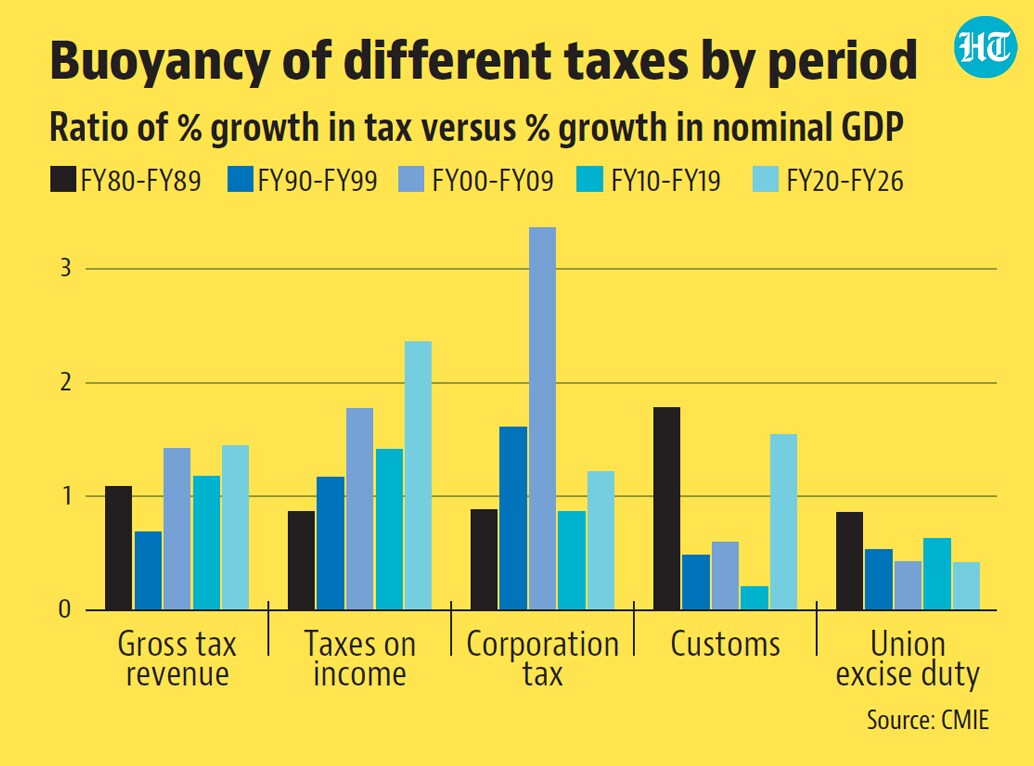
 Rise in importance of income taxes is a 21st century storyA long-term trend of share in income tax in India’s GDP clearly shows this. This number was lower than 1.5% until the 2000s, went from 1.5% to 2% between Y2K and Global Financial Crisis, lost a bit of momentum thereafter, and gained speed again a decade ago. It breached the 3% mark in 2022-23 and has crossed the 4% mark in 2025-26 according to the assumed nominal GDP and tax collection numbers. If the government had not lowered the tax slabs, the assumed income tax-GDP ratio would be 4.3%. The rising share of income taxes in GDP also implies that income tax buoyancy has been far higher than for other taxes. This data is backed by anecdotal evidence on an increase in the number of well-paid private sector workers in the country. These pages looked at income tax statistics to discuss the rise of India’s white-collar elite in August 2023 as well.
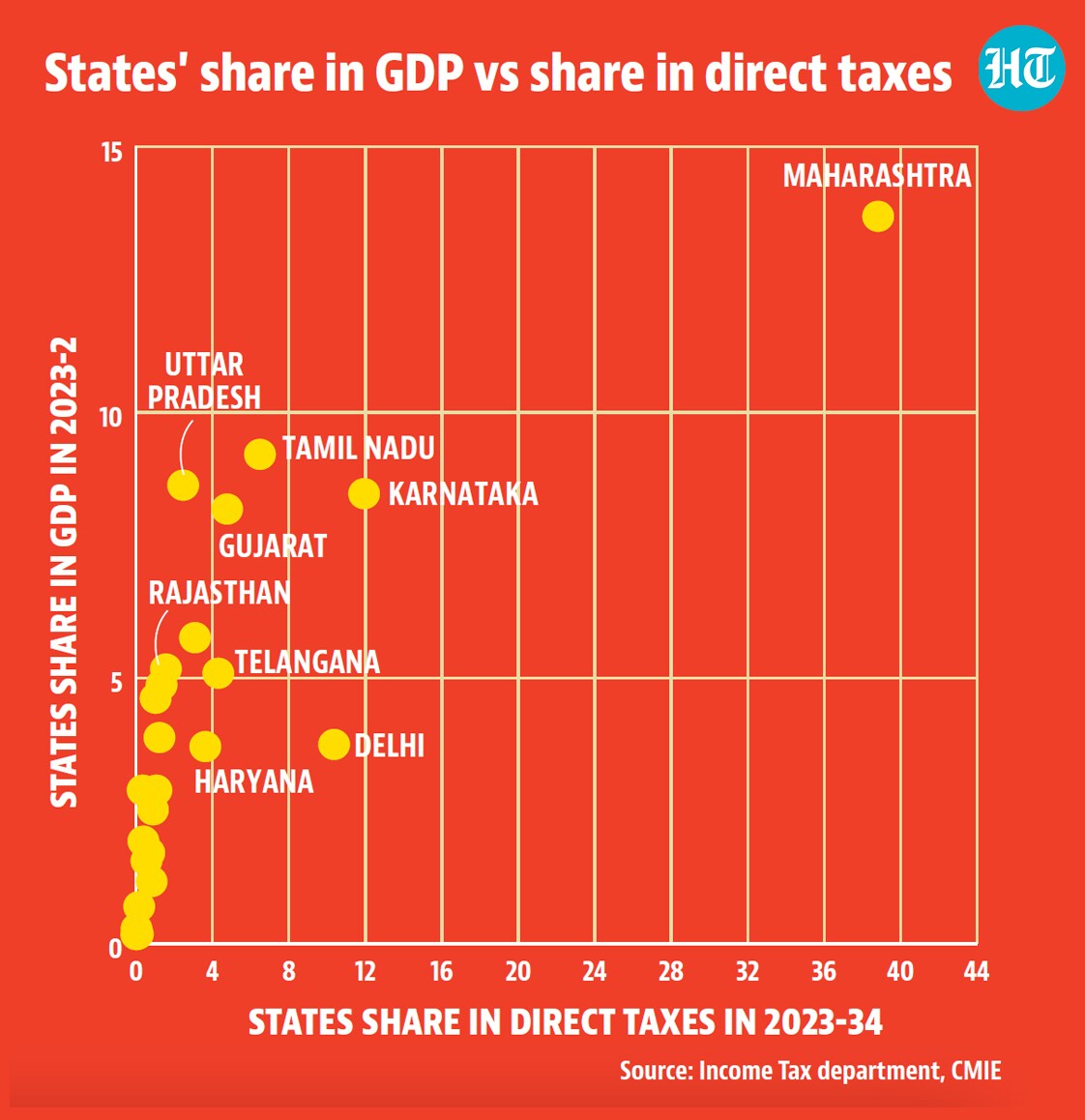
- But the income tax growth story has large personal and regional inequalitiesIt is unfortunate that we do not have recent granular data in income taxes in India. What we do have is a summary table released by the Income Tax Department, the latest of which pertains to fiscal year 2022-23. The personal inequality aspect of the income tax collections was discussed in these pages on Saturday in an analysis that showed that 50.3% of total individual tax liability comes from just 1.4% of the income tax returns filed. The inequality is equally stark at the level of states too. Just four states account for 67.6% of the total direct taxes – this includes both income tax and corporate tax -- paid in the country. Top direct tax paying states have a much greater share in national tax collection than in GDP which suggests that the formal high-income economy in concentrated in these regions. These analyses and numbers could be much more insightful if we had detailed and more up-to-date income tax data.
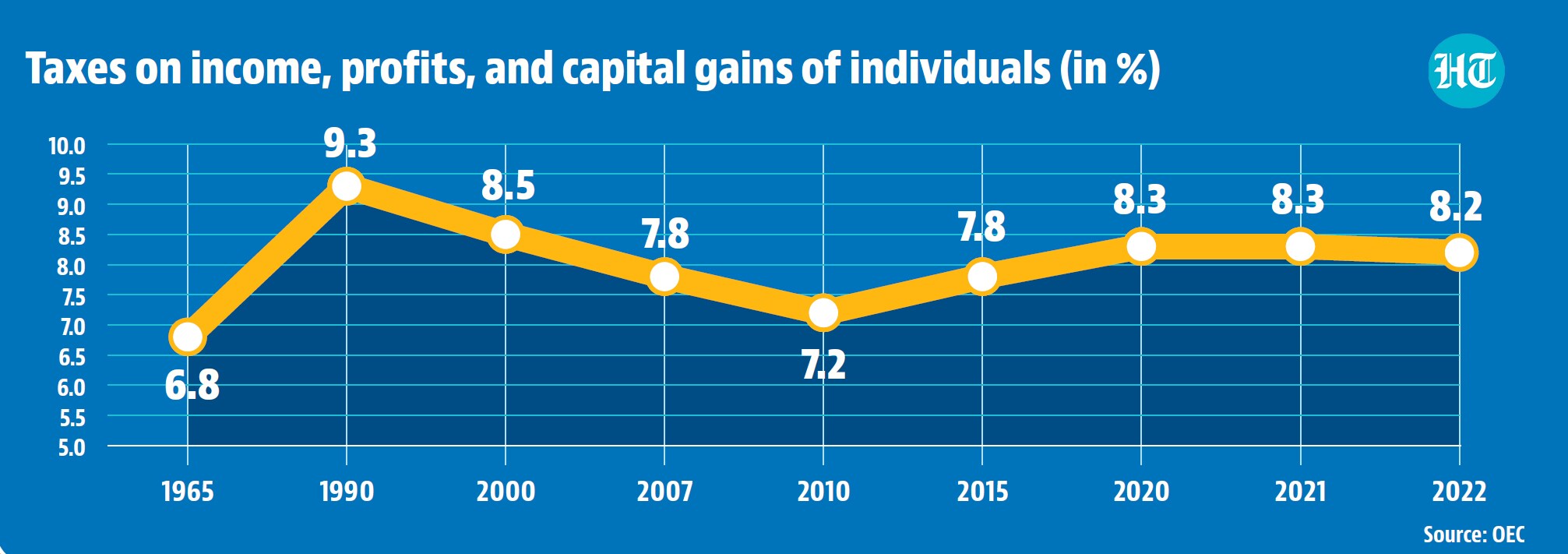
- How long can the rally in income tax collections continue?Going forward this will be an important determinant of India’s fiscal prowess and also a derived reflection of growth in better paying jobs. After all, people only pay taxes when they earn higher salaries. There are two ways to look at this question. One is the fact that India still has a young workforce compared to many advanced economies and therefore a bigger pool of potential taxpayers. Another way to look at this question is to look at the importance of income taxes in more advanced economies. According to data from Organisation for Economic Cooperation and Development (OECD), share of personal income tax (taxes on income, profits and capital gains of individuals) in GDP peaked at 9.3% in 1990. This number has since fallen to 8.2% by 2022. With income tax collections at around 4% of GDP, India is very far from reaching this threshold in terms of income tax share in GDP. However, it is worth underlining that most people still have low-paying jobs in India unlike in OECD countries. In other words, the prospect of future growth in income tax collections is critically linked to our ability to generate more and better-paying jobs for the young workers entering the labour market.


Unlock a world of Benefits with HT! From insightful newsletters to real-time news alerts and a personalized news feed – it's all here, just a click away! -Login Now!


