E-Paper



The average Sikh is now poorer than a non-Sikh in Punjab | Number Theory
Punjab is caught in a vicious cycle of politically untouchable farm subsidies and their toxic nudge towards unsustainable farming practices.

 Prefer HTon Google


Punjab is a state in deep socio-political anxiety. It elected a new political party to power in 2022. It sent two MPs with what can be described as secessionist tendencies, to the Lok Sabha in 2024. The existing assembly has passed a law against sacrilege, making it perhaps the only state with such a law in India. The Sikh clergy is upset rather than happy with the law. The state’s Sikh chief minister is battling allegations of sacrilege. The Aam Aadmi Party (AAP) government in Punjab is trying to overcome this anger by doling palliatives.
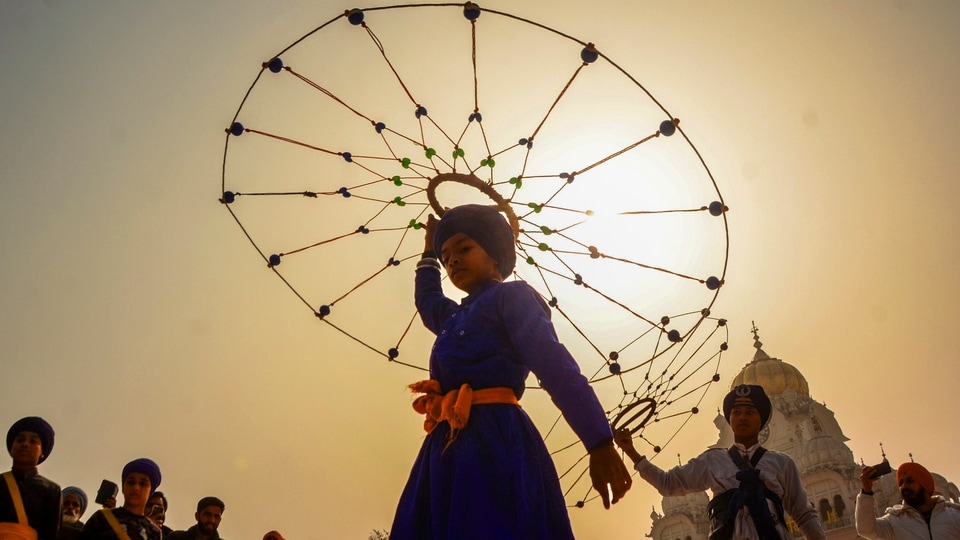
What needs to be underlined is Punjab’s anxiety is different from other states. It faces not just stagnant income and precarity, but stagnant income and precarity against a history of prosperity rooted in farming. This economic decline, an HT analysis of historical data shows, lies in relative decline of income growth in Punjab’s agriculture, which has disproportionately affected Sikhs in the state.
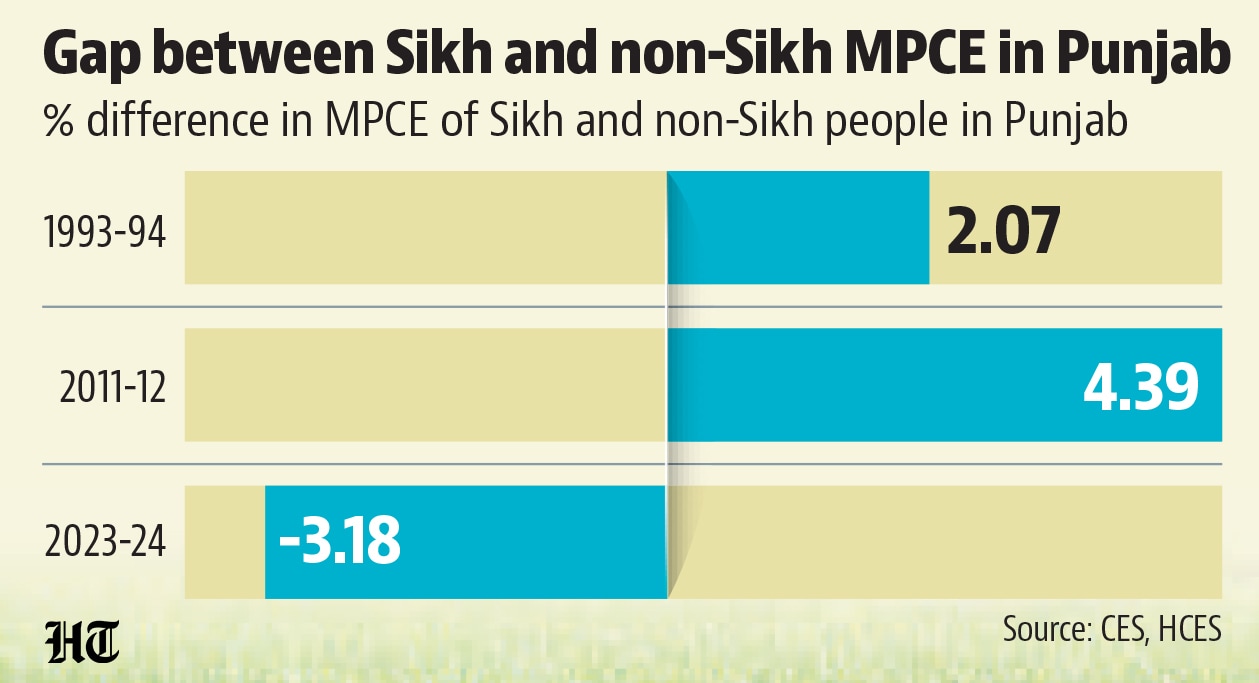
 For the first time, Sikhs have fallen behind non-Sikhs in consumption spending in PunjabMonthly per capita expenditure (MPCE) data from the National Statistic Office’s (NSO) Household Consumption Expenditure Surveys (HCES) shows this clearly. In 2023-24, the latest available HCES data, an average Sikh had an MPCE of ₹6,319 in Punjab, lower than the MPCE of ₹6,527 for the average non-Sikh. This was not the case in 2011-12 or 1993-94. In fact, the Sikhs became better off vis-à-vis non-Sikhs between 1993-94 and 2011-12.
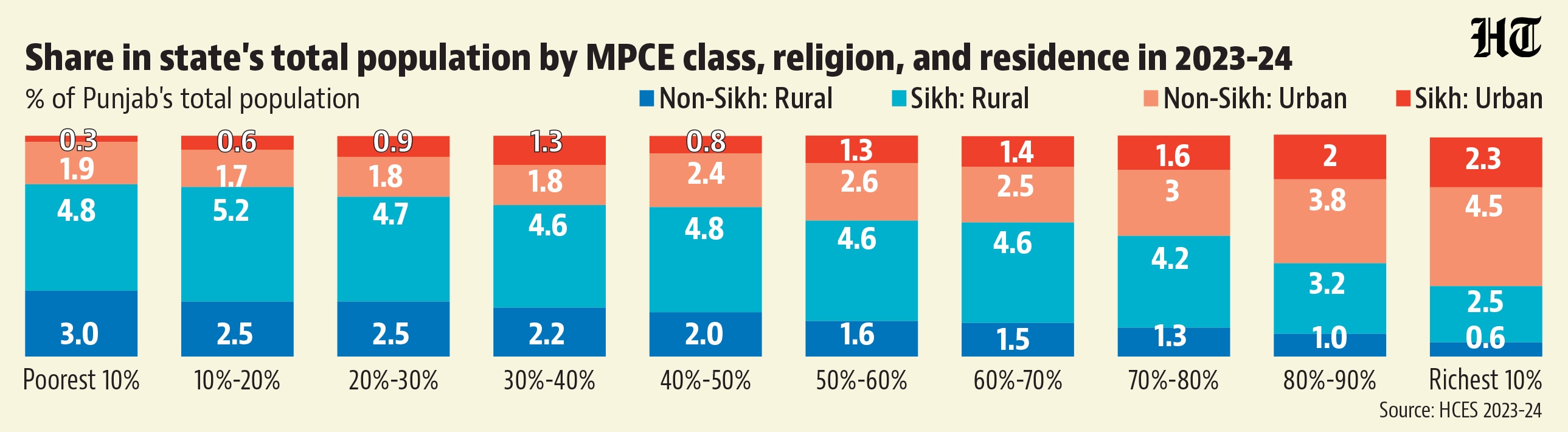
- How did Sikhs become poorer than the non-Sikhs?It is the tyranny of weighted averages. If one were to compare rural and urban MPCEs separately, Sikhs continue to lead non-Sikhs on MPCE. So, why are they behind non-Sikhs at the overall level? The answer lies in spatial distribution of Sikhs and non-Sikhs in the state. The Sikhs and non-Sikh population in rural Punjab is around 70%-30% in the 2023-24 HCES report. In urban areas, the distribution reverses itself. Because overall urban MPCE has been growing faster vis-à-vis its rural counterpart between 1993-94 to 2023-24, the average Sikhs’ MPCE has fallen behind non-Sikhs.
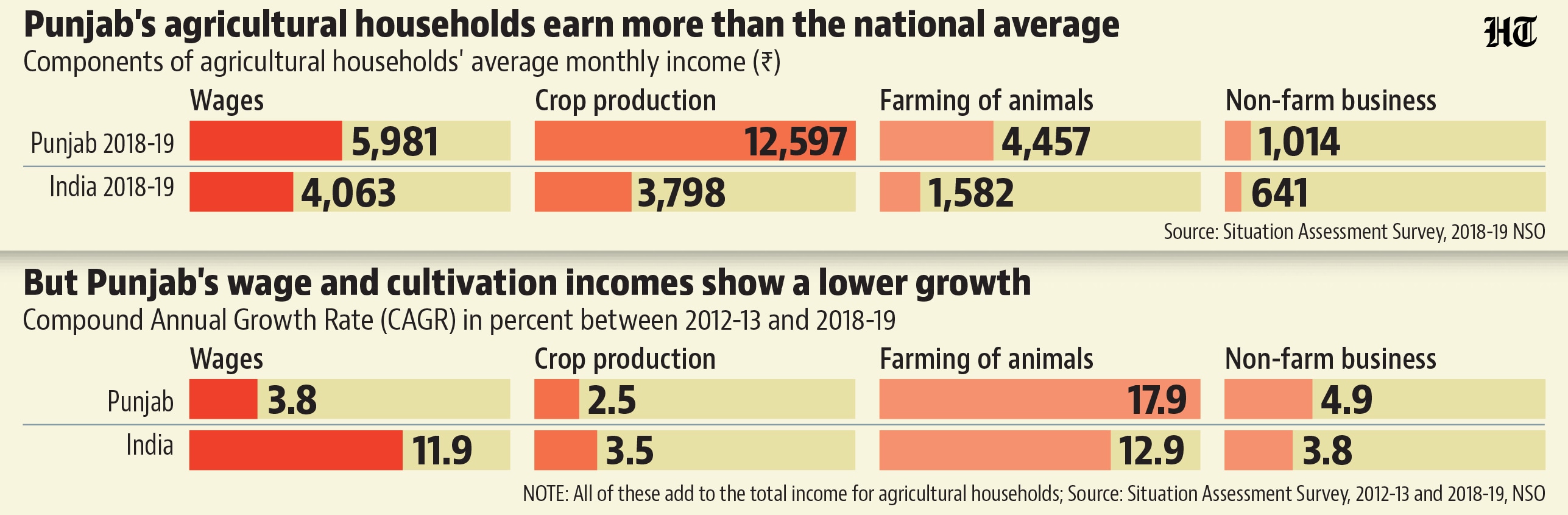
- Rural MPCEs have lagged urban because farm incomes have stalled in PunjabNumbers are slightly dated, but once again clear. The 2018-19 Situation Assessment Survey (SAS) of NSO defined agricultural households (minimum economic stakes in agriculture) as those that received at least ₹4,000 from any farming activity and had at least one member self-employed in agriculture in the past year. Income growth of such households between 2012-13 and 2018-19 was the worst in Punjab -- a compound annual growth rate (CAGR) of 4.9% -- after Odisha and Jharkhand (CAGR less than one percent). The all-India average is 7.8%. It is not just a stall in cultivation incomes which has made Punjab a laggard. Wage income growth has disappointed Punjab as well. To be sure, one could say that it is difficult for Punjab to achieve high growth in its cultivation incomes. Cultivation income per agricultural household in Punjab is 3.3 times the national average.
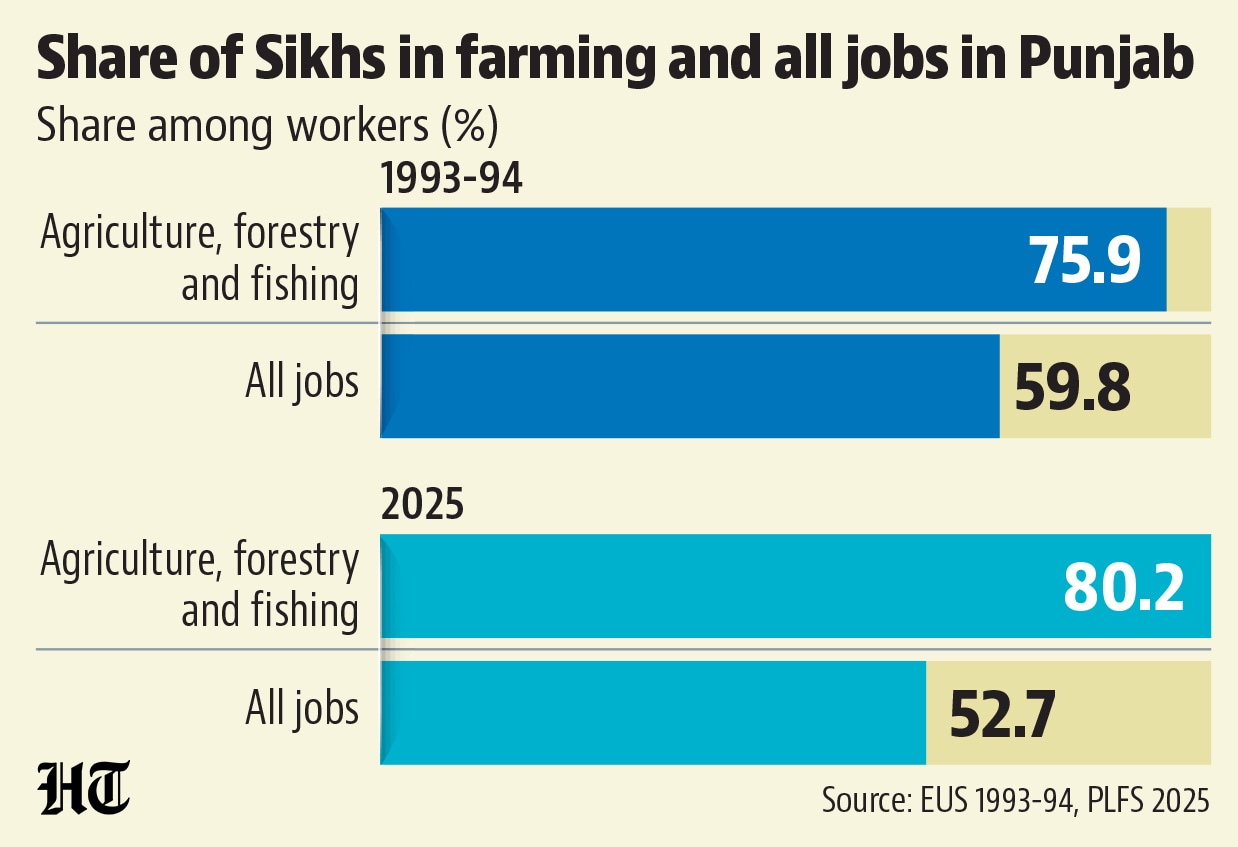
- Sikhs are significantly more invested in farming than non-Sikhs in PunjabPunjab is among the states with lowest overall employment share in agriculture, but Sikhs are disproportionately employed in farming. 2025 data shows that 80% of those employed in agriculture in Punjab are Sikhs, much higher than their share of 53% among workers in the state. In 1993-94, Sikhs were 76% of the total agricultural workers in Punjab. To be sure, Sikhs have moved out of farming in the state, but others have moved out faster.
- What we understand...Punjab is caught in a vicious cycle of politically untouchable farm subsidies and their toxic nudge towards unsustainable farming practices. Unless this changes, agricultural incomes will only go south in the state. No political party has had a meaningful dialogue with the predominantly Sikh Punjab peasantry on this issue. The entire experience of forcing farm laws through the ordinance route during the pandemic created a deep trust deficit for any such initiative. In this self-destructive void, religious conservatism might have emerged as the proverbial opium of the masses. It will be disastrous for the state and the country if politicians and policy makers cannot connect the dots.