
 E-Paper



The household balance sheet puzzle in India | Number Theory
.
Updated on: May 18, 2025, 11:14:47 IST

 Prefer HTon Google
Share via


Copy link

The National Statistical Office (NSO) released National Account Statistics (NAS) tables 2025 on Friday. NAS tables give a detailed break-up of the national income data over and above what is provided in the GDP numbers. To be sure, the NAS data comes with a year’s lag and the 2025 tables give data up to 2023-24. While NAS tables give a lot of information, their data on the household sector, especially its savings part has been widely followed in the post-pandemic period because of a falling trend in household savings as a share of GDP. The latest data shows that the trend continues but we need more information to make sense of what exactly is leading to it. Here are four charts which explain the argument in detail.

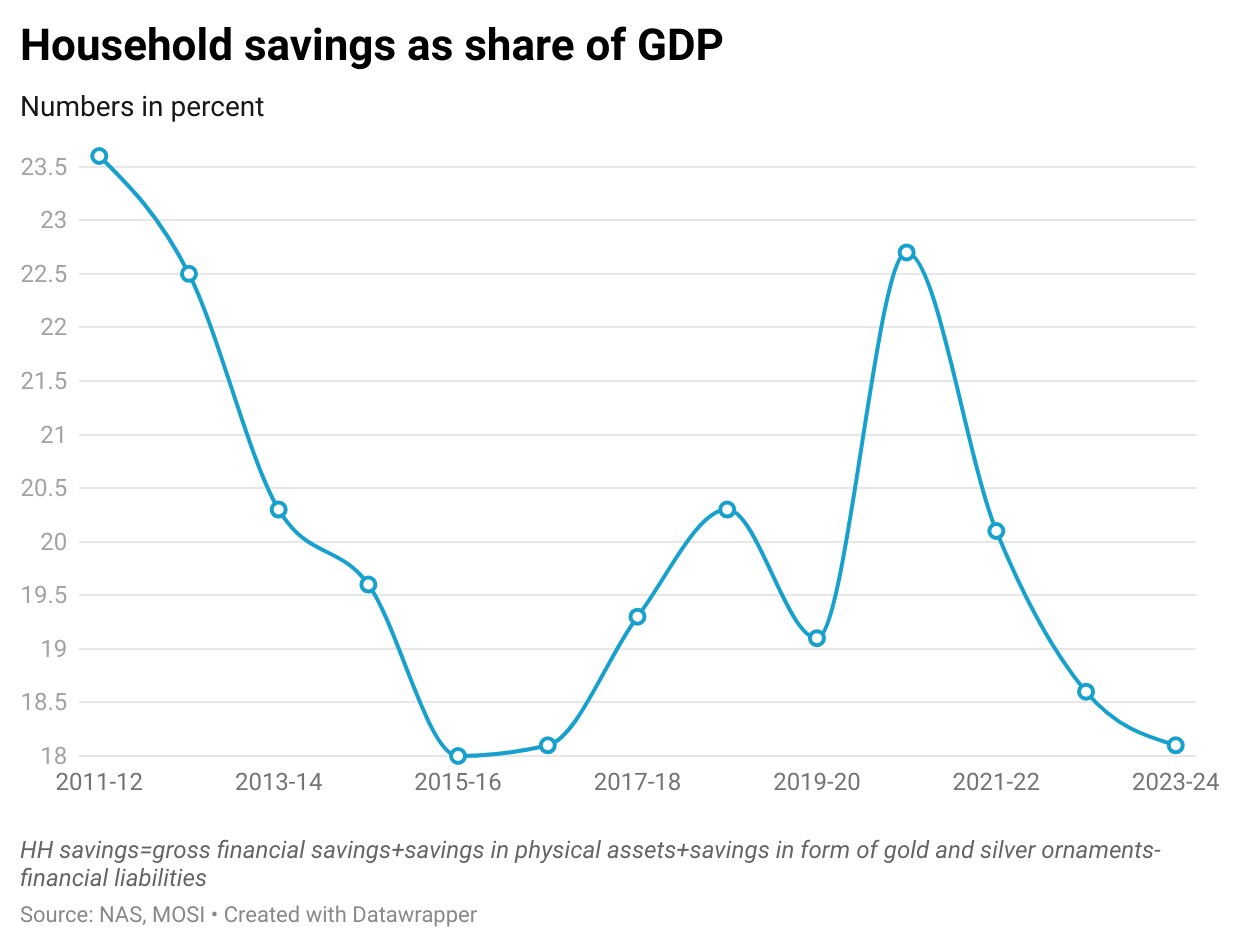
Total household savings are not very low by historical standards
 Total household savings are not very low by historical standardsTotal household savings are defined as the sum of gross financial savings, savings in physical assets, and savings in form of gold and silver ornaments less financial liabilities. The intertemporal trend in this statistic is best seen as tracking savings as a share of nominal GDP. A comparison of the data from 2011-12 to 2023-24 (earliest and latest period for which we have data in the current NAS tables) shows that the 2023-24 number (18.1%) is not very different from what it was 2015-16 and 2016-17. Also, the impression of a sharp fall in household savings is because of a sharp rise in this number in 2020-21, which is perhaps a reflection of forced savings – when households could not spend – because of the lockdown during the pandemic.
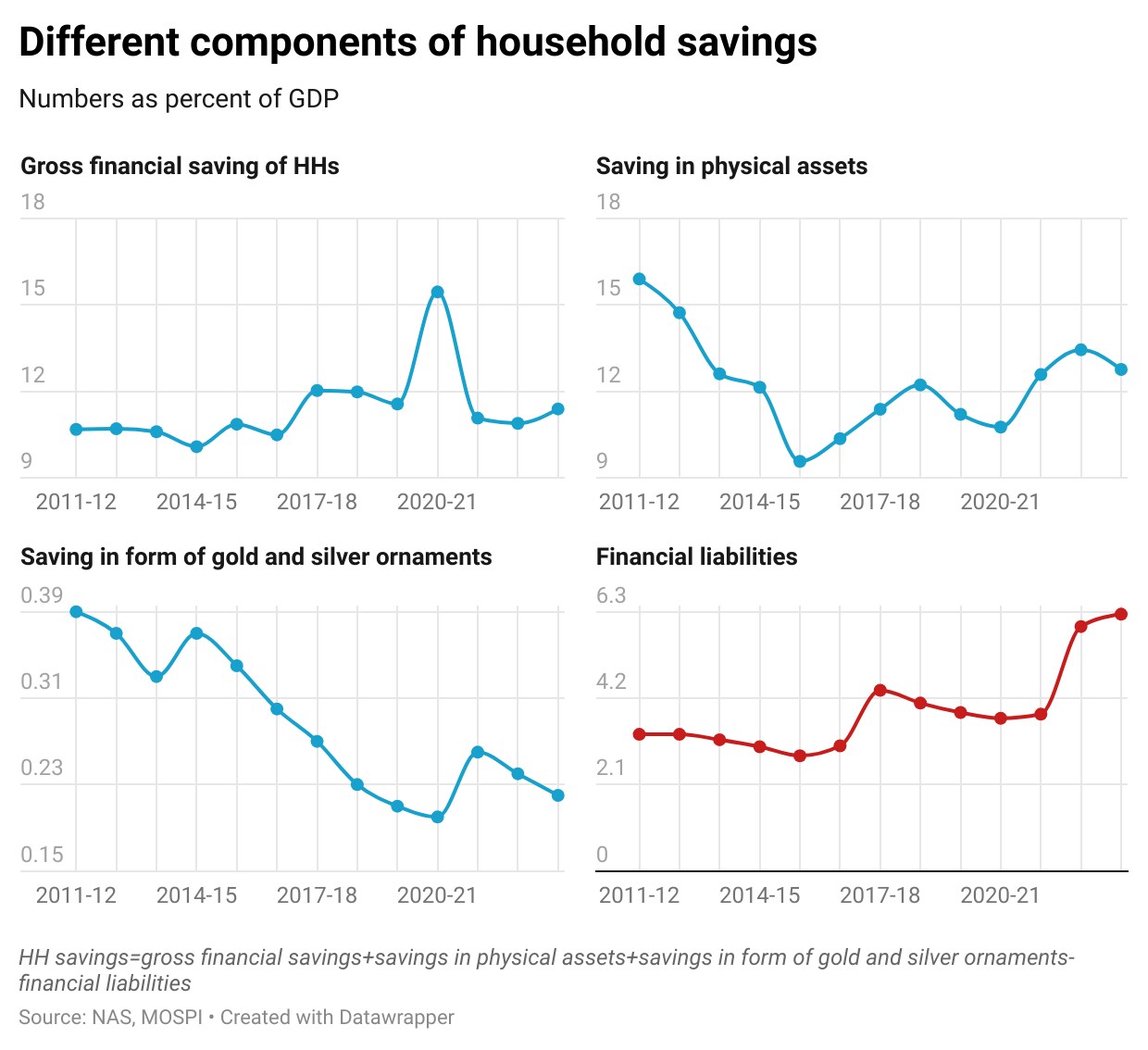
- But net financial savings of households are lower because of a sharp increase in financial liabilitiesThis is the most important takeaway from the decomposition of the household savings data. While the current levels of gross financial savings and savings in physical assets are not exactly unprecedented when compared to historical levels, financial liabilities of households have climbed to an all-time high by a distance in 2022-23 and 2023-24 compared to previous levels. This clearly suggests that households have been borrowing at much larger pace than they have in the past decade.
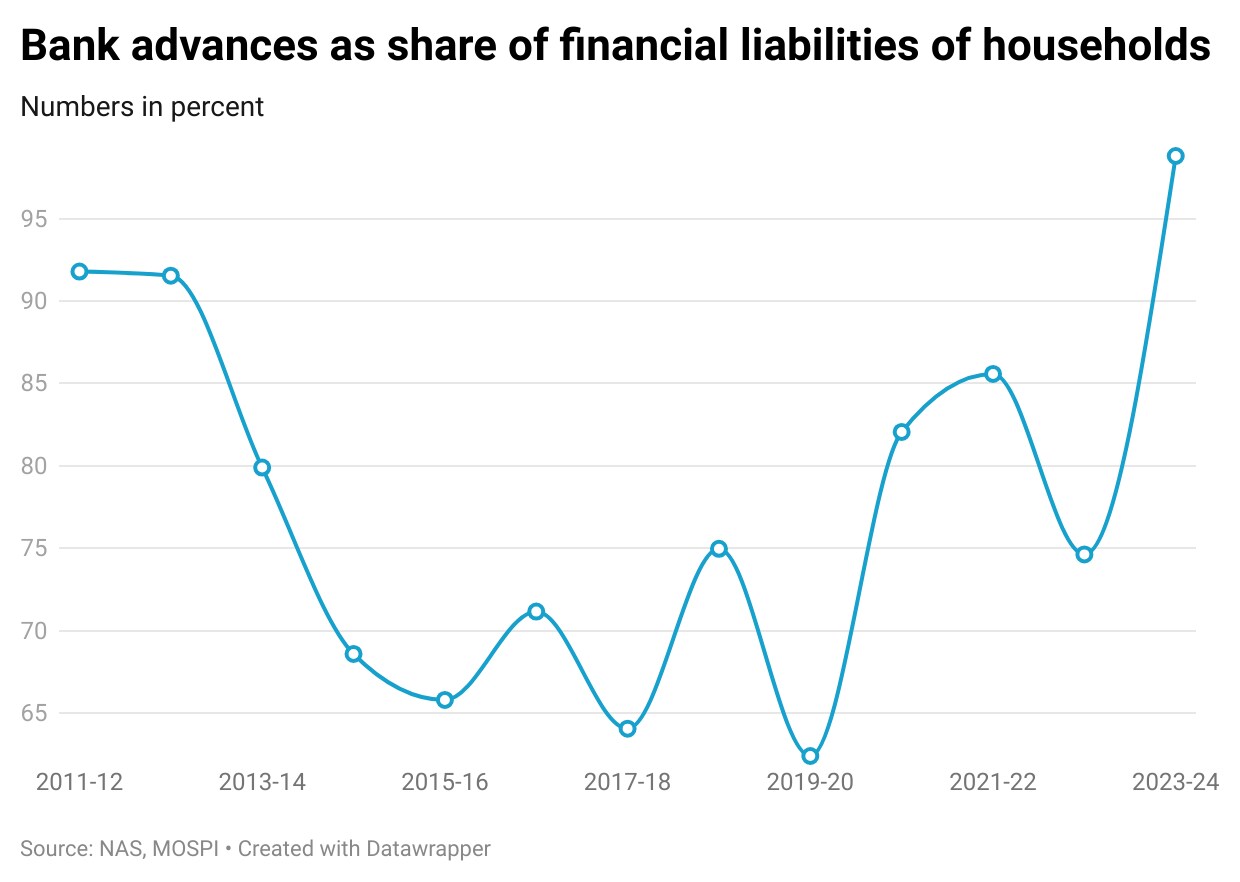
- Most of the rise in household financial liabilities is on account of bank lendingAlmost 99% of the total financial liabilities of households came from band advances in 2023-24. This number saw a sharp increase between 2022-23 and 2023-24 and was at its highest ever in 2023-24. This is reassuring in a way because banks are generally not known to indulge in sub-prime borrowing in India, which generates the confidence that a lot of the increase in borrowing is likely happening on account of borrowers which are considered credit worthy. It is actually interesting to note that the share of bank lending in total household financial liabilities had fallen significantly in the second half of the last decade..
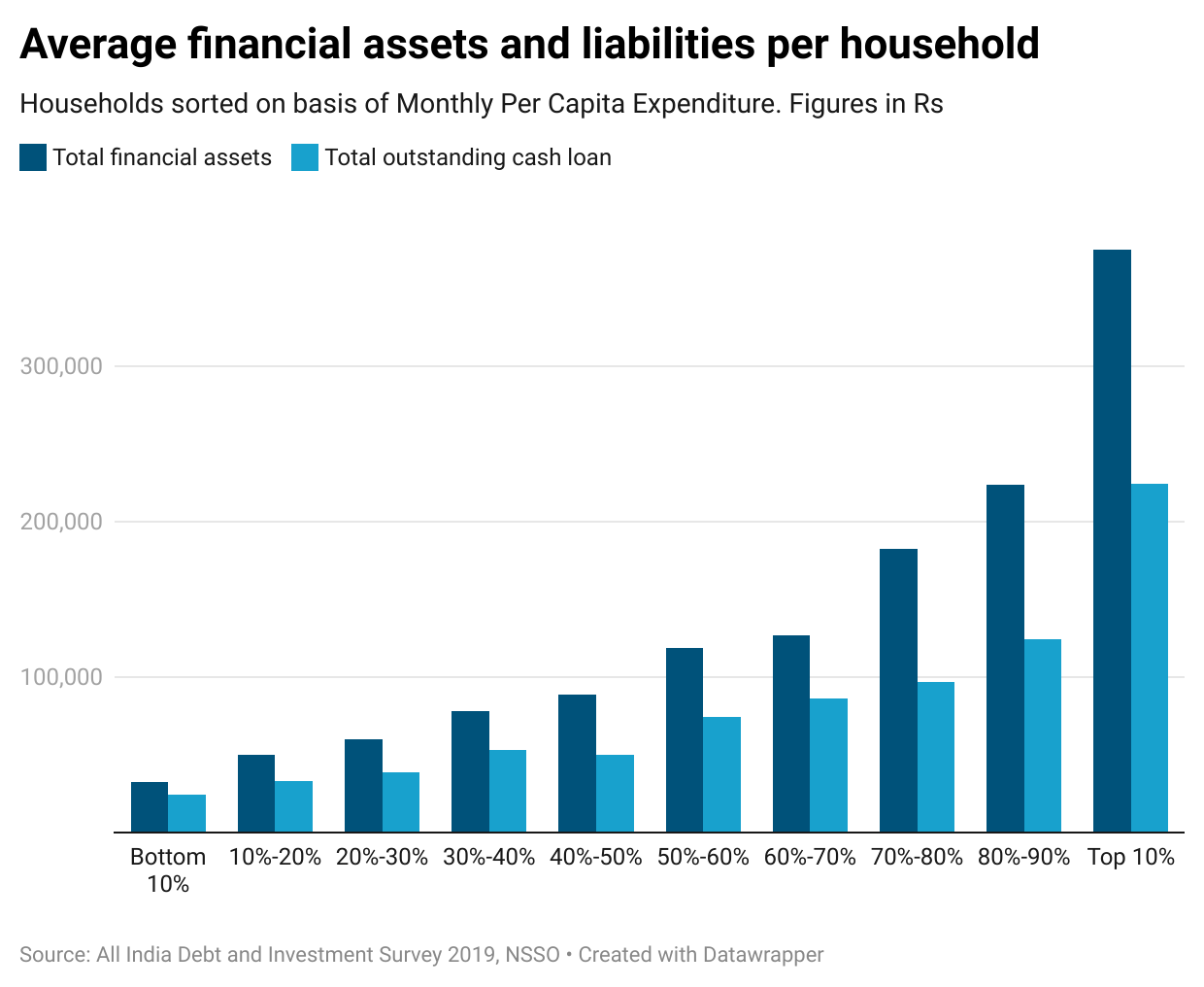
- So, is rising household debt good news or bad news?While a high share of bank lending in total financial savings in 2023-24 makes it tempting to argue that the recent rise in household debt is perhaps on account of people taking more credit to match what could be higher income levels, there is good reason to observe some caution in answering this question. NAS data does not tell us anything about the class-composition of household balance sheets, so we do not know whether the rise in debt is on account of richer or poorer segments of the society. The only official source of class-wise asset and liability data on households are the All-India Debt and Investment Surveys carried out by the National Sample Survey Office. The latest available data (2019) shows that poorer households were more likely to have a high debt to asset ratio than their richer counterparts. If this number has increased further in the forthcoming AIDIS, then one is right in getting worried that household financial health has become more fragile for the poor in the country.



Unlock a world of Benefits with HT! From insightful newsletters to real-time news alerts and a personalized news feed – it's all here, just a click away! -Login Now!


