
 E-Paper



The social composition of Bihar election candidates | Number Theory
.
Updated on: Oct 29, 2025, 08:41:05 IST

 Prefer HTon Google
Share via


Copy link

The first of this two-part series gave a broad social overview of Bihar’s caste composition and the caste composition of NDA and MGB (Mahagatbandhan) candidates based on a database prepared by the first author of this story. This part will offer more granular details of caste composition of candidature of parties within alliances and sub-castes within broad social groups and also the caste-wise contests at the AC level.
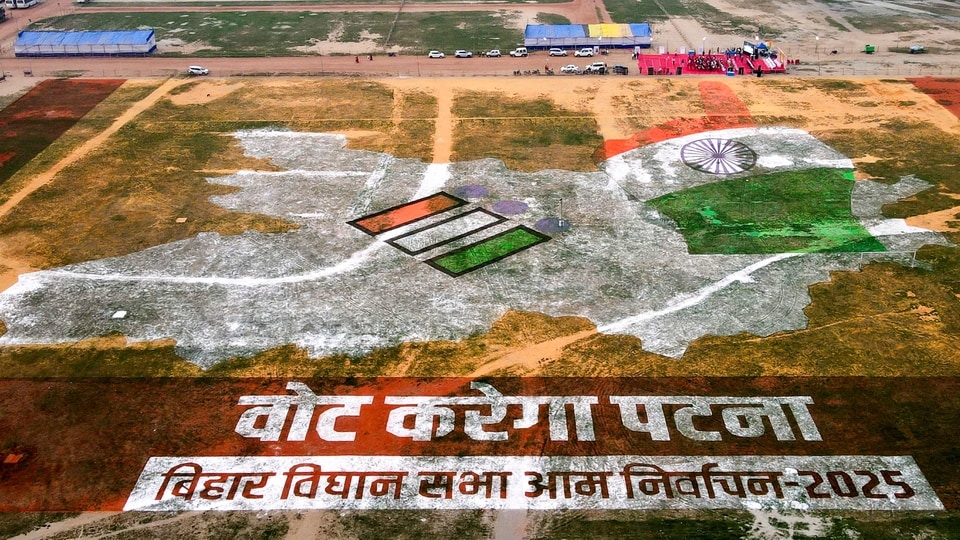
The social composition of Bihar election candidates
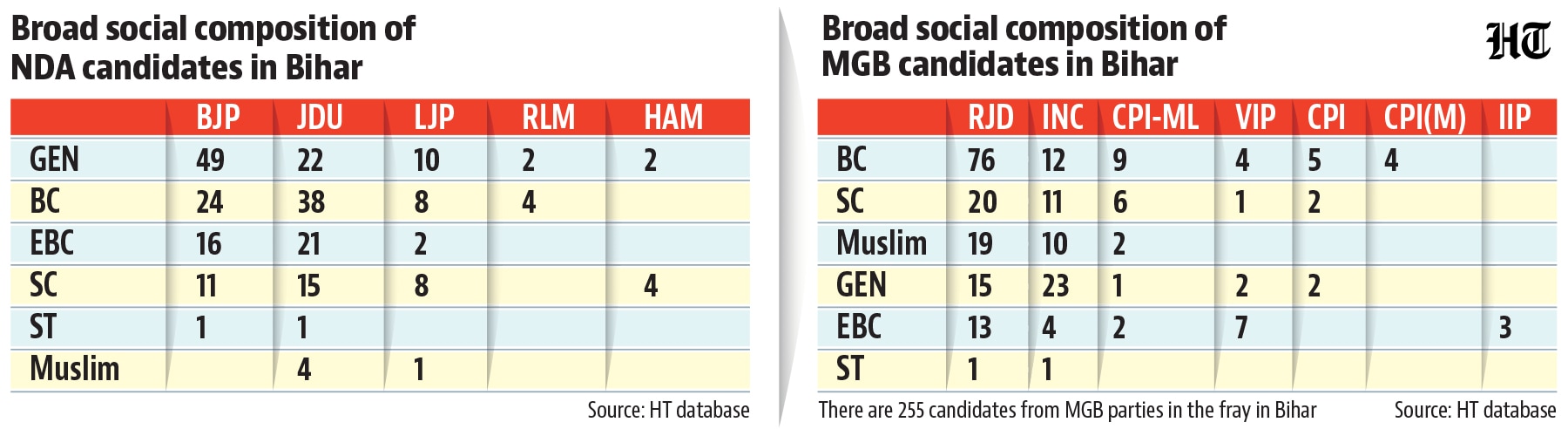
 Among the major alliance partners, BJP and RJD have fielded the largest number of upper caste and BC candidates49 out of the 101 candidates fielded by the BJP are Hindu non-SC-ST-OBC or the upper castes. For the RJD, 76 out of its 144 candidates are from the backward classes (BCs). RJD has also put up the highest number of Muslim candidates among parties which are either in the NDA or MGB. Janata Dal (United) or JD (U) has put up the highest number of Extremely Backward Class (EBC) candidates. The three communist parties which are a part of the MGB, taken together, have the lowest share of upper caste candidates among alliance partners in either of the alliances that are contesting at least five seats. Two of NDA’s partners, the Lok Janshakti Party (LJP) and the Hindustani Awam Morcha (Secular) or HAM(S), both of which are led by Dalits, have a much higher share of upper caste candidates.
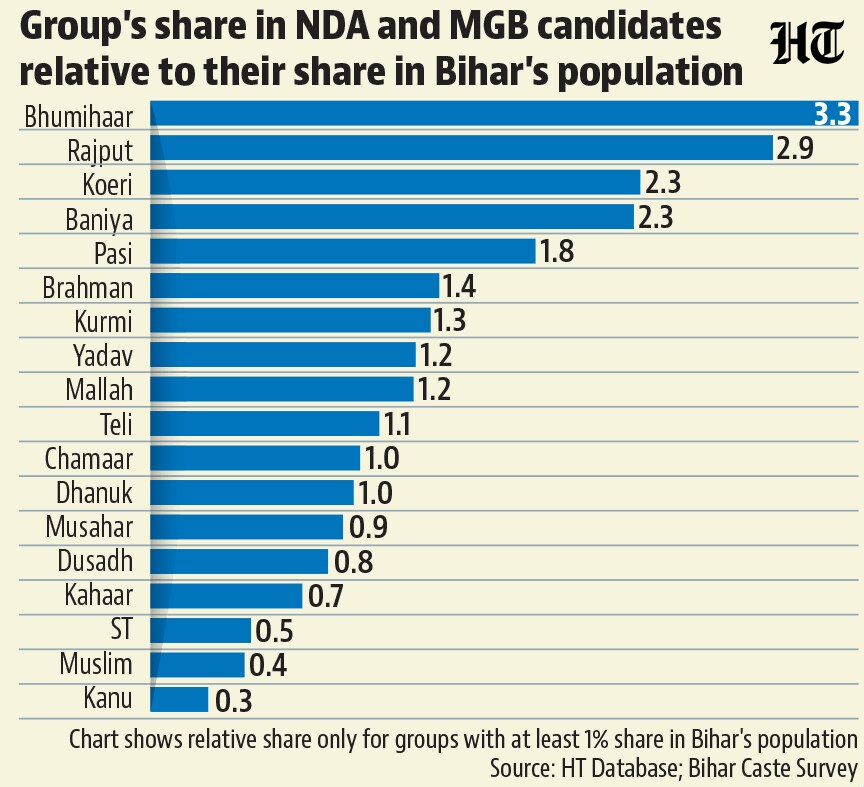
- At the sub-caste level, Bhumihars have the highest proportionate representation, closely followed by RajputsBroad social categories have always meant very little in a polity as fragmented as Bihar. In the immediate aftermath of independence, caste-rivalry took the form of Bhumihar versus Rajput in the intra-Congress factional fight between Shrikrishna Singh and Anugrah Narayan Singh. For the last three-and-half decades, the political competition has been between two backward class leaders from Yadav (Lalu Yadav) and Kurmi (Nitish Kumar) sub-castes. This makes it important to look at candidates at the sub-caste level. An HT analysis of this data along with the respective share of castes in the state’s population from the 2023 caste-survey shows that Bhumihars and Rajputs, two historically land-owning castes, have the highest proportionate representation among NDA and MGB candidates. While the number of Yadav candidates is the largest for a single sub-caste, their relative advantage is not as high given the fact that they also have a much larger share in population (14.26%) than Bhumihars (2.87%) or Rajputs (3.45%). These numbers suggest that upper castes still hold a lot of clout in the state’s politics, which could very well be a derivative of the necessary socio-economic clout needed to contest an election rather than just the number of voters of their own sub-caste.
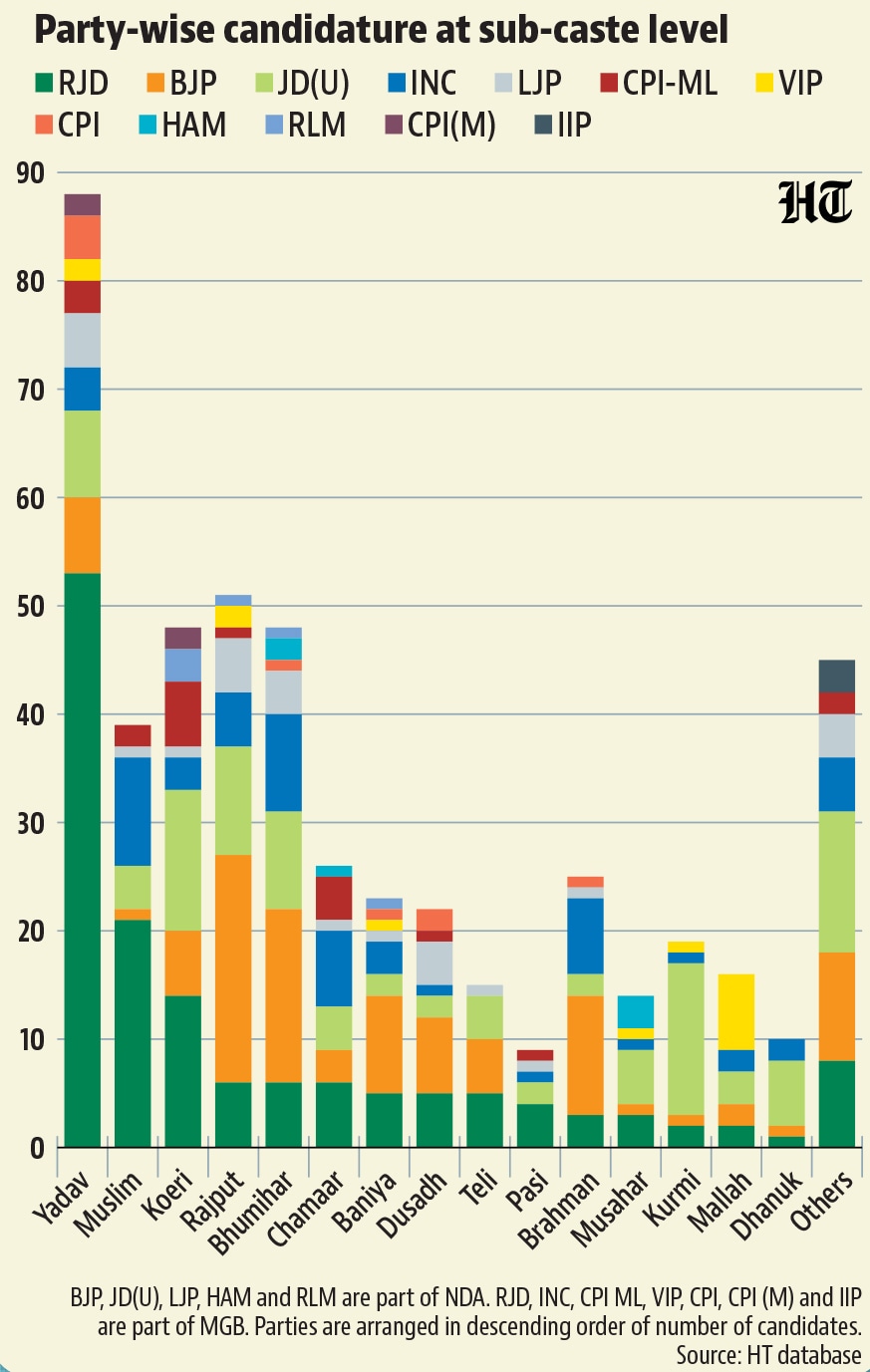
- RJD has given most seats to Yadavs; BJP leads in Rajputs, Bhumihars, Brahmins; JD(U) has fielded most Kurmis53 out of the 88 Yadav candidates from either MGB or NDA are from the RJD. The BJP, on the other hand has fielded more upper caste candidates – Bhumihars, Brahmins, Rajputs and Kayasths – than the RJD and the JD(U) put together, the other two major parties in the state. Because the BJP has not fielded any Muslim candidates, it has also been able to accommodate more EBC sub-caste candidates than the other major parties. The JD(U) has fielded 14 out of the 19 Kurmi candidates in the state.
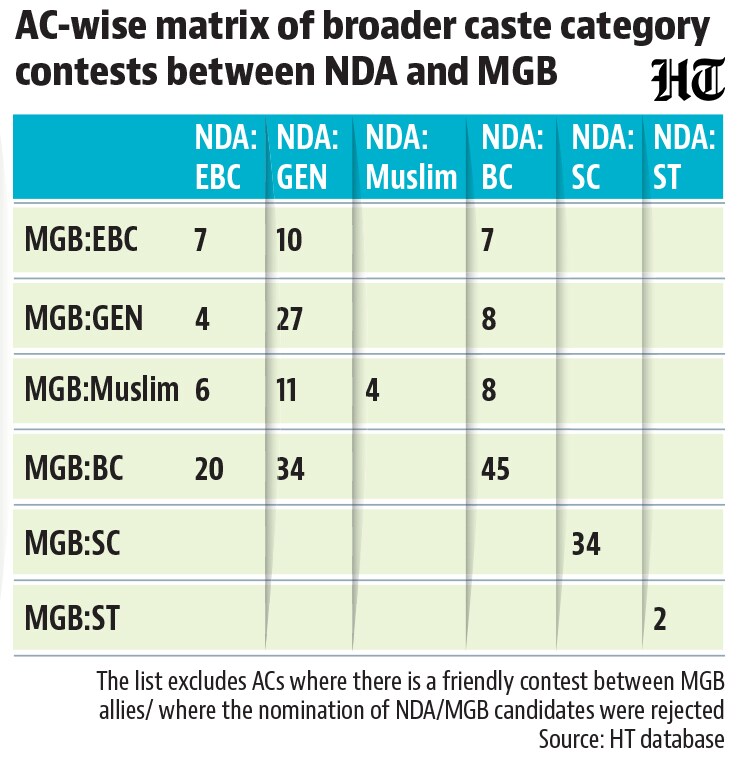
- Decoding the caste-wise contest in BiharBihar’s political history and even the wider narrative around Mandal politics lends itself to the stereotype of electoral politics being some sort of an upper caste versus lower caste struggle. A granular examination of the caste-wise alliance-wise contest matrix in Bihar cautions that one should stay clear of such sweeping generalisations. HT has drawn up such a matrix for 227 ACs in Bihar which excludes 16 ACs where nominations of either the NDA or MGB candidates were cancelled or the MGB has more than one candidate. 36 out of these ACs will see the same social-group contest by default because they are reserved for either SCs or STs. In the remaining 191 ACs, 83 will see a contest between candidates from the same broad social group (upper caste versus upper caste, BC versus BC, EBC versus EBC etc). 25 out of the 108 ACs which have a candidate from divergent social groups are places where the MGB has fielded a Muslim but the NDA has a Hindu. Even at the sub-caste level, 63 out of the 227 ACs analysed here will see a contest between candidates from the same sub-caste, which underlines politics as an exercise in competing ambitions rather than some wider social conflict.


Unlock a world of Benefits with HT! From insightful newsletters to real-time news alerts and a personalized news feed – it's all here, just a click away! -Login Now!


