
 E-Paper



Why is there a fire in the Valley of Flowers? | Number Theory
.
Published on: Jan 15, 2026, 09:09:14 IST

 Prefer HTon Google
Share via


Copy link

Satellites have detected active fires in the Valley of Flowers forest range in the past week, a 87.5 square kilometres national park in the Chamoli district of Uttarakhand and a UNESCO world heritage site. This might appear strange for a winter month in a hilly region of the country. However, data shows that fires are not unheard of in this month in Uttarakhand, although they are usually lower than in summer months. While the trigger for fires can be both manmade and natural, they persist or spread in winter months when precipitation is low. This rain and snow scarcity may be one reason why the fires are high in Uttarakhand this January, and are persisting in the national park.

Why is there a fire in the Valley of Flowers?
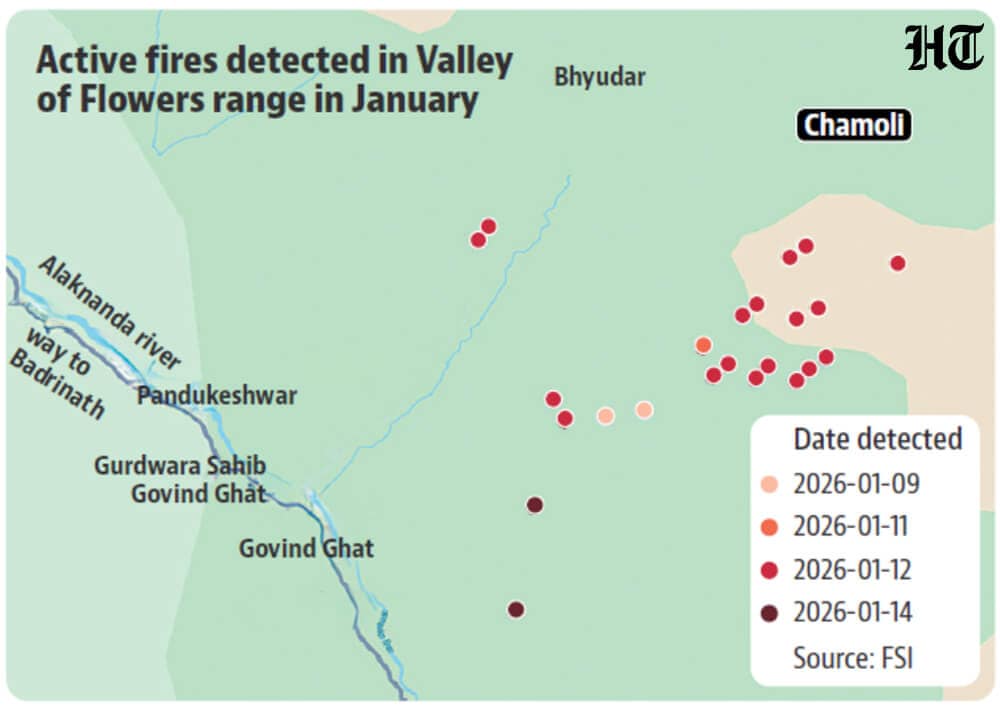
 Active fires detected in Valley of Flowers National Park range since January 9According to the Forest Survey of India (FSI), fire points data generated from the Suomi NPP (SNPP) satellite – it lists fires by forest administrative regions – active fires have been detected this month in the Valley of Flowers range since January 9. To be sure, reports suggest that the national park itself is around 7 km away from the site where fires have been seen in an aerial survey by forest department officials, and is contained at the surface of the nearby forests.
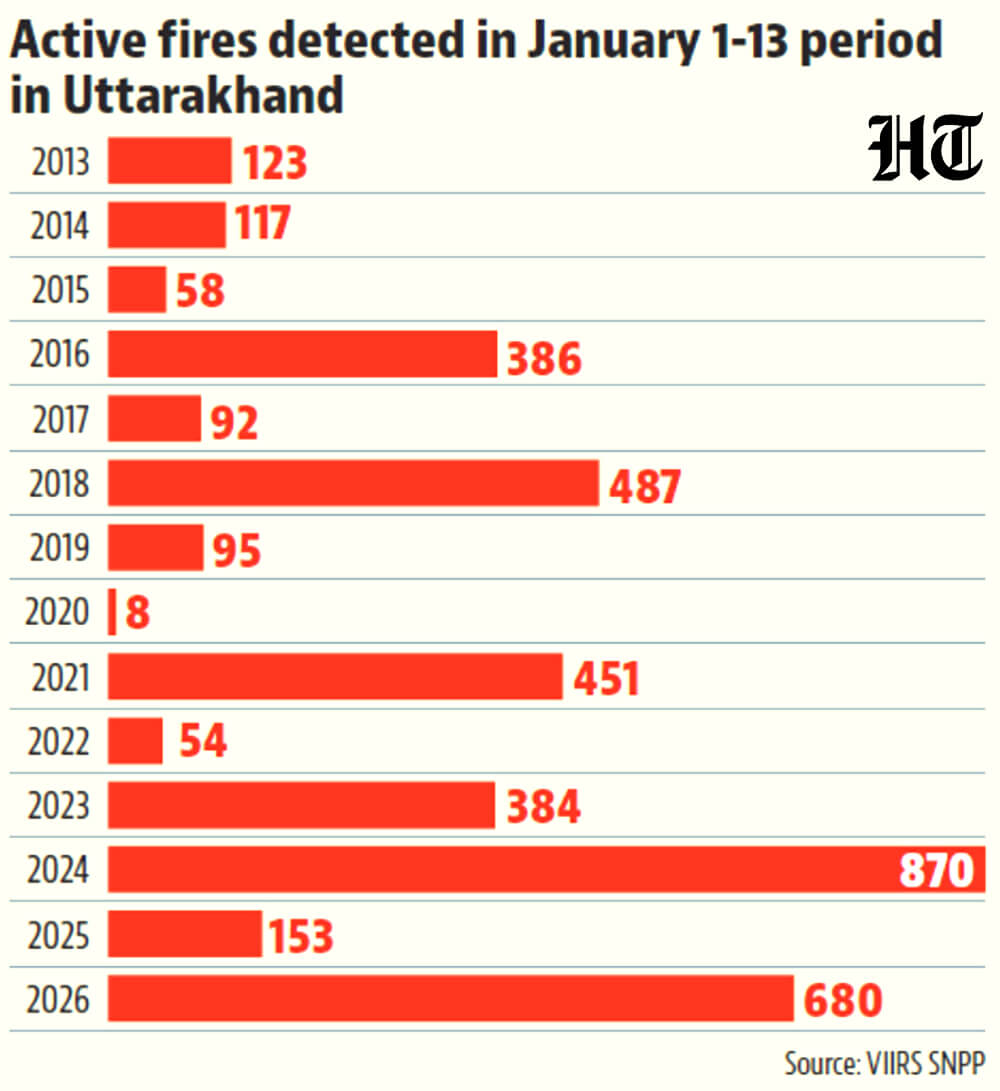
- Uttarakhand has recorded second highest active fires for the first 13 days of JanuaryThe Valley of Flowers fires are not an isolated incident in Uttarakhand. SNPP shows that the state has recorded 680 fires from January 1 to January 13, the second highest count since 2013, the first year for which SNPP produced data for this period. The highest count was in 2024, when 870 fires were detected. Uttarakhand is also not alone in recording a spike in January. The 202 fires detected in Himachal Pradesh is also the second highest count for the state, although far behind the 670 fires recorded in 2024. These numbers will increase. Another 76 and 46 fires were detected in Uttarakhand and Himachal Pradesh on January 14 in the first of two passes that the satellite makes over India. To be sure, the 2013-2025 data shows that January as a whole averages 582 fires, a count on the higher end but similar to other months in the October-February period, and lower only than the warmer months from March to June.
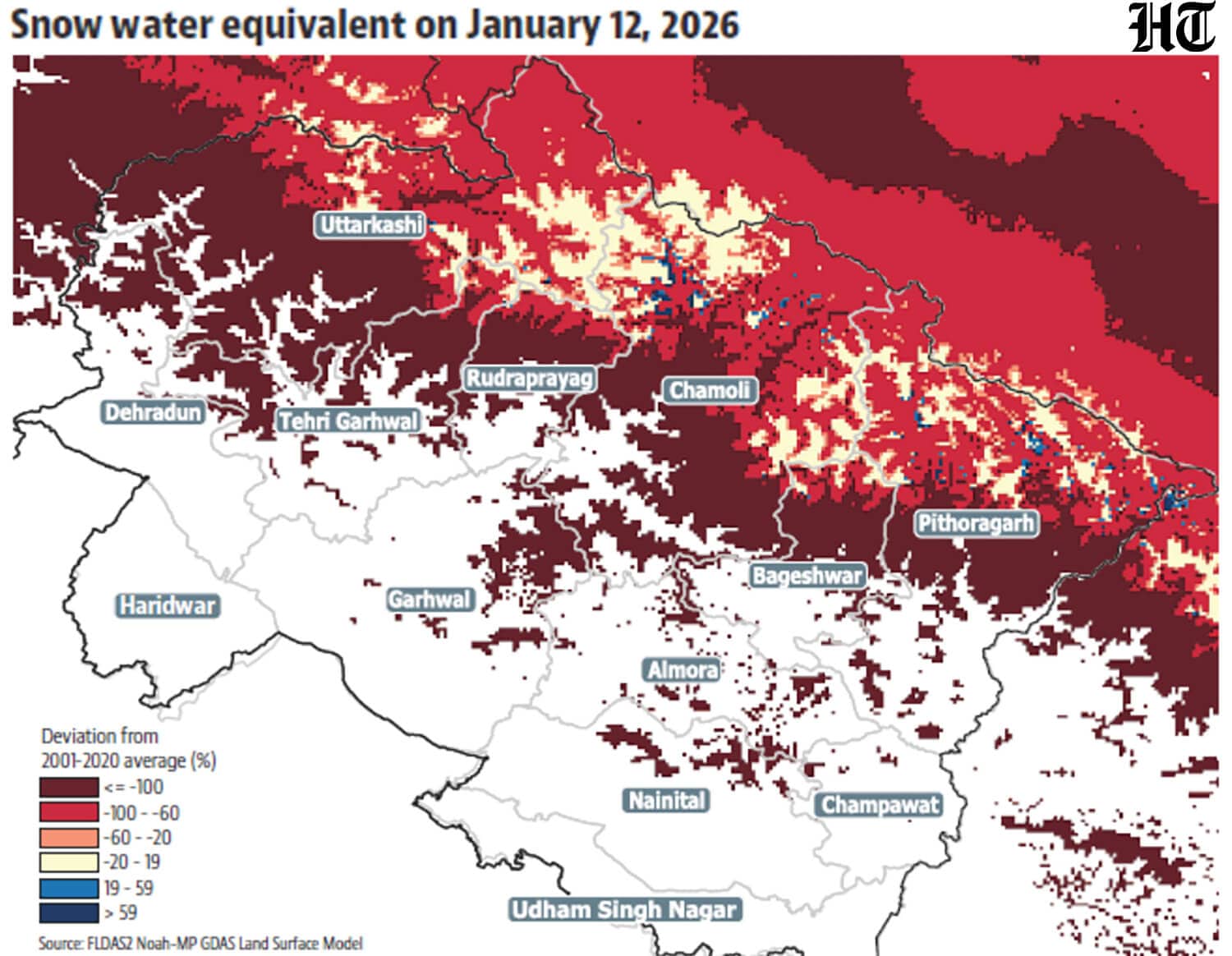
- Lack of rain and snow has a role to play in the high count of fires this yearFires are a combination of three factors: oxygen, fuel, and ignition. Oxygen is always present in the open and the ignition in the Uttarakhand fires could have been both manmade (a fire lit at the outskirts of a forest) or natural (from dry twigs). The fuel, however, is a result of dry weather. No place in Uttarakhand has reported any rain after November 21, a 54 day long dry spell as of January 14, the sixth longest since 1901, the first year for which the India Meteorological Department (IMD) has published gridded rainfall data used in this analysis. This has led to a big deficit in snow pack in the mountains, which keeps the mountain surface damp and the region cool. Therefore, any vegetation is likely to be very dry and vulnerable to fires. That dry weather aids fires can be seen in the fact that January 1-13 fires have some correlation with the amount of precipitation the state received. A strong correlation is not expected because even small amounts of regular rain and can keep the surface damp in January; and preventive measures can prevent fires even if weather conditions favour fires. Such preventive measures need strengthening if fires are to be prevented in the mountains. As HT has pointed out earlier, the snow pack in India’s hilly states appears to be declining long-term, in great part due to global warming. This is also a self-perpetuating problem because dark surfaces absorb more heat and decrease snow pack further. Since forest fires only make surfaces darker, preventing them is necessary for just keeping the problem at its current levels.


Unlock a world of Benefits with HT! From insightful newsletters to real-time news alerts and a personalized news feed – it's all here, just a click away! -Login Now!


