E-Paper



Can students be punished for protesting? Here's what the Constitution says
Authorities can also use the provisions of Bharat Nagarik Suraksha Sanhita (BNSS) to stop protests that can lead to public disorder.

 Prefer HTon Google


The protests carried out by CJP students raised an important constitutional issue - what happens next after the protests are over? Even though peaceful protests are an important element of democracy, students often worry about the possible legal repercussions of their participation. The answer depends on whether the demonstration was peaceful or any laws were broken during the process.
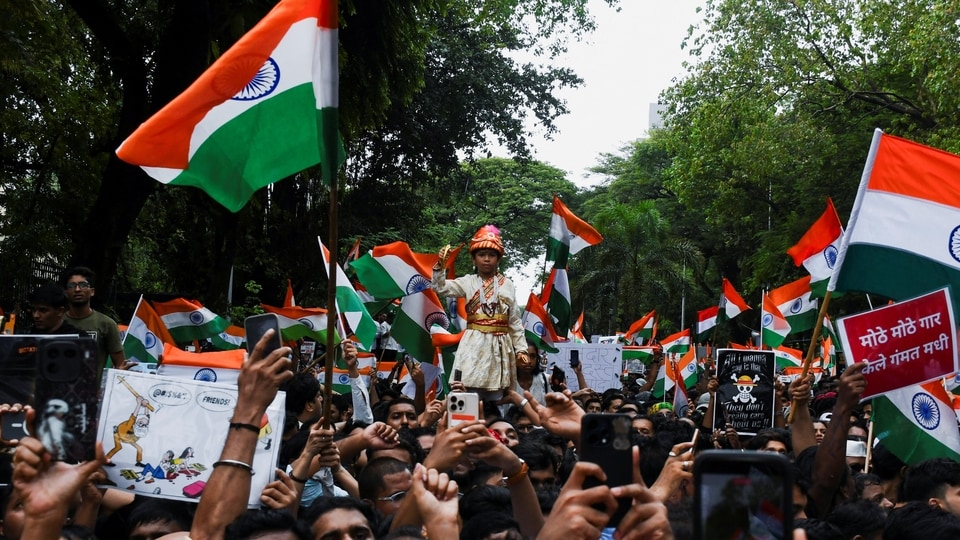
Even if the Indian Constitution does not guarantee the right to protest, this right can be found in Articles 19(1)(a) and 19(1)(b) which provide for freedom of speech and expression as well as the right to assemble peacefully. Such rights provide citizens with a possibility to express their disagreement with the actions of the authorities and institutions involved.
Will AI replace your job? Degrees and skills that have best future
However, individual freedom is subject to some limitations listed in Articles 19(2) and 19(3), which concern such important aspects as sovereignty, public order, and security.
Students can be prosecuted if the protest is no longer peaceful. In case a protest is characterized by violence, harm to public property, unlawful confinement, obstruction of essential services or refusal to follow police orders, legal actions initiated by authorities are not excluded. Authorities can also use the provisions of Bharat Nagarik Suraksha Sanhita (BNSS) to stop protests that can lead to public disorder.
Participants of the event might face criminal prosecution.Nonetheless, engaging in a peaceful protest does not mean that a person will be held legally responsible automatically. Courts have been clear that the authorities cannot justify using public order as a means to suppress valid dissent.
Dreaming of a career in Japan? The JET programme by Japan Embassy opens doors for Indian graduates
The Supreme Court has emphasized time and again that peaceful protest is vital to a democracy. In Ramlila Maidan Incident v. Home Secretary (2012), the Court stated that any action of the authorities must conform to the principles of legality, necessity, and proportionality where force is the last resort.
In Mazdoor Kisan Shakti Sangathan v. Union of India, (2018), the court stated that the right to protest is a constitutional freedom of great value which needs to go hand in hand with the rights of others.
Beyond Studying Abroad: How India is becoming a gateway to global employment
Later, in Amit Sahni v. Commissioner of Police (2020), the court pointed out that even though dissent is an important thing, public space cannot be occupied indefinitely. In the end, the determining factor whether the students face difficulties with the law after the protests are over is not the fact that they protested but how they conducted it.
(The author Sana Raees Khan is the Founder of SRK legal & is a Supreme Court Lawyer)