
 E-Paper



MP: Boards from March 1; do not fret over exams, say experts
With CBSE and MP board Class 10 and 12 examinations just round the corner, stress among students is at an all time high.

 Prefer HTon Google


With CBSE and MP board Class 10 and 12 examinations just round the corner, stress among students is at an all time high. Experts suggest that instead of fretting over how to complete revision, students should relax and avoid burning the midnight oil. Dividing the syllabi into small sections for revision could also help.
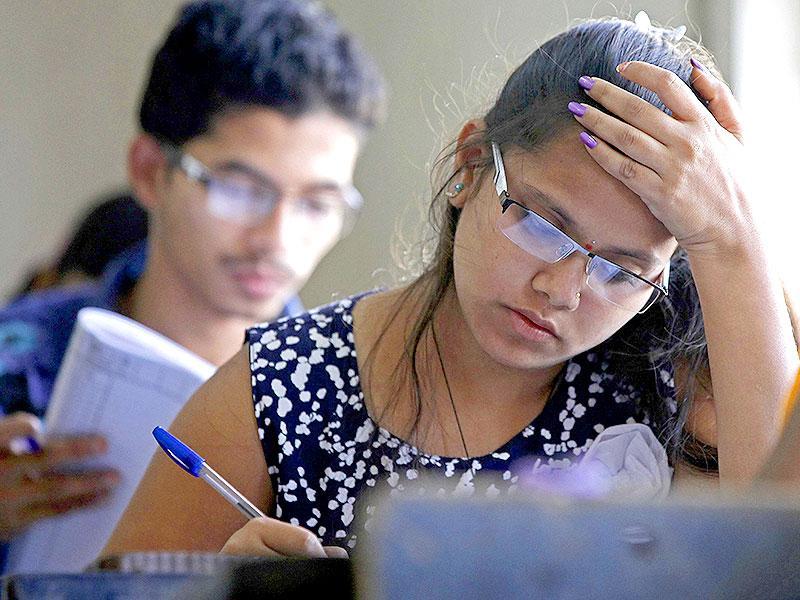
The examinations for Classes 10 and 12 will start from March 1. The examinations for Class 10 will continue till March 28, while Class 12 will end on April 22. The MP Board secondary examination will end on March 29, while the higher secondary examination will continue till April 4.
“Well the course portions are huge, so breaking it up in small parts really helps. It is good to make a timetable of how much time you can devote to each subject and prepare accordingly,” Bhopal-based coaching teacher Kavita Chakravorty told HT.
Chakravorty and senior faculty member of Carmel Convent, Bela Vajpayee, also recommend that students must read NCERT modules thoroughly.
“Never learn by rote, always try to understand the concepts. In this way you will forget answers during the examination. Practice as many sample papers as you can and first complete NCERT modules,” Vajpayee said.
For career counsellor Amir Mehboob good health holds the key. “Maintaining a good health is important during exams and I would suggest a student to take regular breaks. A fresh mind is important for learning new things. Students should also sleep for eight to nine hours as this reduces irritability and anxiety. Late night studies should be avoided as much as possible,” Mehboob said, adding that choosing a right diet was also important.
According to counsellor Shweta Katariya, the role of parents at this stage also holds vital importance. Their support and guidance would be a key for shaping their child’s future, she said.
HOW TO PREPARE
Outline: Make an outline of the course and time frame
Schedule: Make a timetable giving equal weightage to all subjects. Find out the problem areas and start working them out
Organise: Proper organisation and management is needed in every subject
Flowcharts: This is the easiest way you can learn your answers. Flowcharts help you memorise things easily
Textbooks: Read between the lines, solve the objectives and practice all the numericals of NCERT. HOTS and application-based questions are frequently asked
Self-test: It is important as you evaluate yourself. You can practice previous year’s question paper with a time constraint. Try to solve previous years question papers and also prepare a question bank, this helps a lot in subjective studies.
PREPARE SMARTLY
NCERT modules: Never leave NCERT modules, they have to be completed and revised before touching any refreshers or coaching materials
Sample papers: A thorough practise of the sample papers gives one a fair idea of what kind of questions are generally asked in exams
Subjective methods: No shortcuts should be followed. Each and every step has to be written in the paper because they all carry marks
Revision: Revising is of utmost important because it helps you brush up things you have learnt previously.
SMART STUDYING
Time management: Time is to be taken care of. One should avoid wasting time on mobile phones and on social networking sites
Positive attitude: Keeping a positive attitude and an optimistic approach really helps and students perform better when they build up a positive attitude in life
Self-confidence: Always believe and have faith that you can achieve your goal
Introspection: Questioning oneself regarding the preparation done is important to know where one stands
Eat healthy: Say no to junk food and keep your body fuelled and brain fresh by eating simple and healthy. Drink plenty of water.
CHECKLIST FOR PARENTS
Build an open and friendly environment at home so that the child can come up with his or her problems without any hesitation
Do not expect too much from your children and don’t pressurise them to score a certain level of marks
Take care that your child relaxes properly
Keep them on nutritious diet.


