
 E-Paper



Voting for second phase of polls begins amid inclement weather in Assam
Most of the focus of the second phase of the campaign is the three Bengali majority districts of Barak Valley-Karimganj, Cachar and Hailakandi, which have 15 seats in total

 Prefer HTon Google


Voting for 39 seats in the second phase of the ongoing assembly election in Assam started Thursday morning amid inclement weather.
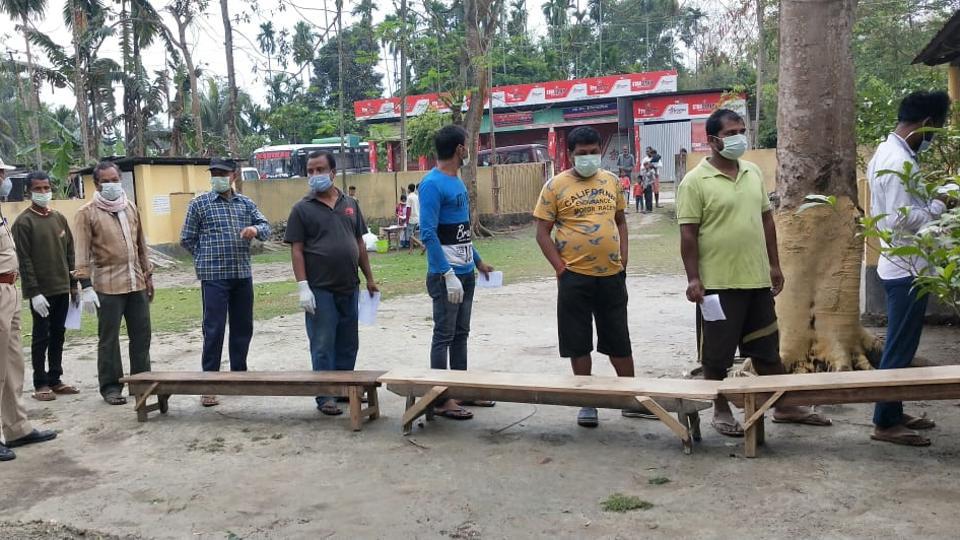
Voters started queuing up before the start of polling at 7am. It has been raining is some areas of Assam since March 29. Voting will end at 6pm.
Over 7.3 million voters will decide the fates of 345 candidates (including 26 women) in 13 districts on Thursday. In the first phase, 79.97% of voters had voted for 47 seats in 12 districts on March 27.
Also Read | Assam polls: Candidate from Congress ally, BPF, joins BJP ahead of 3rd phase
Prominent candidates in the second phase include Parimal Suklabaidya (Dholai), Pijush Hazarika (Jagiroad), Bhabesh Kalita (Rangia), all ministers in the Bharatiya Janata Party-led government, and the assembly deputy speaker Aminul Haque Laskar (Sonai)—also from the BJP.
Most of the focus of the second phase of the campaign is the three Bengali majority districts of Barak Valley-Karimganj, Cachar and Hailakandi, which have 15 seats in total.
The BJP has had a strong presence in the region since the past three decades, mainly among Bengali Hindus. On the other hand, the Congress and All India United Democratic Front (AIUDF) also have influence in several pockets, the latter among Bengali Muslims. In 2016, the BJP won eight of the 15 seats while Congress won three and AIUDF bagged four.
Assam has three hill districts, Karbi Anglong, West Karbi Anglong and Dima Hasao, which have five assembly seats, and will go to polls in the second phase.
In the second phase, the ruling BJP has fielded 34 candidates while its alliance partner Asom Gana Parishad (AGP) is contesting six seats (the parties will have a “friendly contest” on one seat). United People’s Party Liberal (UPPL), which is also part of the alliance, is contesting three seats.
The Congress is contesting 28 seats and its alliance partners AIUDF and Bodoland’ People’s Front (BPF) seven and four seats respectively.
A total of 42,368 poll personnel will be on duty at 10,592 polling stations (556 of them only for women voters) on Thursday for the second phase of polling. In the third and final phase, 40 seats will got to polls on April 6.



