
 E-Paper



GORAKHNATH MUTT: ‘Sahbhoj’ and ‘samajik samrasta’ stand Yogi in good stead for polls
Chief minister Yogi Adityanath has used the ‘sahbhoj’ (community meal) and ‘samajik samrasta’ (social brotherhood) traditions of the Gorakhnath mutt here to win over dalits and people of other backward classes (OBCs) as well as counter challenges from rival parties for the assembly elections.

 Prefer HTon Google


The ‘sahbhoj’ (community meal) and ‘samajik samrasta’ (social brotherhood) traditions of the Gorakhnath mutt here have come handy for chief minister Yogi Adityanath to win support of dalits and people of other backward class (OBC), as well as counter challenges of rival parties for the assembly elections.
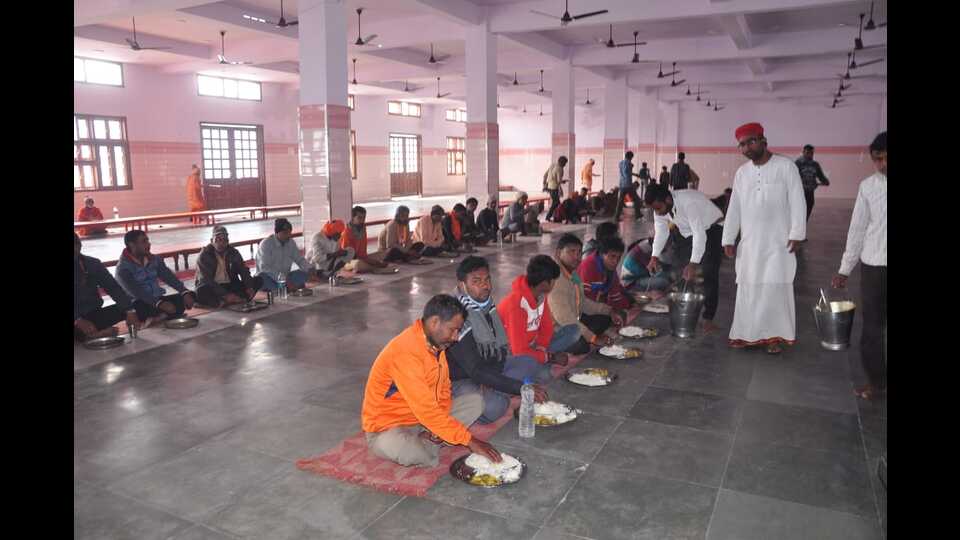
While in Gorakhpur, every morning when Yogi prepares for poll campaign in Gorakhpur urban constituency, the ‘bhojnalaya’ (dining hall) on the mutt premises is abuzz with activity, as cooks can be seen preparing food in the kitchen.
In the afternoons, locals and devotees move into the ‘bhojnalaya’ for lunch, while temple volunteers place plates before them with rice, vegetables and other edible items. The ‘sadhus’ and priests sit along with the people and have meal.
A temple staffer, Virendra Singh, said mahant Yogi Adityanath, as well as former mahant Avaidyanath used to take meal with the common people in the dining hall. After Yogiji became chief minister he takes meal in the mutt building due to security reasons. He joins the people for meal during festivals, he said.
The ‘sahbhoj’ programme not only helped Yogi reach out to the dalits but also sent a message of equality and brotherhood.
The dalits, OBCs and Muslims have been visiting the mutt premises to seek his assistance since he was elected MP from Gorakhpur in 1998.
Although rival parties project Yogi as a Rajput community leader and the mutt as a centre of upper caste politics in east UP, Yogi he has been able to counter the rivals’ allegation with ease and the ‘sahbhoj’ and the ‘samajik samrasta’ tradition have helped him in establishing a rapport with the scheduled caste people and backward communities, the temple staffer said.
Pradeep Rao, principal, Maharana Pratap Post-Graduate College, Gorakhpur said ‘shabhoj’ with people of weaker sections of society was started by former mahant Digvijay Nath post-independence and mahant Avaidyanath made it a permanent ritual by opening the gate of the temple for all castes and communities.
The Gorakhnath temple is a centre of the Nath panth (sect) that is against social inequalities, untouchability and caste system. After the Meenakshipuram (Tamil Nadu) incident in 1981 where large number of low caste people converted to Islam, mahant Avaidyanth gave momentum to the ‘sahbhoj’ and ‘samajik samrasta’ events by mobilising Hindu seers to launch the programme across the country. He had also visited the house of the Dom Raja in Varanasi, Rao said.
In 1994 mahant Avaidyanath declared Yogi Adityanath as his successor and handed over the political baton to him, too. Under direction of Yogi, the ‘shah-bhoj’ programme was launched at Nath panth centres across the country.
The dining hall of Gorakhnath mutt became the focal point of ‘sahbhoj’ programme. Yogi even visited Dalit villages in east UP to have meal at their houses. The main priest of Gorakhnath temple, Kamalnath, is a dalit, Rao said.
After becoming MP in 1998, Yogi launched a movement to bring the outcaste Vantangiya and Musahar community into the social mainstream. Several development and welfare schemes have been launched in their villages after he became CM in 2017, Rao said.
A resident of Bargadwa locality, Shiv Charan Gautam, who belongs to Jatav community, said “majority of voters in his locality will vote for Yogiji. We are not supporter of BJP but that of Yogi.”
Political analyst NK Sinha said there are around 35,000-40,000 dalit voters in Alwapur, Mian Bazar, Tarang crossing, Dharamshala Bazar and other localities of Gorakhpur city and majority of them vote for Yogi. The Bahujan Samaj Party’s attempt to win the scheduled caste community support has proved to be a tough task. In successive assembly elections since early nineties, BSP has polled 10,000-20,000 votes only. Bhim Army chief Chandrashekhar is also working to win support of the dalits to challenge the might of Yogi on his home turf, Sinha said.
The Hindu Yuva Vahini (HYV), raised by Yogi in 2002 to campaign for election, consists of a large number of volunteers from dalit and OBC communities who have spread the support base of Yogi in the dalit and backward dominated areas, turning Gorakhpur into a saffron stronghold, he said.


