E-Paper



Sthal review: A confident, unsparing look at the reality of Indian match-making
Forget Indian Matchmaking's Sima Taparia with the new Marathi feature Sthal, which offers a powerful examination of the hypocrisy of fixing arranged marriages.

 Prefer HTon Google


Writer-director Jayant Digambar Somalkar's confident and nuanced debut feature Sthal- A Match casts an unsparing look at the hypocritical nature of arranged marriages in India. Forget the glossy pitches of Indian Matchmaking with Sima Taparia. The Marathi language film, which first premiered at the Toronto International Film Festival where it won the NETPAC award, shows with matter-of-fact detail, how a woman finds herself helplessly objectified and compared on the basis of her skin colour, height, and caste identity. (Also read: Ri review: Achal Mishra's sublime portrait of Ladakh is a box of contradictions)
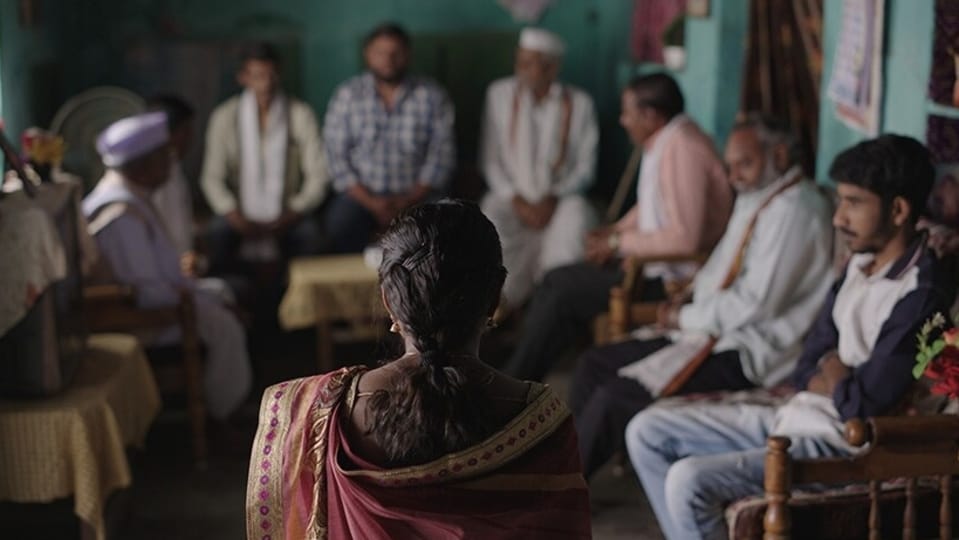
Humiliating questions are thrown at a prospective young bride, a young girl named Savita (Nandini Chikte), about whether she has measured her height, can she work on the field and so on. Assured in its gradual unraveling of the patriarchal lens, Sthal -which is set in Dongargaon, a small town in Maharashtra, is particular in the textures and perspectives it provides the characters surrounding the protagonist, demanding your attention on a subject seldom encountered on screen.
The premise
Savita is a sensitive and hardworking girl, who is in the final year of her Bachelor of Arts degree in Sociology. She prepares for the upcoming entrance exams for a job, but her parents force her to sit before a set of prospective grooms for match-making. Her father Daulatrao Wandhare (Taranath Khitekar) is a cotton farmer, helplessly looks on. For some reason or the other, Savita keeps getting rejected. One telling scene, the men from the groom's side pass comments on her complexion and says, "It's all make-up. Didn't you see her elbows? They gave it away."
Savita's brother Mangya (Suyog Dhawas) is waiting for Savita to get married so that he can introduce his girlfriend to the family. At college, Savita has a crush on the lecturer who teaches a class on women empowerment. When one of her classmates gets married, Savita is aware of the curiosity that surrounds her imminent match. Working with editor Abhijit Deshpande, Sthal finds an engaging flow to the narrative, never bowed down by the repetitive nature of the match-making scenes. The repetitiveness in the dry and transactional exchanges are meant to evoke a sense of drudgery and humiliation that Savita has to face every single time she sits on that chair. Somalkar's intelligent script takes a measured step in these uncompromising examinations. A minor miss occurs in the slow motion and long cuts in-between, which sits a little too longer in the momentum of the drama.
Final thoughts
Nandini Chikte gives an incredibly effective performance as Savita, providing her with a layered inner life. As Sthal progresses, Savita is made to confront and confine under the stifling gaze of people (mostly men) around her. She stands and does the part, the humiliation wearing away in Chitke's expressive face. The other stellar turn comes from Taranath Khitekar, who plays her father. One harrowing scene rests on his face as he tries to talk to a prospective groom's father in the later half. He is unforgettable as the helpless and concerned father, unable to decide how to navigate this situation.
Sthal, which releases in theatres today, is laced with the same ruthlessness as Jeo Baby's The Great Indian Kitchen- its gaze embedded firmly in the mundane and everyday circumstances that has become the norm. Somalkar has created a bracingly defiant and powerful film, one that unleashes the broken discussion on arranged marriages in India with compassion and confidence.