E-Paper



India among nations to lose most work hours due to heat
In a 2021 World Health Organisation survey of health and climate change, only 45 of 91 countries surveyed (49%) say they have a national health and climate change plan or strategy.

 Prefer HTon Google


India, along with Bangladesh and Pakistan, recorded the greatest losses to work hours due to heat exposure in 2020, according to the Lancet Countdown on Health and Climate Change released on Thursday.
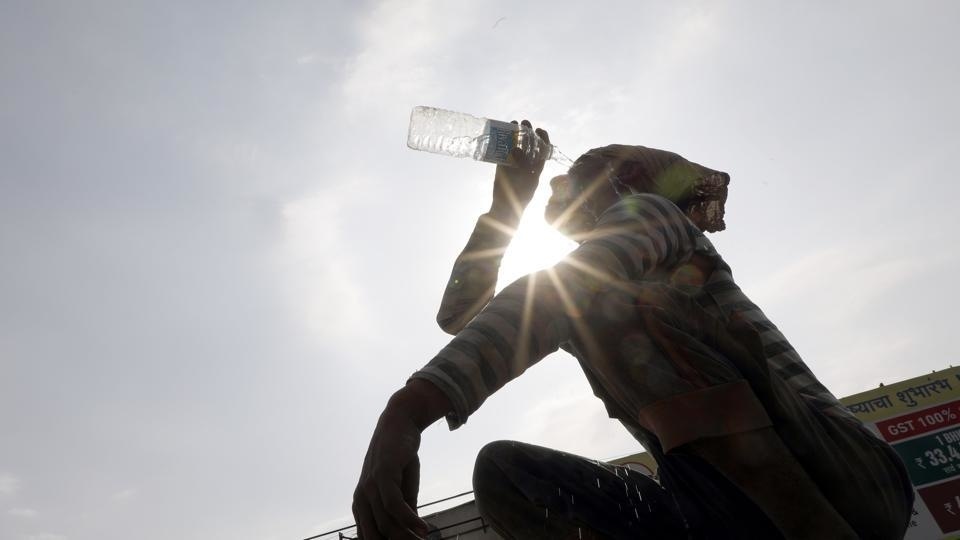
Around 295 billion hours of potential work was lost across the globe in 2020, which is equivalent to 88 work hours per person. In these three countries, which are classified as nations having human development index (HDI) scores in the medium range, work hours lost were 2.5–3 times the world average and equivalent to 216–261 hours lost per employed person last year.
With lockdowns around the world due to Covid-19, millions of hours of labour, particularly in service, construction, and manufacturing sectors, were also lost but those have not been accounted for in the study.
This indicator on productivity loss estimates potential work hours lost as a result of heat exposure, by linking wet bulb globe temperature with the power (metabolic rate) typically expended by a worker. Wet bulb temperature measures heat stress in direct sunlight, which takes into account temperature, humidity, wind speed, sun angle and solar radiation. The highest losses to work hours were recorded in the agriculture sector followed by construction.
The Lancet paper has tracked 44 indicators of health impacts that are directly linked to climate change and showed that key trends are getting worse.
Record temperatures in 2020 resulted in 3.1 billion more person-days of heatwave exposure among people older than 65 years of age, and 626 million more person-days of heatwave affecting children younger than one year, compared with the annual average for the 1986–2005.
Heat-related mortality for people older than the age of 65 reached a record high of almost 345,000 deaths in 2019 — 80.6% higher than in the 2000–2005 average—according to the paper.
In 2018 and 2019, India and Brazil had the largest absolute increase in heat-related mortality. In India, deaths among persons aged over 65 years attributable to heat was in the 10,001–100,000 range in 2019. In the absence of air conditioning, an estimated 195,400 more heat-related deaths would have occurred globally among people aged 65 years and older in 2019, in addition to the 345,000 heat-related deaths that are estimated to have occurred.
In this age group, air conditioning averted an estimated 69,500 deaths in China, 47,800 in the US, 30,400 in Japan, but only 2,400 in India.
“These estimates are probably based on modelling but we in India should start monitoring work hour losses in India. There should be research oriented work on it. Heat action plans should be implemented. After the heat action plan was implemented in 2013 in Ahmedabad, heat-related mortality reduced by 30% to 40% over the years. National Disaster Management Authority is using it as a model plan to be replicated in the entire country...,” said Dilip Malvankar, director, Indian Institute of Public Health, Gujarat.
Climate change has also led to environmental conditions suitable for increased transmission of many water-borne, airborne, food-borne, and vector-borne pathogens, the report said. The epidemic potential for dengue virus, Zika virus, and chikungunya virus, which currently primarily affect populations in central America, South America, the Caribbean, Africa, and south Asia, increased globally, with a basic reproductive rate increase of 13% for transmission by Anopheles aegypti (mosquitoes that can spread dengue fever, chikungunya, Zika fever) and 7% for transmission by Anopheles albopictus (also a vector for viral pathogens) compared with the 1950s.
The biggest relative increase in basic reproductive rate of these arboviruses was seen in countries in the very high HDI group countries like in Baltics and Atlantic northeast regions. “Although its (climate change’s) health impacts are felt across the world, climate change disproportionately affects disadvantaged populations, exacerbating their vulnerabilities,” the paper said.
In a 2021 World Health Organisation survey of health and climate change, only 45 of 91 countries surveyed (49%) say they have a national health and climate change plan or strategy.
“Climate change is here and we’re already seeing it damaging human health across the world. As the Covid-19 crisis continues, every country is facing some aspect of the climate crisis too. The 2021 report shows that populations of 134 countries have experienced an increase in exposure to wildfires. Millions of farmers and construction workers could have lost income because on some days it’s just too hot for them to work. Drought is more widespread than ever before.
The Lancet Countdown’s report has over 40 indicators and far too many of them are flashing red,” said Prof Anthony Costello, Executive Director of the Lancet Countdown