
 E-Paper



The plight of India’s premium prêt in the wake of Covid-19


With FDCI-led LMIFW getting cancelled in the wake of Covid-19 pandemic and no international buyers, Indian designers, who’re struggling with cancellations, share their strategy ahead.
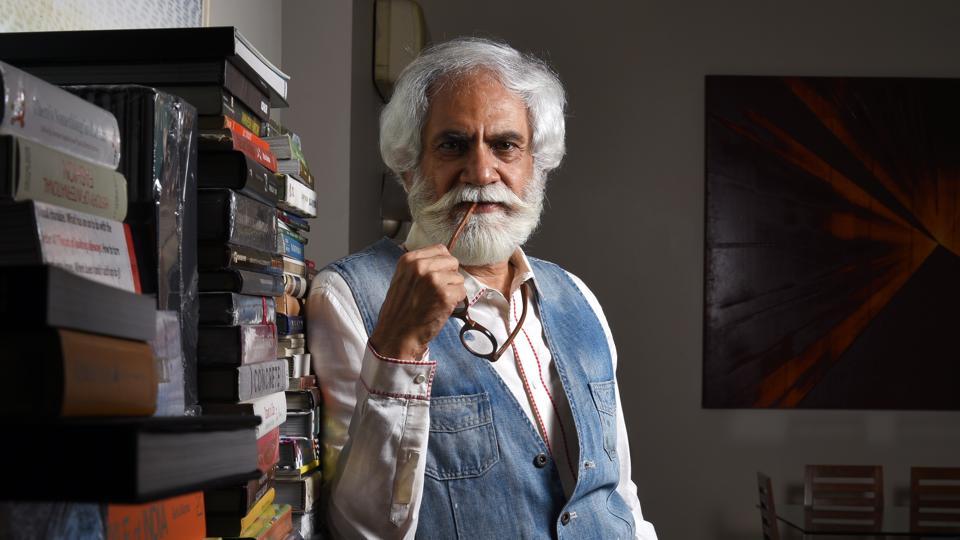
With FDCI LMIFW (which was slated to take place from March 11-15 in New Delhi) getting cancelled due to the coronavirus pandemic, a panoply of premium prêt, resort and diffusion Indian designers (whose core business depends on international buyers) are getting adversely impacted as there are no buyers. With no commercial flights, some of them have all the shipments sitting with them. Many designers like most of us weren’t prepared for the pandemic and spent their money in opening new stores, setting up factories and training their staff. However, there are still ways to minimise the damage and plan pragmatically a way ahead. Sunil Sethi, Chairman, FDCI, who has had more than 30 years of experience as a buying agent, says, “Organised by Fashion Design Council of India (FDCI), Lotus Makeup India Fashion Week has been well known for generating the business of fashion. This season, even though we had support from domestic stores, international buyers showed a reluctance due to the Covid-19 pandemic. This segment of buyers account to a majority of their businesses and many of my designers get four to five months of business. Hence, a lot of designers take stalls with us to get a major volume of the business and keep their factories and workers going. Having said that, I’d like to add that there is an array of unheralded fashion designers, who may not have had the best of the press visibility or social media presence, but they are making large profits due to their growth in the businesses, keeping the Indian craft and designer apparel going to every corner of the world and doing well for their companies. All in all, they are keeping the Indian flag flying high internationally.”
When asked to share his advice for designers facing the heat due to Covid-19, Sethi suggests, “I would advise Indian designers to negotiate a discount, send out their shipments instead of cancellation. Cut your losses at this state, give them a discount. A deferment of payment isn’t as bad as no payment. It’s imperative to get your product out as long as you have a buyer with whom you have had a history. However, ensure that your goods are insured as there could be a risk of a customer applying for bankruptcy.”
Designer Jyoti Sharma of label Bhanuni observes that LMIFW was the only platform for designers to meet international buyers in India as FDCI always focuses on inviting buyers from almost every part of the world. “Cancelling fashion week means no buyers and therefore no business for the complete season. For now, we are trying to take care of our staff and labour to the extent we can. We are just hoping to get over Covid-19 as soon as possible, so FDCI can reschedule the fashion week. If we talk about business, foreign buyers are either cancelling orders, and asking for hefty discounts. European buyers, particularly from Italy and Spain, have already asked our members not to export garments. Our orders are fashion specific and thus are ‘perishable’, and any cancellation would ‘make them redundant, with little or no salvage value next year’. The only approach is retry once it get back to normal.”
A radical learning from pandemic
Aneeth Arora, founder and designer Péro shares, “The fashion weeks for FW20 were not cancelled and the collection was in the showrooms for orders since January (in New York for the US market), February (in Milan for Italian market) and Feb end (Paris for rest of the world). Although very few people came to Paris because till then everyone has become very cautious of travelling. So we have orders for FW20, but not like every year or like last winter. The deliveries for the same anyway start end June. So these orders will reach shops August onwards.”
She adds, “About the future season SS21, I think one positive is that we have time from June to October for taking orders, June is usually for resort, which is unlikely to happen and also kidswear and menswear shows have been postponed to September, so ideally September onwards, we can book orders on SS21. If people are still hesitant to travel to the shows, we will follow the strategy of sending digital catalogues and look books, with improved interaction with the media and we hope to provide the service of ‘order from where you are’, maybe with zoom video call because it allows more than four people, so we can have our buyers, showroom assistants and a model to showcase the collection. I am positive that new ways of working will emerge and we will have a great radical learning from this pandemic.”
Aneeth is positive that as soon as the lockdown lifts, fashion brands will bounce back as all the creative people have utilised this time to make their SS21 and FW21 very strong.
Designer Tanvi Kedia has sent out lookbooks and PPT presentations to her buyers and they are going to place their orders through the these. “The most practical approach is to be patient and wait for the buyers to get back to us with their orders/buy for fall. I am thinking very positively and hoping it will not affect my business drastically and we can make up for the current two to three months of production loss within a year,” says Tanvi.
Focus on digital marketing
Designer Tarun Tahiliani shares, “I do not think fashion weeks have even featured in my mind so far because there are no fashion weeks coming up, besides the couture week and of course, March season was cancelled in Delhi. I think if everyone was to show online and buy there, it lacks the magic and the collective buzz that fashion weeks do actually bring to the table. While they were an effective tool even when designers had their own social media pages, I think for the time being, we will have to increase our digital presence and we will have to possibly also increase our focus into digital marketing and other virtual tools but at this time. I don’t think people are thinking about fashion right now. I cannot comment in absolute terms yet on how much of an impact we have faced, however, there will certainly be a slowdown. Once the lockdown is lifted and things are seeming to settle, I think the need of the hour will progress to buying less, and buying things that have longevity and we hope that the consumer behaviour does change into that direction. Consumers and businesses alike are going to be more mindful and will consciously move towards sustainability. Be Indian, buy Indian is the current mood as well.
Globally, nobody is buying or thinking of buying at the moment, and is too preoccupied with the pandemic. But we will certainly have to be more creative in increasing your digital presence. We will have to give people experiences through our various platforms in times like this.”
Read: Coronavirus outbreak: FDCI issues refunds to designers
Designer Reby Kumar of Guapa too wants to strengthen the label’s digital presence. “Creatively, we have lost out on a ‘season’ and I think we will see the impact of it in the coming months. I have decided to use this time to work on our digital presence and make that stronger both domestically and internationally. All our existing orders are being renegotiated that has obviously put a huge burden on the cash flow not to forget the uncertainty of future orders. The industry will take a hit and I think the focus should now be more on creating apparel that’s not season specific. Internationally, demand will definitely take a massive hit and subsequently, we need to prepare ourselves to not overproduce. We have made the decision to not invest in multiple collections this year and present what we already have. I want to be frugal with our choices and the need to be sustainable in the truest sense of the word is important now more than ever. We are looking at a two-pronged strategy of repackage-reinvent. We did something similar actually at the completion of five years of Guapa last year where we reinvented a previously used print and made it a part of our current collection - which was extremely well received. So that gives me hope! Moreover, I feel that our community is strong - and we will tide over it, if we are careful with our decisions. There have been some disappointments, definitely because the situation is far from ideal or what was planned. But I take solace in the fact that this is too small in the bigger scheme of things.”
Reduce wastage and keep costs low
Designer Payal Pratap says, “I think all businesses are suffering at the moment and the key would be to utilise this time to make strategies on how to stabilise the business post the lockdown. Firstly, the pandemic has given us the time to pause and rethink every aspect of our work. It’s best to be calm and tide through this phase, and find ways of how we can sustain through this period. Yes, business is hit, but not just for me for everyone. It’s going to be a tough next few months domestically as well as globally as my business is contributed to by both markets and one doesn’t know how much longer this will continue. In uncertain times, our challenge will be to sustain through this year and then hope that things will start looking up. We would try and implement necessary safety measures, reduce wastage of any kind, keep our costs low and cut down overheads, try and move to a more conservative and more calculated production module, at the same time be in touch with all our buyers worldwide.”
Designer Dhruv Kapoor’s buyers from China and Japan are excited for forthcoming collections as they gradually emerge. “Considering the concept of revenge buying- I am sure the consumers are going to come back with a larger appetite for “new”. At our end, some of the orders that were ready to ship, the buyers have requested for 10-15% discount and have shifted their payments between 25-30 days post delivery. There are so far no cancellations as such. As far the European market goes, our agents are still holding on to the collection we showcased in February, as they have appointments once the city comes back in routine. Overall, the calendar has shifted a couple of months ahead and new delivery dates are October/November for Fall with smaller orders as the sales window is much smaller than usual. For my team and I, we have been working hard and reworking the brand structure, the image, the aesthetic, administration and working in general. This time, which is otherwise impossible to have - has become more of a stepping stone,” says Dhruv.
Designer Samant Chauhan who started working early this week, opines that given the way the situation is unfolding, domestic and international markets won’t be the same again. “The January and February deliveries have already been sent out. The stuff which was ready with us was already sent without any negotiation. Whatever money we made, we spent it on the brand - from opening stores to setting up factories. Now the challenge is to utilise our resources, but I can see a lot of online inquiries pouring in,” says Samant.
Designer Shruti Sancheti started getting emails from many buyers in UK and the US as the pandemic hit these countries. “I have cancelled all the shipments sitting with me which were supposed to shipped due to no commercial flights. I don’t see any room for negotiation right now as all the larger format stores are shut and overcrowded with merchandise. Even though Ramadan is around the corner, the Middle East has been badly hit due to the oil prices. Once this market opens, one might be able to operate at 25 per cent. We have high-end buyers in China, who want the merchandise, but we have to wait till the market opens.”
One could safely deduce that it’s the most suitable time to plan ahead keeping all the key business learnings in mind and play out the fashion adventures in the seasons to come.
Interact with Manish Mishra at @dandydujour


