
 E-Paper



Before and After: What Paired Glucose Testing Reveals About Your Day
A single test may tell you what your blood sugar is. But paired testing, done before and after key activities, might help show what actually caused the change.

 Prefer HTon Google


Many people living with diabetes regularly check their blood glucose at home. But a single measurement, taken at one point in the day, may not always give the full picture. For example, a morning fasting reading might be within the target range, but if your sugar spikes after breakfast, you may never know unless you check again after breakfast.
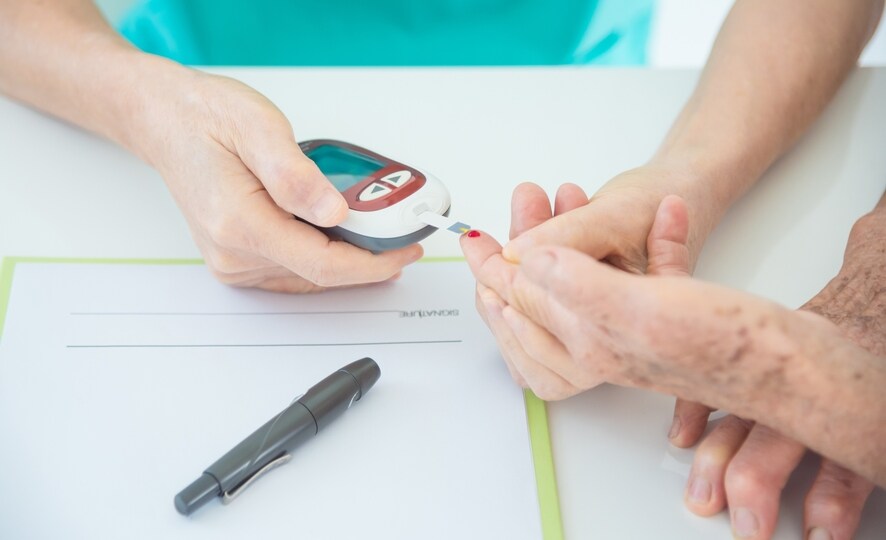
That’s where paired testing can help. It involves checking your blood glucose before and after a specific event, like a meal, a walk, or even sleep, so that you can understand how your sugar levels are changing with the activity.¹
This method is not required for everyone, all the time. But for people going through changes in medication, diet, or activity, or those noticing unusual sugar swings, paired testing may offer more useful insights than isolated readings.
What Is Paired Testing?
Paired testing is simply two tests done around a single event — one before, one after.¹
Common examples include:
- Before the start of a meal and 1-2 hours after meals
- 15 to 30 minutes before physical activity and immediately after physical activity
By doing this, you may be able to spot things like:
- Sudden spikes after eating
- Delayed sugar drops after physical exertion
According to the RSSDI Expert Consensus for Optimal Glucose Monitoring in Diabetes Mellitus in India and Recommendations for Clinical Practice, structured SMBG with paired testing may help make glucose monitoring more personalised and better understand blood glucose patterns. It’s not meant to replace other methods but to add extra understanding when needed.
Few Examples Where It May Be Useful² ³ ⁴
You may not need to do paired tests every day. But in some situations, this method could be especially helpful:
1. To Identity the Post-Meal Glucose Spikes
Even if your sugar is fine before eating, it could spike afterward. Testing about 120 minutes after a meal may help spot this.
2. To Understand the Impact of Physical Activity
Some people experience drops in sugar after activity, but not always right away. Paired testing before and after walking or workouts might help you feel more confident and avoid unnecessary worry.
3. Before Trying a New Routine
If you’re switching your meal timing, exercising differently, or going on a new diet, this method could give you a better idea of what’s working.
Paired Testing – Before and After Meals
The basic idea is to test before an event, and then again about 2 hours later. Here's how it might look across a day:
| Event | Time of Check ⁵ |
|---|---|
| Before breakfast | Fasting glucose |
| After breakfast | 2 hours post-meal |
| Before lunch | Pre-lunch |
| After lunch | 2 hours post-lunch |
| Before dinner | Pre-dinner |
| After dinner | 2 hours post-dinner |
In some cases, your doctor might ask for a full-day pattern like this before your next check-up. For some people, under less intensive schemes, even one paired check per day (like just lunch readings) over a few days could be helpful.
The RSSDI Expert Consensus for Optimal Glucose Monitoring in Diabetes Mellitus in India and Recommendations for Clinical Practice notes that this pattern can be flexible, especially in India, where cost or access to test strips may be a concern. What matters is choosing the right event to monitor based on the advice of your treating physician, not doing every combination.
What Can These Tests Reveal?
You might start to notice patterns, which you can discuss with your doctor:
- Post-meal spikes: If your sugar jumps after eating, it may be worth reviewing what or how much you ate or your current medications.
- Flat response: If there’s little change before and after walking, it could be a sign that your sugar stays stable during activity, a reassuring signal.
- In the morning: If your sugar is normal before bed but high in the morning, this may point to overnight changes that your doctor should assess.
These results don’t automatically mean something is wrong. But they can help you and your healthcare provider have more meaningful conversations, especially when managing diabetes in the long-term.
Can It Be Done Affordably in India?
In India, the cost of test strips is a common concern. That’s why paired testing should be used smartly, not excessively.
Here are a few practical ideas:
- Focus on one meal per day instead of all three and do it in a staggered manner over 3 days a week to understand the changes with each meal
- Choose times when you’ve changed something like a new diet, new medicine, etc.
Quantity may be important, but so is the timing.
What About Accuracy?
Even the most carefully timed test won’t help much if the reading isn’t reliable.
ISO standards maintain that 95% of measured glucose values must fall within ±15% if <100 mg/dl or within ±15% if ≥100 mg/dl of standardised laboratory reference values.
A post‐market performance follow‐up study on “Monitoring of the Analytical Performance of Four Different Blood Glucose Monitoring Systems” confirms that Accu-Chek® meters (such as Guide and Instant) met ISO 15197:2013 standards, with over 99.4-99.9% of readings within ±15% accuracy. They also scored high on real-world evaluations, including among Indian users, making them dependable tools for daily use.
Don’t Do It Alone, Always Consult Your HCP
Paired testing should never be a substitute for medical advice. It’s a tool to support your doctor in making informed decisions.
Your healthcare provider may help you decide:
- Which events or meals to focus on
- How long to do paired testing
- Whether a particular pattern needs action or reassurance
It is important to emphasise that SMBG, including paired testing, would benefit more as a shared journey between patient and provider.
In Closing: Two Tests, One Story
Living with diabetes means learning how your body reacts to different situations — meals, physical activities etc.
Paired testing might help you do that better.
It doesn’t have to be done throughout the day. It doesn’t need to be expensive. But when done thoughtfully, and at the right times (as advised by your doctor), it may help you and your doctor understand not just what your sugar is, but why it’s changing.
It’s not about numbers alone. It’s about making those numbers useful.
References:
- https://www.accu-chek.co.uk/tools/testing-in-pairs#:~:text=Paired%20testing%20is%20a%20structured,impact%20your%20blood%20sugar%20levels.
- https://www.jstor.org/stable/26619547
- https://cdn.ymaws.com/www.nursepractitionersoforegon.org/resource/resmgr/imported/NPO_2012-SMBG-Book-2012-08-24.pdf
- https://www.mayoclinic.org/diseases-conditions/diabetes/in-depth/diabetes-and-exercise/art-20045697
- https://pmc.ncbi.nlm.nih.gov/articles/PMC4019250/
Note to the Reader: This article has been created by HT Brand Studio on behalf of Roche Diabetes Care India Pvt. Ltd. The information provided is intended solely for informational purposes and does not constitute medical advice or endorsement. Please consult a registered medical practitioner for personalized medical advice or before making any decisions regarding your health conditions or treatment options.


