
 E-Paper



From first salary to institution building: Madhu Lunawat on wealth and purpose
From an INR 2,000 salary to building India’s first female-led fund house, Madhu Lunawat shares lessons on discipline and compounding.

 Prefer HTon Google


For Madhu Lunawat, financial freedom has never been defined by the size of a bank balance. Instead, it has always been about the power to choose how to work, what to build, and which values to protect along the way.
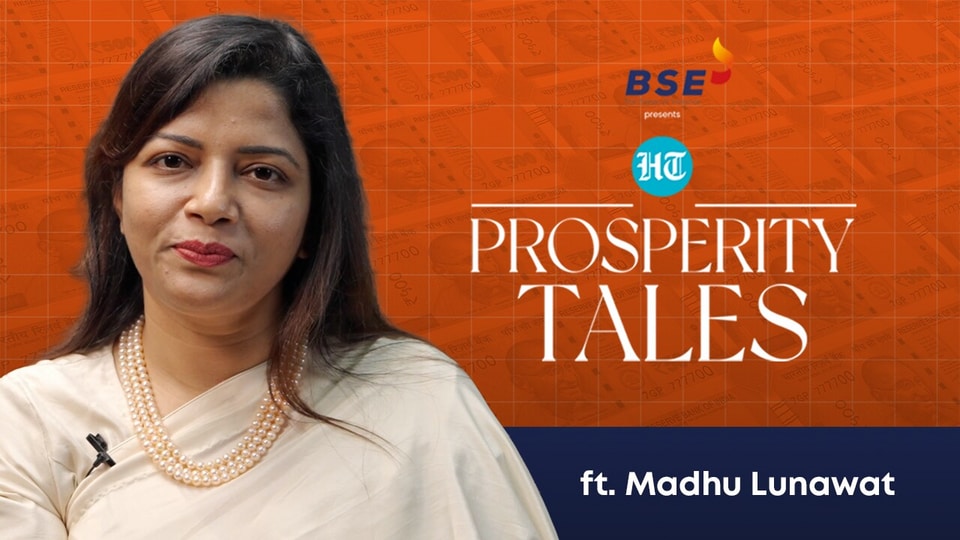
Growing up with limited means, money played a very real role in her life. It was the enabler that allowed her to pursue education, fund everyday needs and, most importantly, claim independence. Years later, as a co-founder of Pantomath Group and a key force behind India’s first female-led mutual fund house, her definition of financial freedom remains unchanged even as the scale of responsibility has grown.
“Financial freedom is not about how much money lies in your bank account,” Lunawat says. “It’s about the power to choose and the impact you can create with it.”
The first salary and the first shift in confidence
The first significant milestone in Lunawat’s career came early, when she earned her first salary of ₹2,000 while working at a chartered accountant’s office. The amount itself was modest, but the emotional shift it triggered was profound.
“That first salary gave me confidence,” she recalls. “The confidence to say no to people who told me to go back home, get married, or settle down. It also removed the fear that I wasn’t good enough or capable.”
Earning her own income altered her perspective on both money and herself. It marked the beginning of a lifelong commitment to financial independence, one that would later shape many of her personal and professional decisions.
Why discipline matters more than speed
Lunawat’s early experiences also instilled in her a deep respect for money one that continues to influence her approach to wealth creation. Having earned money through sustained effort, she has consciously stayed away from speculative investing and short-term trading.
“When money comes from hard work, you don’t take reckless risks with it,” she says. “I’ve never been tempted by shortcuts or speculation.”
For her, discipline is not limited to financial behaviour. It extends to everyday routines, decision-making, and institution-building. Repetition and consistency, she believes, are underrated but powerful drivers of long-term success.
“Doing boring things day in and day out is what creates real results,” she says.
Money as a vehicle, not the destination
While Lunawat acknowledges the importance of wealth, she is clear that money alone does not create fulfilment or freedom.
“Money is a vehicle, not the destination,” she explains. “If you have money but no purpose or vision, you’re simply idle. Real freedom comes when money and purpose come together.”
This belief has shaped her transition from earning for herself to building institutions that create access and opportunity for others. Over time, her focus has shifted from personal financial security to enabling large-scale impact.
“It’s no longer about how much I make,” she says. “It’s about what that money allows me to build for others.”
Compounding beyond capital
Lunawat often speaks about compounding not just as a financial concept, but as a life principle. In her view, compounding applies equally to skills, credibility and relationships.
“Every day, skills compound. Experiences compound. Relationships evolve and strengthen over time,” she says.
She believes that real growth cannot be borrowed or rushed. It comes from walking one’s own path, making mistakes, and learning through experience rather than imitation.
“You can read and listen endlessly,” she notes. “But unless you live it, the learning doesn’t truly compound.”
Navigating volatility with calm
Market volatility, Lunawat believes, is inevitable and often misunderstood. Rather than fearing it, she views volatility as a natural part of the wealth creation process.
“Volatility is like a factory setting,” she says. “It’s always there, and if handled well, it actually helps create wealth.”
The bigger risk, she argues, lies in emotional decision-making driven by noisy headlines, social media and unverified advice.
“Cut out the noise,” she advises. “Trust your advisor, stay disciplined, and don’t react impulsively during volatile periods.”
Advice for first-generation earners
For first-generation earners, Lunawat’s advice is straightforward and grounded in lived experience.
- Start early, even with small amounts.
- Allow compounding time to work.
- Practise delayed gratification.
- Seek trusted advice to manage emotions.
- Focus on building earning capacity.
“What you truly control is your time,” she says. “Use it wisely to shape your future.”
Women, confidence and financial ownership
A central theme in Lunawat’s journey is the importance of financial ownership for women. She observes that many women, including educated professionals, continue to delegate financial decisions to male family members.
“Your financial future should never be outsourced,” she says. “It has to be in your own hands.”
For Lunawat, confidence is the starting point. She strongly believes in self-belief and positive reinforcement as tools for overcoming hesitation.
“Rewire your thinking,” she says. “Tell yourself you are capable. That shift changes everything.”
She also advocates for increasing the number of women advisors and distributors, creating more comfortable entry points for female investors.
Why Tier 2 and Tier 3 India matter
Lunawat sees India’s next wave of wealth creation emerging from Tier 2 and Tier 3 cities, where financial awareness still lags digital access.
“Digital penetration doesn’t automatically translate into financial literacy,” she says. “That gap is where institutions must step in.”
With locally embedded distributors and trust-based relationships, she believes these regions represent the country’s most significant opportunity to convert savers into long-term investors.
Building institutions that outlast individuals
At the heart of Lunawat’s philosophy is institution building creating systems that endure beyond individual leadership.
“When you are in the business of trust, even perceived conflicts matter,” she says.
Her decision to avoid personal trading while building wealth-management institutions reflects that principle. Integrity, transparency and long-term thinking, she believes, are essential for institutions that aim to outlive their founders.
For Lunawat, financial freedom is not a finish line. It is a responsibility—one that demands discipline, purpose and a commitment to building structures that empower others for generations to come.


