
 E-Paper



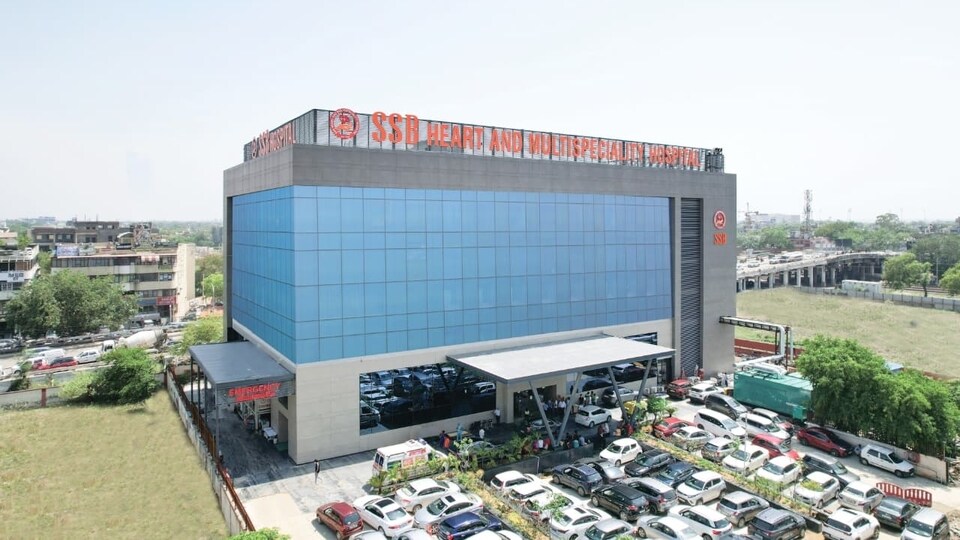
SSB Hospital, Faridabad, Performs Nonsurgical Aortic Aneurysm Repair on an International Patient
A 78-year-old with a 7 cm abdominal aortic dilation underwent endovascular repair at SSB Heart Hospital, treating the aneurysm and preserving kidney blood flow.

 Prefer HTon Google


A 78-year-old international patient presented to SSB Heart and Multispeciality Hospital, Faridabad, with excruciating pain in the abdomen radiating to the back. On ultrasound examination, it was found that his abdominal aorta was markedly dilated (7 cm), compared to the usual size of not more than 3 cm in healthy individuals. There was a risk of rupture. A CT Abdominal Aortogram was done to confirm and assess the extent of the problem. The situation was challenging as the dilated aorta involved both kidneys arteries, posing a risk to the blood supply of both kidneys during the treatment of this aneurysm with a covered stent graft. Another issue was that this aneurysm was extending into both lower limbs along with significant tortuosity of aneurysmally dilated aorta and its branches. All these factors made this case demanding to manage.
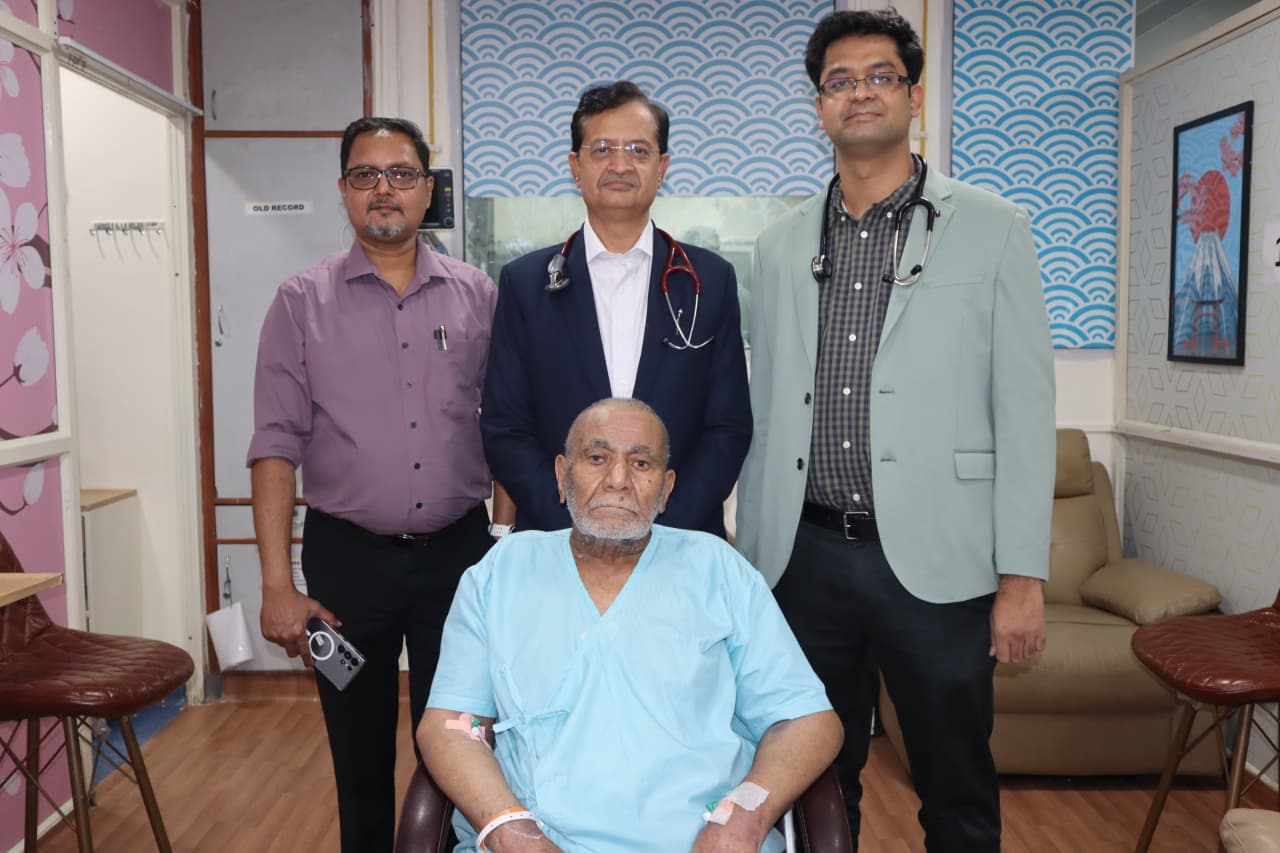
A complex and high-risk endovascular procedure was performed at SSB Heart & Multispecialty Hospital, Faridabad, noted as an advanced treatment option in the region.
A team of expert doctors led by Dr S. S. Bansal, Senior Interventional Cardiologist and CMD, performed an aortic aneurysm repair using an endovascular stent graft inserted from both thigh arteries, after creating onsite fenestrations at the exact positions of origin of the kidney arteries. After accurately placing the stent graft fenestrations across the origin of Kidney arteries, blood supply to the kidneys was maintained by placing two separate covered stents through these fenestrations. This helped treat the abdominal aneurysm and ensured continued blood flow to both kidneys.
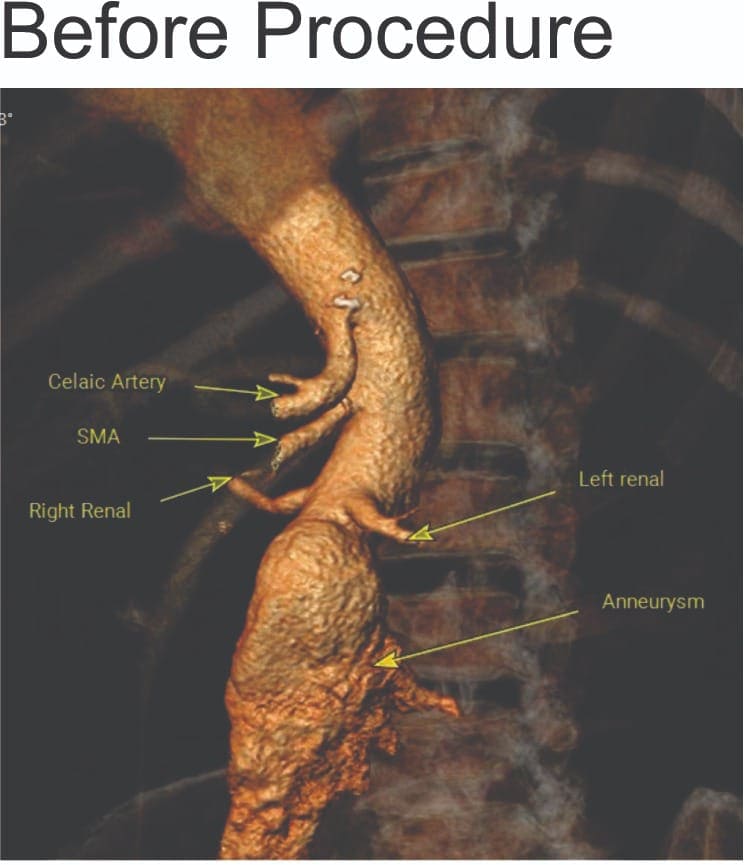
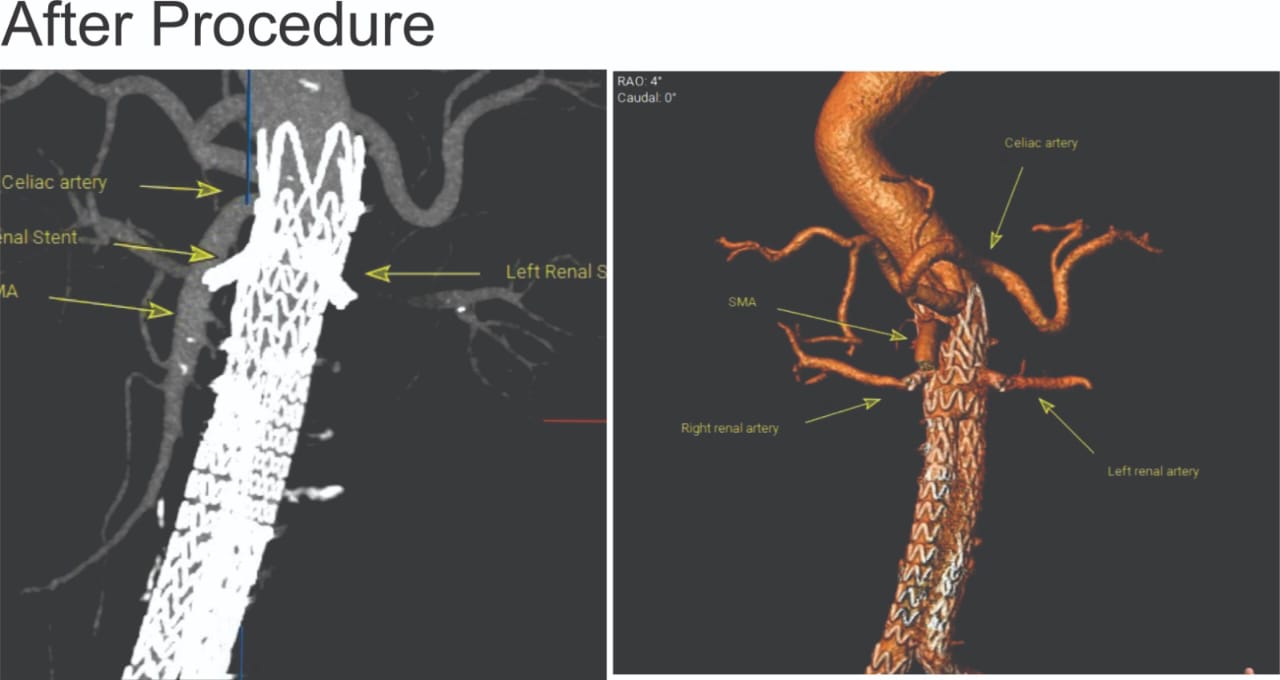
A total of five covered stents were used to seal & prevent blood from entering the aneurysmal sac of the abdominal aorta and iliac arteries in the pelvis, thereby reducing the risk of further expansion or rupture while maintaining blood flow to the kidneys. The procedure was done under general anaesthesia, with all four access sites—both thighs and both arm arteries—utilised for precision navigation.
Arm routes were used to place stents across the kidneys.
The multidisciplinary team included:
•Dr Pankaj Ingola (Anaesthesiologist)
•Brig Sudeep Singh Sidhu (Vascular Surgeon)
•Dr Subanghi
•Dr S. S. Bansal & Dr Siddhant Bansal, along with interventional radiologist Dr Anshul.


