
 E-Paper



Gurgaon:Panel submits report on Najafgarh drain, its issues to MoUD
Although the findings of the report have not been made public, sources said the committee had identified key points on the Delhi-Gurgaon border where the Najafgarh drain has blockages owing to silt deposits and has recommended that machines be used to desilt these areas.


After inspecting the Najafgarh drain on Friday and Saturday, in keeping with the strategy agreed upon during a high-level joint meeting last week, officials of the Delhi and Haryana public bodies submitted a report of their findings to the Ministry of Urban Development on Monday.
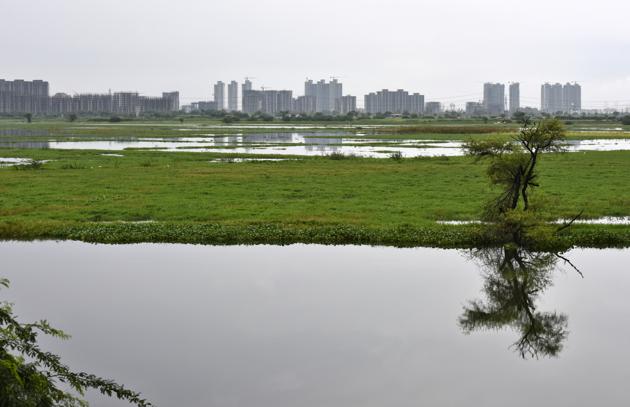
Although the findings of the report have not been made public, sources said the committee had identified key points on the Delhi-Gurgaon border where the Najafgarh drain has blockages owing to silt deposits and has recommended that machines be used to desilt these areas.
Gurgaon civic officials said the high level of silt in the Najafgarh drain caused havoc last year by preventing the flow of water from Badshahpur drain towards Delhi, causing a backflow in the low-lying areas of Gurgaon. As a result, traffic movement on the Delhi-Gurgaon Expressway was affected for over 48 hours.
The Municipal Corporation of Gurugram (MCG) Commissioner V Umashankar said, “As per the directions, findings of the inspections have been submitted to the secretary of Nirman Bhawan (Durga Shanker Mishra) in a report, which also includes a layout of measures adopted to tackle a flood-like situation in Gurgaon.”
Umashankar said run-off rainwater from the Aravallis flows through Badshahpur drain into the Najafgarh drain, which empties into the Yamuna. But silt in the Najafgarh drain ended up raising the stream bed, consequently hampering the natural flow of water at the interjunction of the two drains and causing a backflow.
Umashankar refused to divulge the findings of the report.
Sources said the report has also highlighted that although the National Highways Authority of India (NHAI) has doubled the carrying capacity of its culvert along the Delhi-Gurgaon Expressway, the failure of civic officials to widen the Badshahpur drain at Khandsa village has made NH-8 susceptible to waterlogging every monsoon.
On Thursday, in a meeting of officials from MoUD, the Delhi and Haryana governments, MCG, Haryana Urban Development Authority, Gurugram Metropolitan Development Authority and the Delhi Jal Board discussed last year’s waterlogging crisis and measures to counter the same.
After the meeting, Durga Shanker Mishra, secretary of Urban Development in Nirman Bhawan, directed officials from both states to submit a report on desilting Najafgarh drain.

Stay updated with all the Breaking News and Latest News from Mumbai. Click here for comprehensive coverage of top Cities including Bengaluru, Delhi, Hyderabad, and more across India along with Stay informed on the latest happenings in World News.


