
Sign in

Gurgaon: Sampling for avian flu starts in Sultanpur National Park

Project aims to study emergence and recurrence of respiratory diseases in poultry; this poses major threat to animal and public health worldwide

Published on: Apr 1, 2018, 23:50:50 IST
Hindustan Times | By , Gurgaon
Share
Share via
  • facebook
  • twitter
  • linkedin
  • whatsapp
Copy link
  • copy link

Experts from Lala Lajpat Rai university of veterinary and animal sciences (Luvas), Hisar and University of Minnesota, US, and forest department officials will begin collecting samples from resident and migratory birds at the Sultanpur National Park for a three-year project on Monday.
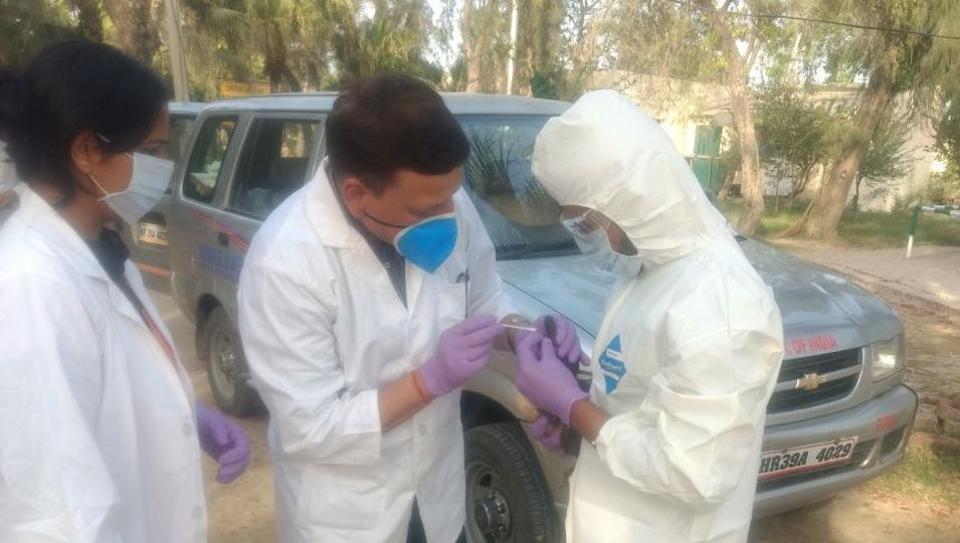
Doctors collect swabs from birds at the Bhindawas bird sanctuary in Jhajjar, one of the two places in Haryana from where samples will be collected over three years for surveillance of AI virus.

Luvas had proposed a project, in collaboration with University of Minnesota, US, in 2016 to surveil migratory and resident birds for the Avian Influenza (AI) virus. The department of agricultural research and education, the Indian council of agricultural research, and the state forest department granted the requisite permissions in December 2017. A 12-day training programme was organised from February 5 to February 16 this year, at Hisar, where the project overview was discussed.

The project was proposed to research the emergence and recurrence of respiratory diseases in poultry that threaten animal and public health worldwide, said Dr NK Mahajan, principal scientist, veterinary public health and epidemiology, college of veterinary sciences, Luvas.

“The pursuit of this research will be helpful in advancing science to reduce the challenges of countering emerging disease threats of considerable economic impact to the poultry industry in India as well,” said Dr Mahajan.

The Sultanpur National Park, situated 15km from the city, will be one of the two places in Haryana where these samples will be collected from over a period of three years for surveillance of the virus. The other place is Bhindawas Bird Sanctuary in Jhajjar, where sampling was done in February and March. Though most migratory avian species have left Sultanpur, research on the resident birds will begin from Monday, said a state wildlife official.

According to him, only oral swabs will be taken from the migratory birds that are the probable carriers of the viruses.

“We have collected swabs from 20 bird species from Bhindawas Bird Sanctuary, Jhajjar. We plan to work at the Sultanpur Bird Sanctuary next and send the samples to Luvas. Also, we have been asked to send any dead birds we find so that they can monitor and collect samples to prevent the outbreak of bird flu,” said Dr Ashok Khasa, veterinary surgeon, wildlife, forest department.

The collection of samples from resident birds will be done till August and migratory birds will start flying in by September after which, they will be subjected to a sample collection process. Sultanpur sees a flurry of winged visitors in the winter — more than 30,000 birds from different parts of the world. At present, there are 35 species of residents birds here.

“Many species of these migratory birds are known carriers of the AI virus, which not only causes mortality and economic loss in the domestic poultry but is communicable to human beings. This sampling exercise will help in possibly stopping this,” said Haryana’s forest and wildlife minister Rao Narbir Singh.

In late 2016, a number of dead birds found in Rajpura, Punjab, had tested positive for bird flu (H5N8 avian flu). Following this, Haryana’s animal husbandry department had carried out a massive culling of birds and banned visitors to Sultanpur National Park fearing their exposure to migratory birds. The state government had also issued an advisory to all district headquarters for preparedness, control, and containment of the disease

FACT FILE

  • Avian Influenza is a viral infection that occurs naturally in wild birds, especially waterfowl, gulls, and shorebirds, and is carried without any outward symptoms. It is caused by type A influenza viruses that have 2 important surface antigens, hemagglutinin (H) and neuraminidase (N), that give rise to 144 possible virus subtypes.
  • Migratory birds fly from various countries including Russia, Siberia, and China and visit different regions every winter (September to March).
  • Sultanpur National Park and Bhindawas Bird Sanctuary are a haven for migratory and resident birds. In winters, Sultanpur becomes a stopover for approximately 150 species of migratory birds.
  • Sampling done in Bhindawas on birds includes Rosy pelican, Gadwall, Comb duck, Black-headed ibis, Eurasian coot, Ruddy shelduck, Bar-headed goose, Pintail, greylag goose and painted stork.
  • Haryana has two national parks, eight wildlife sanctuaries, two wildlife conservation areas, four animal and bird breeding centres, one deer park, and 49 herbal parks.
  • Leena Dhankhar
    ABOUT THE AUTHOR
    Leena Dhankhar

    Leena Dhankhar is Senior Editor and Bureau Chief, Gurugram, at Hindustan Times, where she has spent over 17 years chronicling the transformation of one of India's fastest-growing urban regions. From starting her career as a crime reporter to leading the Gurugram bureau, her journalism has been defined by investigative reporting, in-depth storytelling and an unwavering focus on public interest. Over nearly two decades, she has reported extensively across crime, politics, civic governance, elections, real estate, environment, courts, sports, education and entertainment, covering Gurugram, Faridabad, Nuh and Palwal. Her reporting has exposed several major scams and systemic failures, including insurance frauds, waste management irregularities, illegal arms manufacturing units in Nuh, illegal mining in the Aravallis, organised crime networks and governance lapses affecting millions of residents. Known for her investigative work and exclusive stories, Leena has reported on high-impact national issues, including the Nicaragua charter flight carrying Indian migrants that was turned back amid allegations of human trafficking, exposing the growing network of illegal immigration rackets. Her work has also focused on gang wars, prison administration, juvenile crime, women and child protection systems, the functioning of the Juvenile Justice Board and Child Welfare Committee, and environmental challenges such as pollution, waterlogging and deteriorating civic infrastructure. Beyond hard news, Leena has extensively documented Haryana's rich heritage, forests and wildlife, bringing attention to the state's historical landmarks, biodiversity, conservation efforts and ecological challenges through immersive reportage and feature writing. Her journalism has consistently gone beyond breaking news. She has documented Gurugram's rapid urbanisation through long-form narratives and enterprise reporting on issues ranging from pothole-ridden roads, flooding and waste management to the changing social fabric of India's Millennium City. She also writes widely read feature columns, including The Outsider, Changemaker, and Concern for Gurugram, profiling people, places and ideas shaping the city's identity. Leena is the author of Gurugram School Murder, published by Juggernaut Books, a deeply reported account of one of India's most high-profile school murder investigations. She is currently working on her second book, an investigative work exploring some of India's most significant scams and fraud investigations. Beyond print journalism, she has expanded her storytelling through public speaking and digital media. She is a TEDx speaker and has produced podcasts exploring Gurugram's transformation, civic challenges and untold stories. Her work reflects a commitment to narrative journalism that combines rigorous reporting with compelling storytelling. A law graduate with an MBA in Human Resources, Leena brings a multidisciplinary perspective to her reporting, particularly on governance, public policy and legal affairs. She has travelled extensively across India to pursue investigative assignments, often reporting from remote locations and conflict-prone areas in search of stories that matter.Read More