E-Paper



AIIMS doctors replace hip joint using 3D printed implant

 Prefer HTon Google


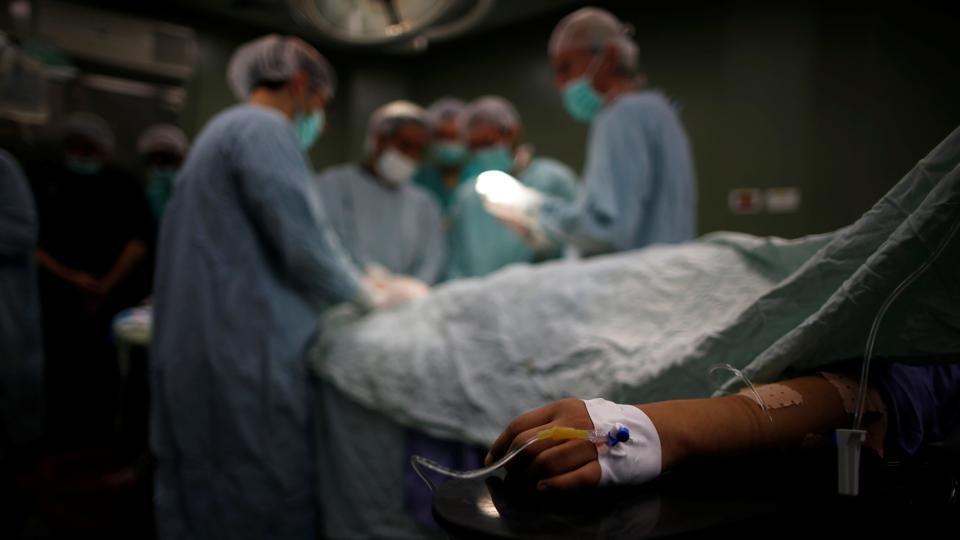
The team included critical care specialists, professor Anjan Trikha and Dr Manpreet Kaur, and professor of surgery, Dr Biplab Mishra.
Doctors at AIIMS-Delhi have successfully performed a hip joint replacement surgery using a 3D printed medical implant.
A multi-disciplinary team of doctors, including orthopaedic and vascular surgeons and critical care specialists, replaced the right hip joint of 40-year-old Amit Bahnot using 3D printing technology in an eight-hour-long surgery on April 25.
“It was a complicated surgery because his pelvic bone was badly damaged,” said Dr Rajesh Malhotra, professor and head of orthopaedic department.
“I had full faith in the doctors,” said Amit Bahnot, the patient.
The team included critical care specialists, professor Anjan Trikha and Dr Manpreet Kaur, and professor of surgery, Dr Biplab Mishra.
“The patient lost a lot of blood during surgery and we had to transfuse about 15 units of blood and blood products. He was in the intensive care unit for three days post surgery,” said Prof Trikha.
The planning for the surgery took close to five months. Doctors worked out the dimensions for the implant through a CT scan and fed into a computer to create the perfect fit implant.
“First we modelled the defect and then modelled the implant. We kept fine tuning it and after six-seven attempts we finally got what was perfect for him,” Dr Malhotra said.
“Very few centres around the world use 3D printing technology for creating hip joint implants. We tried it because the patient had no other choice because of a botched up surgery in which a significant portion of his pelvic bone was removed,” he said, adding that off-the-shelf implants would not have fit him.
Perfect fit also increases the longevity of the implant as wear and tear is lesser. Normally, an implant can last up to 15 years. Implants created through 3D printing are essentially the same as normal implants, only a better fit. The implant cost ₹2 lakh but it would have cost around ₹20 lakh abroad.
“Like robotics, 3-D modelling is the future of medical landscape,” said Dr Malhotra.