
 E-Paper



In new study, AI decodes fitness trackers for top health advice
The Google model scored 79% on sleep medicine questions and 88% on fitness questions, beating expert averages of 76 and 71%.

 Prefer HTon Google


On most mornings, your fitness tracker greets you with a string of numbers — steps taken, hours slept, heart rate, maybe a “sleep score” out of 100. But what if those numbers came with the kind of nuanced, tailored advice you’d expect from a personal coach who knows the science inside out? That’s the vision behind PH-LLM, a new AI system unveiled by Google researchers in 2024.
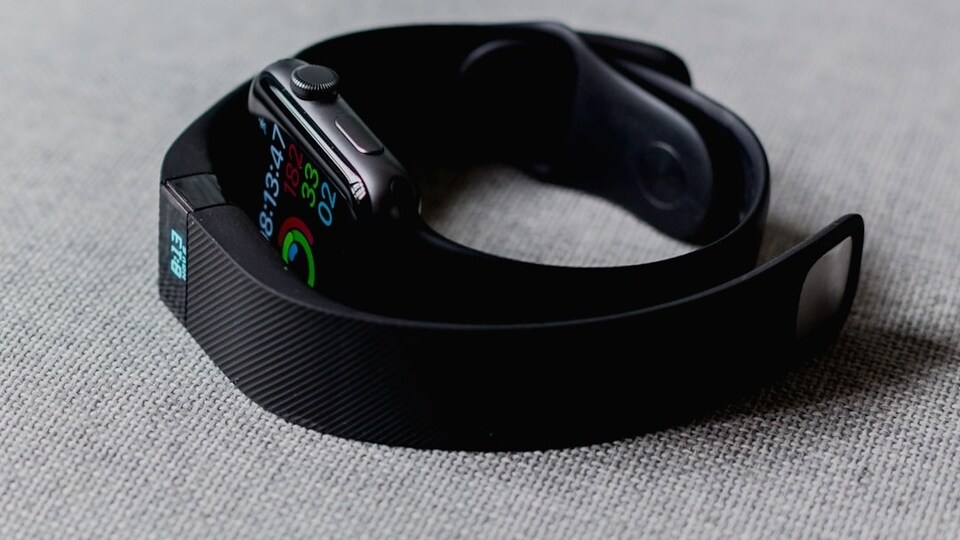
In a study published in the journal Nature Medicine on Thursday, the company’s researchers reported that its personal health coaching can interpret wearable device data and match — or even surpass — human experts in sleep and fitness advice. The system, called the Personal Health Large Language Model (PH-LLM), is a fine-tuned version of Google’s Gemini AI trained to understand daily sensor readings from devices such as smartwatches and fitness trackers like Apple Watch and Fitbit. In the study, PH-LLM outperformed domain experts on professional exam questions and provided individualised insights that human evaluators rated nearly on par with specialist-written recommendations.
The study found PH-LLM could score 79% on sleep medicine questions and 88% on fitness questions, beating expert averages of 76 and 71%. In more than 850 case studies using real-world data, the AI’s sleep and fitness recommendations were rated almost as highly as those of human specialists, with notable gains over the base Gemini model for sleep-specific insights.
PH-LLM also predicted how users would rate their own sleep quality from wearable data alone — a capability traditional trackers generally lack.
The authors, however, caution that PH-LLM is not yet ready for consumer release. It occasionally introduces errors or assumptions, and its training data does not represent all populations. Next steps will include testing with more diverse users, integrating richer time-series sensor data, and studying whether people follow and benefit from the model’s advice.
“These are interesting developments. Smart wearable devices help understand physiological factors / pathological aspect. Thus, the data may help professionals to guide/counsel individuals to handle some health concerns, but this area is growing and we need to learn more and also its limitations. Proper and precise interpretation of data is important for its precise use,” said Dr KK Talwar, former head of cardiology, AIIMS, Delhi.
Dr Talwar stressed that insights from such devices must be used with expert advice for accurate interpretation and advice for now. “Because of its simplicity, some individual may use and draw inaccurate interpretations that lead to health stress and unnecessary obsession. Obsession is itself a stress and may affect individual health with self-use of such smart devices,” he cautioned. “This paper shows that personalised advice by AI would become a reality soon. It can go beyond generic advice to provide actionable insights from wearable devices. For India, with its diverse population and growing lifestyle-related conditions, this technology holds immense promise. It can empower millions of Indians with lifestyle-related diseases to take control of their sleep and fitness,” said Dr Anoop Misra, chairman, Fortis-C-DOC Centre of Excellence for Diabetes, Metabolic Diseases and Endocrinology. To make it work, the company trained PH-LLM in two stages: First, it learned from hundreds of detailed case studies pairing demographic information and up to 30 days of aggregated wearable metrics with expert-written advice for improving sleep or fitness.
Second, they added a “multimodal adapter” that converted numerical sensor data — such as heart rate variability, sleep stages and activity minutes — into a format the AI could process like text. This enabled the model to connect specific data patterns to targeted recommendations.

Catch your daily dose of Fashion, Health, Festivals, Travel, Relationship, Recipe and all the other Latest Lifestyle News on Hindustan Times Website and APPs.


