
 E-Paper



India gets first dengue vaccine as DCGI approves Takeda’s QDENGA
QDENGA can be administered to individuals irrespective of previous dengue exposure, without requiring pre-vaccination testing.

 Prefer HTon Google


Japan-based Takeda Biopharmaceuticals on Monday announced that India’s drug regulator has granted market authorisation to its anti-dengue vaccine QDENGA, making it the first dengue vaccine approved for use in the country.
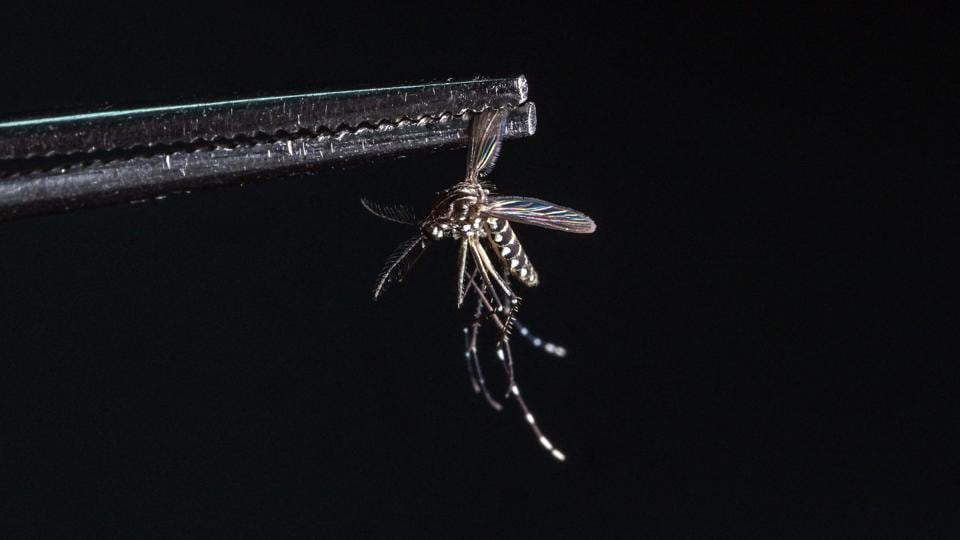
“The Drugs Controller General of India (DCGI) has granted market authorisation (CT-20, New Drugs and Clinical Trials (NDCT) Rules, 2019) for QDENGA, Takeda’s dengue vaccine for the prevention of dengue disease in individuals aged 4-60,” Takeda Biopharmaceuticals India said in a statement.
QDENGA is the first dengue vaccine approved in India and can be administered to individuals irrespective of previous dengue exposure, without requiring pre-vaccination testing, the company said.
Dengue continues to pose a major public health challenge in India, with thousands of cases reported every year. According to National Vector Borne Disease Control data, 6,927 cases and 10 deaths had been reported till February this year. The disease is endemic across most parts of the country, which accounts for nearly one-third of the global dengue burden.
According to the company, the vaccine is effective against all four dengue virus serotypes.
“The latest seven-year data for QDENGA show continued protection against dengue infection and hospitalisation across all four serotypes; an important milestone for communities and health systems. Since its launch in 2022, QDENGA has been approved in 43 countries, with more than 32 million doses distributed globally,” said Mahender Nayak, head of intercontinental markets at Takeda.
Dengue is a year-round public health challenge with no specific treatment. Its severe form, dengue haemorrhagic fever, can be life-threatening.
Goh Choo Beng, medical affairs head, Southeast Asia and India Cluster, said, “India carries a substantial dengue burden, and all four dengue virus serotypes have been documented as co-circulating in several regions. QDENGA is designed to protect against all four serotypes, regardless of prior exposure. Its approval represents an important step in strengthening India’s comprehensive approach to dengue prevention, alongside vector control, surveillance, community awareness and other public health measures.”
The approval is based on findings from Takeda’s global clinical development programme comprising 19 Phase I, II and III clinical trials involving more than 28,000 participants across dengue-endemic and non-endemic regions. The programme included the pivotal Phase III TIDES (DEN-301) trial, which evaluated the vaccine in more than 20,000 participants across eight countries over an extended period to assess its long-term safety and efficacy.
At 12 months after the second dose, the study met its primary endpoint by demonstrating an overall vaccine efficacy of 80.2% against virologically confirmed dengue. At 18 months, it showed 90.4% efficacy against dengue-related hospitalisation, meeting a key secondary endpoint. After 4.5 years, two doses of QDENGA provided 84.1% efficacy in preventing dengue-related hospitalisations. The vaccine has also demonstrated sustained safety and efficacy for up to seven years against all four dengue virus serotypes.
“This approval is also supported by data from a Phase III clinical trial (DEN-302) conducted in Indian participants, which evaluated the safety and immunogenicity of the vaccine in individuals aged 4–60 years. The study demonstrated that QDENGA was found to be tolerated, safe and immunogenic in healthy adults, adolescents and children. These clinical outcomes are further supported by real-world evidence generation and ongoing pharmacovigilance to deepen understanding of the vaccine’s safety and impact,” the statement said.
QDENGA is a tetravalent live-attenuated vaccine designed to provide protection against all four dengue virus serotypes. It is administered subcutaneously as a 0.5ml two-dose regimen, with the second dose given three months after the first.
The vaccine is recommended by the World Health Organization (WHO) for use in dengue-endemic settings and supports introduction in public immunisation programmes in high-transmission areas without the need for pre-vaccination screening. It has also received WHO prequalification.


Catch your daily dose of Fashion, Health, Festivals, Travel, Relationship, Recipe and all the other Latest Lifestyle News on Hindustan Times Website and APPs.


