The US House of Representatives on Wednesday passed the Lindsey O Graham Sanctioning Russia and Iran Act of 2026 by 262-159 votes, sending it to President Donald Trump for his signature. The Senate had cleared the bill 86-11 in August.
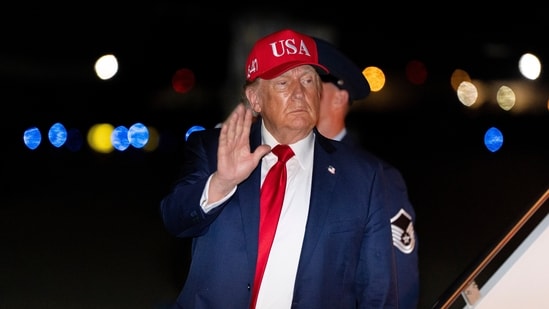
The legislation is named after the late Senator Lindsey Graham, a close Trump ally who spearheaded it over more than a year before his sudden death in July.
What does the bill allow?
It gives Trump explicit congressional authority to impose tariffs of up to 100% on goods from the five largest purchasers of Russian oil and gas — currently China, India, Slovakia, Hungary and Azerbaijan. It also authorises tariffs on the five countries doing the most to help Russia evade existing sanctions. The decision on whether to act, and at what rate, rests entirely with the president. The bill does not compel any tariffs.
The legislation provides substantial exemptions for European allies, citing their efforts to reduce Russian energy dependence. India has no such exemption.
How is this different from the tariffs India already faces?
Trump has imposed sweeping tariffs on Indian goods throughout his presidency, but those have relied on presidential emergency powers — first under the International Emergency Economic Powers Act (IEEPA), which the Supreme Court struck down in February, and then under Section 122 of the Trade Act, which carries a 150-day expiry. Both routes have faced legal and procedural challenges.
{{/usCountry}}Trump has imposed sweeping tariffs on Indian goods throughout his presidency, but those have relied on presidential emergency powers — first under the International Emergency Economic Powers Act (IEEPA), which the Supreme Court struck down in February, and then under Section 122 of the Trade Act, which carries a 150-day expiry. Both routes have faced legal and procedural challenges.
{{/usCountry}}The Graham bill is different. Once signed, it gives the president a durable, congressionally authorised tool to penalise buyers of Russian energy — one that does not expire and is far harder to challenge in court.
For India, it means the tariff threat over Russian oil purchases now rests on firmer legal ground than anything Trump has wielded so far. The US Trade Representative will reassess the top five purchasers every 180 days, creating a recurring pressure cycle.
What has India said?
India's ministry of external affairs said on Thursday that the government has "noted" the bill's passage and is "monitoring further developments." The statement struck a notably firm tone, asserting that India "remains firmly committed to ensuring energy security for its 1.4 billion people" through diversified sourcing and market dynamics.
The ministry said the issue had been "discussed at high levels in recent months with various US interlocutors" and that India had "very clearly articulated" the bill's potential implications — "for not just the bilateral relationship but also the international energy market”.
In its sharpest line, the statement said India was determined "to take all necessary measures to protect its trade and economic interests" and that the government would work with trade and industry bodies to deal with the fallout.
India's ambassador to Russia, Vinay Kumar, has previously called US tariffs imposed over Russian oil purchases "unfair, unreasonable and unjustified," pointing out that other countries, including European nations, also trade with Russia.
How did India end up buying Russian oil again?
India had scaled back Russian oil purchases under US pressure through much of 2025. But when the widening conflict in West Asia effectively closed the Strait of Hormuz, India faced a severe supply crunch. Washington also granted a series of general licences temporarily allowing countries, including India, to resume Russian oil purchases to cover the shortfall.
Indian refiners bought roughly 30 million barrels under that window, according to Bloomberg. India’s Russian crude imports subsequently surged 34% month-on-month to record levels in June, valued at €4.5 billion — making India the second-largest buyer behind China, according to the Centre for Research on Energy and Clean Air.
The bill now gives Trump the authority to penalise India for purchases that Washington itself facilitated.
Also read: India, others face 100% US tariffs as House advances Russia sanctions bill; final vote tomorrow
What happens next?
Trump is expected to sign the bill. It includes a waiver provision allowing him to suspend tariffs on a country if he certifies to Congress that doing so serves the US national interest.
For India, the threat is likely to function as leverage in the broader bilateral trade negotiations — where both sides remain far from a deal — rather than as an immediate economic blow.