
 E-Paper



Energy storage as backbone of India's green energy transition
This article is authored by Amit Kumar Mittal, CEO, Jindal India Renewable Energy.

 Prefer HTon Google


India's renewable growth has entered a new phase. For most of the past decade, the question was how much solar and wind capacity the country could add. That question is largely answered, with renewable energy now making up 51.6% of India's total installed power capacity of 532.7 GW. What’s more, solar alone has grown by March 2026. India met its 500 GW non-fossil target five years ahead of schedule.
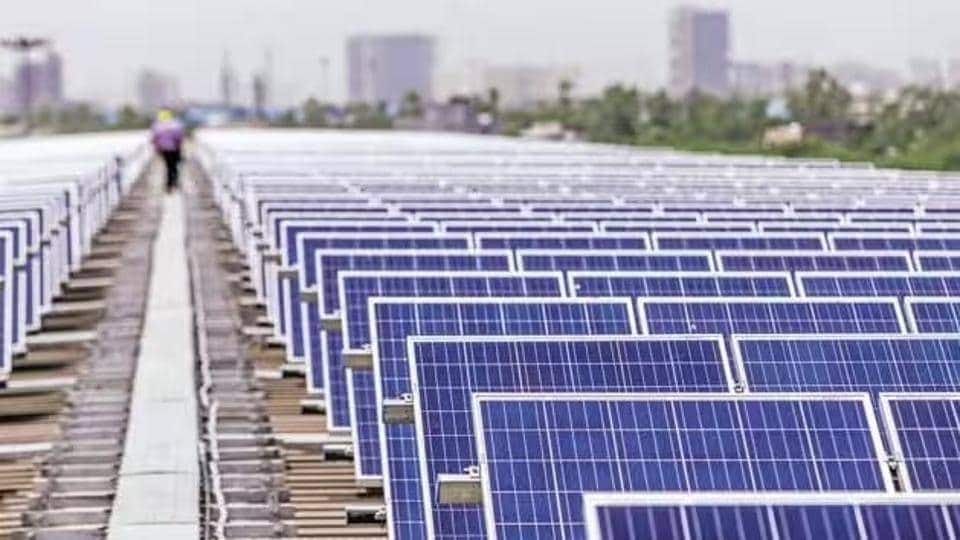
A harder question, however, has taken its place, asking how the country is using this power reliably, especially at the hour it is needed. In April 2026, India recorded its highest-ever electricity demand of 256 GW during a heatwave. Solar met nearly 58 GW of that at its afternoon peak, then fell away by evening as cooling loads kept demand high, and other sources stepped in to hold the grid steady.
Solar and wind are intermittent by nature. Solar peaks at midday and disappears by evening, while wind follows weather patterns no operator can fully predict. This gap between generation and demand is a structural problem, not a passing inconvenience. Between May and December 2025, India reduced around 2.3 terawatt-hours of solar power as the grid failed to accommodate the midday excess, with the National Load Dispatch Centre warning of an evening deficit of about 15 to 20 GW. As a Citigroup report correctly pointed out, India is changing from "not enough energy" to “not enough dispatchable energy at the right hour.”
Storage provides the solution through absorbing midday excess and providing discharge during evening peak hours, and the economics are increasingly favourable. The tariff for battery storage auctions in India fell by more than 65% in 2022-2024, following global prices that have dropped by almost 93% from 2010. Ember estimates that solar paired with battery storage could meet up to 90% of India's electricity demand at roughly ₹5.06 per unit, already competitive with retail grid tariffs in several states.
Storage also bears directly on how secure India's power supply is. Every unit of solar curtailed for lack of storage must be replaced by coal, at a higher cost and emissions footprint. The Central Electricity Authority projects a need for 47.2 GW of battery storage by 2032, with longer-range estimates putting total demand at 73.93 GW and 411.4 GWh by 2031-32.
As of March of 2026, the installed storage capacity across batteries and pumped hydro stood at around 11.6 GWh. This figure is a fraction of what will be needed by the middle of 2030s. Batteries suit short duration needs well, but longer gaps during weak monsoon spells call for pumped hydro, an area where India's 176 GW of potential remains largely untapped.
The gap between the current storage capacity and what the grid will need by the early 2030s is being bridged by government programmes. Launched in 2023, the Viability Gap Funding scheme for battery storage backed 4 GWh of projects. It was expanded in May 2026 to cover an additional 30 GWh, supported by Rs. 5,400 crore from the Power System Development Fund. A related production-linked incentive programme worth Rs. 18,100 crore targets 50 GWh of domestic battery cell manufacturing.
Early projects show this policy push translating into results. Adani Energy Solutions has commissioned a 40 MW/120 MWh battery system in Gujarat paired with 300 MW of solar, while Reliance New Energy has energised a 5 MW/50 MWh vanadium flow battery, one of the country's first utility-scale non-lithium deployments. Industry trackers put India's current storage pipeline at around 92 GWh, the largest on record for the country.
The direction is clear, even if the distance left to cover is considerable. Battery costs will keep falling, renewable capacity will keep expanding, and electricity demand will keep climbing as summers arrive earlier and last longer. What happens between now and 2032 will decide whether India's grid absorbs that growth cleanly or continues losing power to curtailment.
Execution, more than ambition, is the binding constraint now. Turning an announced pipeline into operating capacity will need coordinated progress across financing, transmission, and project delivery, offering, if done well, a working template for pairing solar and wind with storage at a scale few countries have attempted, one with relevance for other fast-growing economies facing similar conditions.
(The views expressed are personal)
This article is authored by Amit Kumar Mittal, CEO, Jindal India Renewable Energy.


